How Much Mixer in a Double: Practical Cocktail Ratios
Master the art of balance with practical mixer-to-spirit ratios for doubles, plus a calculator, data table, and tips to scale for batches and taste.


Why the Question Matters for Home Mixers
Understanding how much mixer in a double matters for balance, consistency, and guest satisfaction. Whether you’re mixing at home, at a bar, or during a party, getting the ratio right avoids a drink that’s too strong or too sweet. In this guide, the Mixer Accessories Team breaks down practical guidelines for common spirits and glassware, and shows simple ways to scale up or down. By learning the core concepts, home cooks, bar enthusiasts, and audio hobbyists can craft cocktails that taste as good as they look, every time.
According to Mixer Accessories, a clear ratio helps you predict the final volume and flavor before you pour the ice. This prevents over-dilution from ice melt and ensures you meet expectations for a “double” without surprises. The goal is repeatable results that align with the occasion and guest preferences.
Common Mixer-to-Spirit Ratios for Doubles
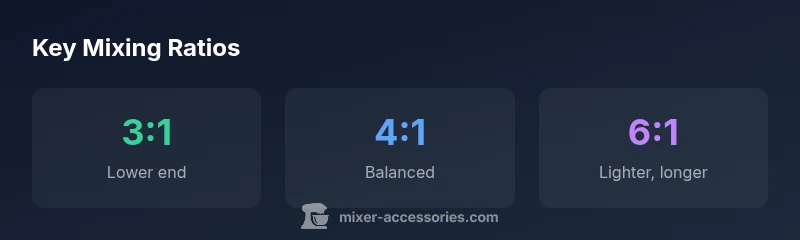
Doubles typically range from a strong, spirit-forward profile to a lighter, more refreshing versio n. A 3:1 ratio (three parts mixer per one part spirit) yields a robust drink, while a 6:1 ratio leans sweeter and longer, with more dilution from ice. The exact ratio depends on the base spirit, mixer strength, and desired mouthfeel. For example:
- Vodka or gin (clean profiles): 3:1 to 4:1
- Rum (light to amber): 4:1 to 5:1
- Whiskey (bourbon or rye): 3:1 to 6:1
If you’re starting from scratch, begin at 4:1 for most doubles and adjust up or down based on taste and sweetness. If you’re crafting a low-sugar option, favor the lower end (3:1 or 3.5:1), then add lime, bitters, or citrus to brighten rather than sugar.
Scaling Ratios for Batch Service
Batching doubles is a practical skill for parties. A simple approach is to fix the spirit volume per drink and multiply the mixer accordingly. For example, with 2 oz of spirit per double:
- At 4:1, mixer per drink = 8 oz; total per drink = 10 oz
- At 3:1, mixer per drink = 6 oz; total per drink = 8 oz
To prepare for a party, multiply by the desired number of doubles. If you plan 12 doubles, you’d mix roughly 96 oz of mixer for a 10 oz serving at 4:1, or 72 oz for an 8 oz serving at 3:1. Always consider ice volume and glassware capacity when finalizing batches.
Practical Tips for Balance, Dilution, and Ice
- Start with measured ratios, then taste and adjust. A quick sip while the ice chills is worth the effort.
- Ice matters: large cubes melt slower and reduce rapid dilution, helping you keep the ratio intact longer.
- Glassware drives perception: taller, slimmer glasses emphasize dilution differently than short rocks glasses. Match the vessel to the drink size.
- Syrups and cordials can skew sweetness; account for these when selecting a mixer ratio.
- Temperature affects perception: colder drinks can taste more balanced even if the ratio is slightly higher in mixer.
These practical steps help you deliver consistent doubles whether you’re serving 2 guests or a crowd.
Glassware and Serving Styles
Selecting the right glass matters for how a drink’s volume is perceived. For a standard double, a highball or Collins glass (8–12 oz capacity) works well for longer drinks built with a 4:1 or 3:1 mixer ratio. A rocks glass (8–10 oz) suits shorter, stronger versions with a 3:1 ratio. Always pre-chill glasses to minimize rapid dilution and keep the drink at the intended strength longer.
In professional settings, bar staff may pre-measure doubles into batch jiggers and hold the mixers separately to maintain control over dilution until service. For home use, a simple method is to measure the spirit and mixer, pour over fresh ice, and adjust the level with a splash of soda or citrus if needed.
Quick-Start Recipes by Spirit Type
- Vodka & Soda (4:1 to 3:1): For a 2 oz vodka double, add 8–6 oz of soda water. If you want more bite, use 4:1; for a lighter, longer sip, use 3:1 with a squeeze of lime.
- Gin & Tonic (3:1 to 4:1): Start with 2 oz gin and 6–8 oz tonic. A 4:1 ratio leans crisper; 3:1 yields a bolder botanical profile.
- Rum & Cola (4:1 to 5:1): Mix 2 oz rum with 8–10 oz cola. The higher ratio (5:1) creates a more refreshing, less sweet profile.
- Whiskey & Ginger (3:1 to 4:1): Combine 2 oz whiskey with 6–8 oz ginger ale or ginger beer for a balanced, warming drink.
These recipes illustrate how a single spirit can pair with different mixers to achieve varied flavor outcomes. Adjust the numbers to taste, and always consider ice, glassware, and the guest profile when dialing in a double.
The Psychology of Sweetness and Strength
Humans perceive sweetness and alcohol strength differently depending on context and temperature. For doubles, a target of 8–14 oz total volume is a comfortable, approachable range for most guests. If you’re cooking for palate-sensitive guests or where desserts are rich, favor a lower mixer ratio to highlight the spirit’s character while reducing sugar load. Conversely, for sessions where you want longer form drinks or a party vibe, stretch with a higher mixer ratio and lighter spirits. The key is to maintain balance and avoid a chalky finish from over-dilution.