How Much Mixer with Gin: Ratios, Tips, and a Calculator
Learn the right gin-to-mixer ratios for classic gin drinks, with a built-in calculator to scale recipes for batches. Master mixing with practical tips from Mixer Accessories.


Why the gin-to-mixer ratio matters
According to Mixer Accessories, the ratio between gin and mixer sets the drink’s aroma, dilution, and perceived strength. A well-balanced mix avoids overpowering botanical notes while maintaining enough refreshing fizz. When you scale recipes, small changes in the gin or mixer can shift flavor dramatically, especially with different tonics or soda varieties. Understanding the ratio helps you reproduce the same drink across multiple glasses and occasions, from casual gatherings to more formal tastings. By thinking in terms of per-drink volumes, home cooks and bar enthusiasts can craft consistent experiences, whether you’re crafting a round for guests or testing a new tonic brand. This mindset also supports batch planning, which saves time and reduces guesswork at party time.
Common starting points for gin-to-mixer balance
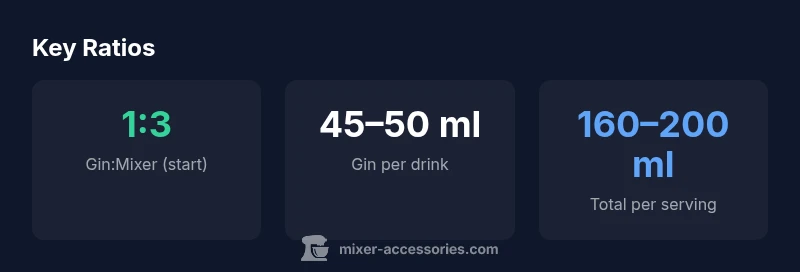
Most traditional gin drinks use a clearly defined ratio by volume. For a standard gin and tonic, a common starting point is about 45–50 ml gin with 120–150 ml mixer per serving, yielding roughly 165–200 ml total. If you’re aiming for a lighter drink, you might use 40 ml gin with 120 ml mixer; for a bolder profile, push toward 50 ml gin and 150 ml mixer. It’s also common to adjust based on the tonic’s bitterness, the ice-to-liquid ratio, and glass size. In practice, you’ll often end up with a 1:3 or 1:4 ratio (gin:mixer) by volume. Keep in mind that different gin styles (fresh botanicals, proof) respond differently to dilution.
How to adjust for style and strength
To tailor strength, vary the gin amount first, then tweak the mixer to maintain balance. If you want a drier, more aromatic drink, keep gin level the same but use a lighter mixer or splash more citrus. For sweeter tonics or flavored mixers, reduce the gin slightly or increase the ice to slow dilution. Ice matters: larger cubes melt slower and reduce abrupt dilution, letting the botanicals shine longer. Tasting mid-pour helps you fine-tune ratios before serving a full batch. For guests who prefer less alcohol, reduce the gin by 5–10 ml per drink and compensate with more mixer or a splash of citrus.
Batch calculations and scaling
Converting per-drink ratios to a batch is straightforward. Total batch volume = number of drinks × (gin per drink + mixer per drink). For example, with 4 drinks using 45 ml gin and 120 ml mixer, total volume = 4 × (45 + 120) = 4 × 165 = 660 ml. If you scale to 8 drinks, it becomes 8 × 165 = 1320 ml. The key is to keep the per-drink ratio constant while multiplying by servings. Our calculator helps automate this so you can plan large gatherings without miscalculations.
Flavor considerations: tonics, mixers, and ice
The tonic you choose heavily influences the perceived bitterness and sweetness. A lighter, citrus-forward tonic will feel crisper with the same gin amount, while a fuller-bodied or quinine-heavy tonic may require a touch less mixer to avoid overpowering botanicals. You can experiment with flavored tonics (elderflower, grapefruit) but adjust gin downward to maintain balance. Ice quality and volume also affect dilution; colder, denser ice slows melt and keeps drinks tasting consistent longer. If you’re serving multiple guests, consider pre-chilling mixers and glasses to reduce on-site dilution from ambient heat.
Practical tips for ice, chill, and glassware
Use a shaker or stirring method appropriate to the drink style. For gin and tonic-style drinks, a long highball glass with 2–3 large ice cubes works well. Pre-chill glasses, pour ingredients sequentially, and avoid too much agitation, which can over-dilute quickly. Label batches when mixing in larger quantities to prevent cross-contamination of different gin brands or tonics. If you’re preparing a flight of gin-based drinks, maintain a standard base ratio and swap mixers between samples to compare flavors side by side.
Step-by-step example: from 4 servings to 20
- Start with a trusted per-drink baseline: 45 ml gin, 120 ml mixer. 2) Decide the batch size: 4, 8, or 20 servings. 3) Calculate total gin: 4 × 45 ml = 180 ml; total mixer: 4 × 120 ml = 480 ml. 4) For 20 servings, gin = 20 × 45 ml = 900 ml; mixer = 20 × 120 ml = 2400 ml. 5) Combine with ice and adjust taste with a quick tasting. 6) If you want to maintain flavors across batches, prepare ice and citrus slices in advance.
Troubleshooting common issues: over-dilution, bitterness, and mismatched flavors
If drinks taste weak, check for excessive ice or too much time in the glass before serving. If bitterness dominates, switch to a milder tonic or reduce gin by a few milliliters per drink and add a touch of citrus. For flat flavors, ensure your mixer isn’t stale and that the gin was stored properly. Record successful ratios for future events so you can replicate the exact balance without repeated testing.