How Much Mixer Per Shot: Practical Cocktail Ratios
Learn exact mixer-per-shot guidelines for cocktails with practical ranges, techniques, and tips from Mixer Accessories to elevate at-home mixing. Understand how ice, dilution, and drink style affect the ideal mixer volume.


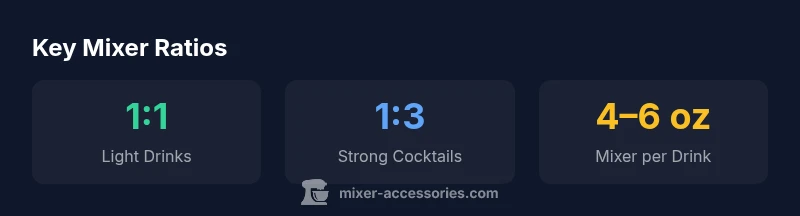
For most cocktails, measure mixer-to-spirit by a flexible ratio rather than a fixed number. A lighter drink typically uses about 1 part mixer to 1–2 parts spirit, while stronger recipes sit around 1:3 to 1:4. If you’re using a standard 1.5 oz shot, that translates to roughly 1.5–6 oz of mixer, depending on ice and dilution. Start with the lower end and adjust to taste, then lock in your go-to ratio for common drinks.
Why the right mixer-to-spirit ratio matters
In home bartending, the ratio between mixer and spirit is the foundation of a balanced drink. A well-calibrated ratio affects flavor integration, mouthfeel, aroma perception, and the drink's overall impression. If the mixer is too dominant, sweetness and citrus can overwhelm the liquor's character, and the finish may taste diluted as ice melts. Conversely, too little mixer leaves a drink tasting punchy, too strong, or overly sharp, with dilution lagging behind consumption. According to Mixer Accessories, most recipes offer a range rather than a fixed number, which accounts for variations in ice size, shaker time, glassware, and personal taste. The takeaway is simple: start with a baseline, then refine with blind tastings to lock in a reliable routine for your home bar.
How to determine your target ratio
Your target ratio should reflect the drink family, desired strength, and the presence of sweeteners or acidic modifiers. Begin by identifying the cocktail’s style (light and refreshing vs. spirit-forward). Use a baseline like 1:1 for lighter recipes, or 1:3 for stronger, more spirit-forward options. Consider the sweetness of liqueurs, syrups, or citrus juice, and adjust to keep the balance intact after ice dilution. If you plan to batch drinks, scale both components proportionally and test a single serving first to verify that balance remains consistent across the batch.
Common mixer-to-spirit guidelines by drink type
Different cocktails demand different balance points. Here are practical guidelines you can apply at home:
- Light, refreshing drinks (highballs, spritzes): aim for roughly 1:1 to 1:2 mixer-to-spirit. These drinks rely on effervescence and citrus, so a lighter ratio helps retain brightness.
- Sour and citrus-forward drinks (whisked sours, margarita bases): target around 1:1 to 1:2, with additional sweetener or syrup to compensate acidity.
- Classic, spirit-forward cocktails (old fashioneds, Negronis): generally 1:3 to 1:4, allowing the liquor’s character to lead while the mixer tames edges and adds balance.
- Batch cocktails: scale up both mixer and spirit, then taste and adjust for uniform balance across servings.
- Special cases (cream or dairy-based drinks): ratios can skew toward 1:2 or 1:3 to accommodate texture and mouthfeel.
Practical tips for measuring and adjusting
- Start with a standard bar measure (jigger) to establish your baseline, then switch to a measuring cup for batch recipes.
- Use the same ice cube size and quantity to minimize dilution variability.
- Taste at the planned dilution point (after shaking or stirring) and adjust by small increments (0.5–1 oz) to reach balance.
- Write down your preferred ratios for frequently made drinks so you can reproduce consistently.
- When in doubt, shift toward a slightly higher mixer-to-spirit ratio for sweeter or more citrus-forward drinks; taste and adjust from there.
Ice, dilution, and temperature effects
Ice is not neutral. As it melts, it dilutes both the mixer and the spirit, which can flatten or intensify flavors depending on the drink. A colder drink can mask some alcohol perception, while a warmer drink feels bolder but may taste harsher. If you’re serving a batch, consider pre-chilling components and using large, slow-m melting ice to control dilution. Alternatively, keep a separate pitcher of still water on hand for guests who prefer to tailor the dilution themselves.
Batch cocktails and service: scaling ratios
When scaling from a single cocktail to a batch, multiply both spirits and mixers while preserving the ratio. For example, doubling a 1:2 ratio drink means doubling the spirit and the mixer proportionally. Batch cocktails are convenient for gatherings, but you must account for dilution over time and the potential need to adjust sweetness after chilling. A quick taste test after the first pour is a reliable way to decide if you should add a splash more mixer or a pinch more citrus.
Tools, techniques, and workflows for consistency
Consistency comes from using standard tools and repeatable workflows. Keep a dedicated measurement set (jigger, glass measuring cup, and a marked bottle for frequently used syrups). Pre-measure common combos in labeled mini bottles, and maintain a small tasting kit to compare taste profiles as you adjust ratios. Finally, document your preferred ratios in a home-bar notebook or app so you can replicate the same results across nights and guests.
Common mistakes and quick fixes
- Mistake: Guessing by eye. Fix: Switch to a jigger and measure; re-check after dilution.
- Mistake: Over-diluting during shaking. Fix: Shorten shake time, increase the mixer slightly after tasting.
- Mistake: Ignoring sweetness balance. Fix: Add citrus or a small amount of sugar syrup to rebalance the drink.
- Mistake: Batch without testing. Fix: Prepare a test batch first and adjust before serving to guests.
Quick-start guide for home bartenders
- Pick your drink and identify its target family (light, sour, spirit-forward).
- Choose a baseline ratio (1:1 for light, 1:2 for medium, 1:3+ for strong).
- Measure precisely with a jigger, then add ice and shake or stir.
- Taste after dilution and adjust by small increments.
- Record your final ratio for future reference and batch preparations.
Representative mixer-to-spirit ranges for common home cocktails
| Drink Style | Recommended Mixer (oz) | Notes |
|---|---|---|
| Highball | 4–6 | Refreshing, rely on carbonation and ice |
| Sour/Citrus | 2–4 | Balance acidity with sugar and citrus |
| Old Fashioned-style | 0.5–1 | Spirit-forward with minimal dilution |
| Daiquiri/Margarita base | 3–5 | Citrus-forward, balanced with sweeteners |
Your Questions Answered
What does 'mixer' mean in cocktail ratios?
In cocktails, a mixer is any non-alcoholic liquid used to dilute and flavor the drink, such as juice, soda, syrups, or water. The mixer helps balance alcohol strength and enhances mouthfeel. Always consider sweetness and acidity when choosing a mixer.
A mixer is any non-alcoholic liquid that dilutes and flavors a drink. It helps balance strength and sweetness.
Should I measure by weight or volume?
For home bartending, volume measurements with a jigger are quick and repeatable. Weight-based methods are more precise but require a kitchen scale and a bit more math. Start with volume, then adjust if you need exact replication.
Use a jigger for quick, repeatable results. Weight is more precise but slower.
How does ice impact the ratio?
Ice dilutes as it melts, shifting the balance toward more mixer over time. Plan for dilution by starting slightly stronger than your target tasting point and adjust as the drink sits.
Ice makes everything melt, so start strong and taste as it dilutes.
Can I batch cocktails without losing balance?
Yes. Scale both spirit and mixer in the same ratio, then test a single-serving batch to confirm balance. Dilution and temperature changes can affect perception, so adjust before serving to a crowd.
Batch with the same ratio, test a small sample, and adjust for dilution.
What’s a good starter ratio for beginners?
Begin with 1:1 for light, or 1:2 for balanced drinks. Adjust by taste, adding more mixer for sweetness or citrus as needed. Practice with a few core recipes to build confidence.
Try 1:1 for light drinks, 1:2 for balanced ones, then tweak by taste.
“Accurate measurement builds consistency, allowing flavor balance to shine as you adjust for ice and dilution.”
Top Takeaways
- Start with a flexible ratio, then tailor to taste
- Account for ice and dilution when setting the mixer amount
- Document your go-to ratios for consistency
- Use precise measuring tools to improve repeatability