How Much Mixer in a Standard Drink: A Practical Guide
Explore the typical mixer volumes for a standard drink, with practical ranges, templates, and tips to balance flavor, strength, and calories. Learn how to measure and tailor mixer portions for home-bartending and small gatherings.


Typically, a standard drink uses about 4–8 ounces of mixer per 1.5 ounces of spirit, depending on the style. Highball drinks usually fall in the 4–6 oz range, while longer, lighter drinks can push toward 8–12 oz. This range covers soda, juice, tonic, and sweet syrups and helps balance flavor, strength, and calories.
Why the amount of mixer matters
In any mixed drink, the mixer is more than just liquid. It determines how strong the drink tastes, how quickly ice dilutes the flavors, and how many calories appear in a serving. A well-balanced ratio helps the base spirit shine without leaving the drink too sweet, too tart, or too watery. For home bartenders, getting this ratio right is also a practical skill: it reduces guesswork, improves repeatability, and supports healthier portions when you’re mindful of sugar and calorie intake. According to Mixer Accessories Team, the art of mixing starts with controlling dilution: you want enough mixer to carry aroma and texture, but not so much that it washes out the alcohol. The volume you choose should align with the glass size you’re using, the ice load, and the audience you’re serving. For casual tasting at home, pre-measuring a standard range (4–6 oz for many cocktails, up to 8–12 oz for punchy or long drinks) makes sense. For bar setups where guests request strength variations, offering small, measured pours first helps you calibrate. In all cases, a consistent approach to mixer volume builds confidence and ensures a predictable experience for every drink. There is a clear link to practical kitchen and bar routines in every home bar guide published by the Mixer Accessories Team, emphasizing repeatable results through disciplined measuring and tasting.
Defining a standard drink and mixer role
A standard drink is a defined unit of alcohol used to help people gauge strength and intake. In many countries, one standard drink corresponds to roughly 10–14 grams of pure alcohol, with common practice in the United States setting a 1.5-ounce shot of 40% ABV spirit as the base for a standard drink. The mixer’s job is to extend flavor, provide carbonation or sweetness, and balance dilution as ice melts. For home mixing, a practical rule of thumb is: use enough mixer to bring the total beverage volume to a comfortable sip length while maintaining the spirit’s character. This means selecting a mixer amount that, when combined with the ice and glass size, yields a total serving around 5–8 ounces for many cocktails. If you want a stronger, more spirit-forward drink, reduce the mixer slightly toward 4–5 ounces; for lighter, more refreshing drinks, move toward 6–8 ounces or more if the glass is large. Always consider the mixer’s sugar content and the drink’s intended audience. The Mixer Accessories Team emphasizes consistency; once you establish a preferred range for your go-to recipes, you can reproduce it reliably. Understanding local guidelines helps you tailor portions for guests and compliance in group settings.
Common mixer ratios by cocktail type
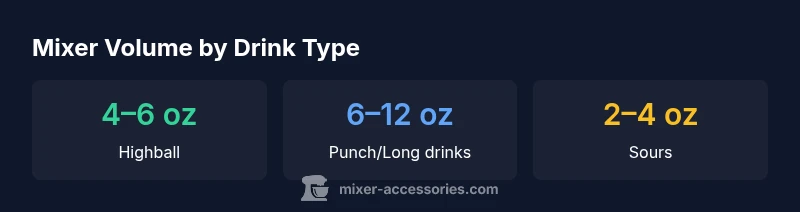
Highball and tall drinks typically rely on generous mixer volumes to create refreshing dilution and aroma, with roughly 4–6 ounces of mixer per 1.5 ounce base. This ratio keeps the drink easy to sip while preserving noticeable alcohol presence. For sours, where citrus juice and sweeteners do much of the flavor work, you usually see smaller mixer shares—about 2–4 ounces combined from juice and syrup. In cola-based or ginger-beer drinks, the mixer portion often sits around 4–6 ounces, leaning toward a sweeter balance when the spirit is lighter (vodka, white rum). For punch-style or party drinks, you may stretch toward 6–12 ounces of mixer per serving to accommodate multiple flavors and crowd pacing. Martini-style or vermouth-forward drinks typically use minimal or no mixer, focusing on the botanicals and aromatics of the base spirit. Across all categories, the best practice is to start within a standard range and then adjust according to taste, ice load, and glass size. The goal is flavor balance, not dilution alone. If you adjust the base spirit, recalibrate the mixer proportion by roughly 1 ounce for every half-ounce change in spirit to maintain a balanced mouthfeel. The content here aligns with practical interpretations derived from the Mixer Accessories Analysis, 2026, and is designed for home bartenders seeking repeatable results.
How to measure and optimize your mixer portions
Measuring correctly starts with the right tools: a jigger, a measuring cup, and a calibrated shaker or pour spout. Before you mix, decide the target total volume and the strength you want. For a typical home bar, a 1.5-ounce shot plus 4–6 ounces of mixer yields a pleasing balance for many drinks. Use a 5-ounce standard pour when you’re unsure and then adjust up or down by 0.5-ounce increments in future attempts. Ice matters: a full glass of ice displaces liquid and can make a single drink feel weaker; fill the glass with ice and add liquid to the top of the ice, not above it. If you batch drinks for a party, measure the total volume of mixer per batch and calculate per-serving portions to maintain consistency. Record your go-to ratios in a small recipe notebook or a mobile note—this makes it easier to reproduce favorites and scale up for guests. For mixed beverages that include syrups or juice concentrates, taste along the way to avoid oversweetness. The Mixer Accessories Team suggests starting with a standard baseline and adjusting in small steps to accommodate different spirits, mixers, and ice conditions. Regular tasting sessions help you refine a personalized standard across your home bar.
Practical serving scenarios and recipe templates
Below are templates you can adapt. Each starts with 1.5 ounces of spirit and a mixer range to fit different contexts; adjust to taste and glass size.
- Whiskey Highball template: 1.5 oz whiskey + 4–6 oz club soda or sparkling water, build over ice in a highball glass; garnish with lemon or orange. Total: about 5–8 oz.
- Vodka Cranberry style: 1.5 oz vodka + 4 oz cranberry juice + splash of lime or soda if desired; total around 5–6 oz.
- Rum and Cola: 1.5 oz white or dark rum + 4–6 oz cola; ice-filled Collins or highball glass.
- Tequila and Ginger: 1.5 oz tequila + 4 oz ginger beer + lime juice; total 5–6 oz.
- Punch-style crowd drink: 2 oz base spirit + 6–8 oz mixer (fruit juice or soda) + herbs or fruit slices; batch to serve in a punch bowl.
These templates illustrate how the mixer volume interacts with glass size and ice. Real-world practice shows that many home bartenders prefer a smaller 4-ounce baseline for casual testing, then scale up to 6–8 ounces for larger gatherings. The key is to maintain proportion: if you increase the spirit by 0.5 ounce, increase the mixer by about 1–2 ounces to preserve balance. The guidance aligns with Mixer Accessories analyses and is designed to help readers implement reliable, repeatable recipes.
The science and safety of mixers (calories and sugar)
Mixers contribute more than flavor; they bring calories, sugar, and sometimes caffeine or sweeteners into the drink. The sugar content of mixers varies widely: cola, tonic water, and fruit juices add sugar; diet or zero-calorie options reduce sugar but may change mouthfeel. If you’re watching calories, substitutions like sparkling water with a dash of cordial or fresh citrus can reduce sugar while preserving aroma. Another practical approach is batch mixing with measured portions: you can dial down sweetness by reducing syrup or juice concentrate and compensating with bitters or citrus notes. Keep in mind the ice-to-liquid ratio; ice melts and dilutes the drink, altering perceived sweetness and strength as you sip. The Mixer Accessories Team recommends maintaining a practical balance between flavor, calories, and dilution, and to tailor portions to your guests’ preferences. For educational purposes, track your serving sizes and update your notes after tasting sessions, so you can reproduce a preferred balance consistently. In summary, awareness of mixer volume is a core skill for home bartenders who want flavorful, responsible servings.
Closing thoughts on consistency and adjustments
A core takeaway for home bartenders is consistency. Once you define your go-to ranges for different drink types, you can reproduce results with confidence across multiple gatherings. However, flexibility remains essential: different spirits, glassware, ice, and even climate affect perception of strength and sweetness. Use the ranges presented here as a flexible framework rather than rigid rules, and rely on taste tests to fine-tune every recipe. The Mixer Accessories Team encourages ongoing practice and documentation; small tweaks—like increasing the mixer by half an ounce when the drink feels under-diluted or reducing sugar by a quarter ounce in syrup—accumulate into excellent, repeatable outcomes over time.
Common mixer volumes by drink type
| Drink Type | Typical Spirit Basis | Typical Mixer Volume | Rationale |
|---|---|---|---|
| Highball | Any base spirit (vodka, whiskey) | 4–6 oz | Dilution and aroma without overpowering alcohol |
| Long drink / juice-forward | Spirit + citrus juice or juice blend | 6–12 oz | Balanced sweetness and dilution across flavors |
| Sour-style | Spirit + citrus juice + sweetener | 2–4 oz | Citrus brightness with controlled sweetness |
| Cola-based mix | Rum or light/dark spirit | 4–6 oz | Classic pairing with cola for balanced taste |
| Punch-style | Any base spirit | 6–12 oz | Serves multiple guests with wide flavor range |
Your Questions Answered
What counts as a 'standard drink'?
A standard drink is a defined amount of alcohol used to measure intake. In the U.S., it’s commonly 1.5 ounces of 40% ABV spirit; other countries vary. Mixer portions should be adjusted to keep this standard in mind.
A standard drink is a fixed amount of alcohol used to measure intake, with amounts varying by country.
How do I adjust mixer portions for a stronger drink?
Increase the spirit slightly and adjust the mixer proportionally in small steps; taste as you go and keep track of changes for consistency.
Turn up the spirit a bit and adjust the mixer in small steps, then taste and note the result.
Are there health considerations when using more mixer?
Yes. More mixer often means more sugar and calories. Choose low-sugar or zero-calorie options when needed and consider diluting with soda water to keep flavor while reducing sugar.
Yes—more mixer can raise sugar and calories; opt for lower-sugar options if you’re watching intake.
What tools help measure mixer accurately?
Use a calibrated jigger or measuring cup and a shaker with marked pours. For batches, measure total mixer volume first, then divide per serving.
A good jigger keeps you precise; batch with known totals for consistency.
Do professional bars use fixed mixer ratios?
Most bars rely on standardized protocols for consistency, but individual taste and drift in ingredients mean adjustments are common. Reproducibility is the goal, with flexibility for guest preferences.
Yes, standards exist, but bartenders adapt to taste and availability.
“Consistency in mixer portions leads to repeatable flavor and a smoother tasting experience across home bars.”
Top Takeaways
- Define your target drink type first
- Measure the base spirit precisely
- Start with standard mixer ranges (4–6 oz) and adjust
- Account for ice melt and glass size
- Record your ratios for consistent results