Difference Between a Mix and a Remix: A Practical Comparison
Explore the difference between a mix and a remix with clear definitions, practical guidelines, and real-world examples for home cooks, bar enthusiasts, and audio hobbyists.


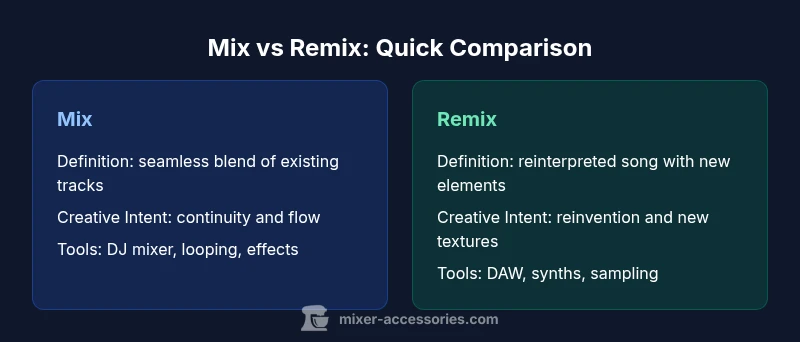
The difference between a mix and a remix hinges on intent, source material, and production approach. A mix blends existing tracks to create a continuous listening flow for a specific context, such as a live set or radio edit. A remix rewrites or reimagines the original song, adding new elements, changing tempo, or altering structure for reinvention. In short, a mix emphasizes continuity; a remix emphasizes reinvention.
Definitions and Core Concepts: what the difference between a mix and a remix means in practice
At its core, the difference between a mix and a remix centers on intent and treatment of source material. A mix is a curated sequence or blend of songs or stems designed to feel like a single, cohesive sonic journey. It prioritizes tempo flow, harmonic compatibility, and seamless transitions to keep listeners engaged from start to finish. By contrast, a remix takes the original track as a foundational idea and retools it—adding new instrumentation, adjusting the tempo, or restructuring sections to create a distinct new item. The difference between a mix and a remix is not merely a label; it signals how the creator negotiates authorship, licensing, and audience expectations. For clarity, think of a mix as a living mix tape for a moment in time, and a remix as a reimagined artifact that stands on its own. When you encounter the term difference between a mix and a remix, you are looking at two distinct creative strategies that serve different purposes and contexts.
Historical Context: the roots of mixing and remixing in music culture
The concept of a mix originates with DJs who stitched together records to form a continuous set, often emphasizing beatmatching and seamless transitions. Over decades, the mix evolved into radio edits and club-friendly blends that preserve recognizable elements while guiding the energy of the room. Remixes emerged from studio culture where producers reinterpreted songs, sometimes changing genres, adding new vocals, or rethinking the arrangement. The difference between a mix and a remix reflects two parallel creative trajectories: one anchored in live interpretation and flow, the other rooted in studio reinvention and recontextualization. As technology advanced, both practices expanded—digital software made precise edits easier, and stock libraries offered new sounds for both mixing and remixing.
Creative Intent: when continuity beats reinvention versus reinvention beats continuity
The difference between a mix and a remix becomes most evident in intent. A mix aims to preserve the character of the original material while curating a new listening journey. In contrast, a remix seeks to transform the material—altering tempo, adding new melodic hooks, changing instrumentation, or shifting the genre—so the piece feels like something altogether new. For practitioners, this distinction impacts decisions about arrangement, track selection, and collaboration. A well-executed mix feels cohesive and alive as a set; a strong remix provides a fresh hearing of a familiar song, inviting listeners to experience it anew. The balance between fidelity to the source and creative reinvention is the central axis along which the difference between a mix and a remix unfolds.
Source Material and Rights: navigating licensing and attribution in mixes and remixes
The difference between a mix and a remix also involves rights and licensing. A mix often aggregates tracks under the rider of a club, radio, or streaming context, sometimes relying on permissive licenses that allow use within curated sets. A remix typically requires permission or licensing from the original rights holder because it transforms the core work, creating a derivative work that may be distributed commercially. Clear attribution remains important for both, but the legal mechanics tend to be stricter for remixes due to the altered creative content and potential revenue streams. In practice, producers should secure appropriate permissions or work with licensed samples to avoid disputes, especially when distributing remixes on major platforms.
Process and Workflows: how a mix is built versus how a remix is produced
A typical mix workflow emphasizes flow, tempo compatibility, and live performance considerations. Practitioners select tracks that share tempo ranges or keys, then craft transitions, loops, and effects to maintain energy through the set. A remix workflow, on the other hand, starts from the original master or stems and proceeds through creative re-sampling, new arrangement design, and often a new instrumental palette. The difference between a mix and a remix becomes most apparent in the production timeline: mixes may be assembled from existing tracks with minor edits; remixes involve significant original contributions and re-recording or reprogramming of parts. The end result reflects the intended experience—continuous listening in one case, a reimagined work in the other.
Tools and Techniques: comparing hardware, software, and skills for mixes and remixes
Makers of both types leverage a mix-friendly toolkit: a reliable DAW, a capable mixer, drum machines, and sample libraries. For mixes, engineers emphasize phrasing, beatmatching, and crossfades, often using EQ and effects to smooth transitions. Remixes lean more on sound design—synthesis, resampling, and layering new elements—to achieve a distinct identity. While a good mix stresses curation and timing, a strong remix showcases creative production choices. Familiarity with keyboard shortcuts, automation, and tempo mapping helps both approaches, but the production demands for a remix tend to be higher because of the need to re-create much of the sonic landscape.
Contexts and Audiences: where listeners encounter mixes versus remixes
Differs in venue and platform. Live sets, club nights, and radio mixes present the difference between a mix and a remix through real-time energy management and crowd response. Remixes appear as official releases, streaming staples, and chart-worthy productions that reframe a song for specific genres or demographics. The difference between a mix and a remix is thus not only a technical distinction but also a social one: audiences expect continuity from a live mix and novelty from a remix, and producers tailor their approach accordingly.
Common Pitfalls and Misconceptions: avoiding conflating terms
A frequent mistake is assuming that a longer track length equals a remix, or that every re-edit is a remix. Another pitfall is neglecting licensing when distributing a remix commercially, which can lead to takedowns or rights disputes. Conversely, some DJs release “mashups” that blend elements from multiple songs—these occupy their own space but share a vocabulary with both mixing and remixing. The difference between a mix and a remix hinges on the creative process, not solely on the presence of new elements. Clear communication about intent and process helps audiences and collaborators avoid confusion.
Practical Guidelines for Creators: deciding between a mix and a remix for your project
If your goal is to curate a listening journey with cohesive energy, a well-crafted mix is often the best choice. If you aim to reinterpret a song, reveal new textures, or reach a different audience, a remix is usually more appropriate. Start by clarifying ownership, licensing, and distribution plans. Build a roadmap that accounts for tempo, key relationships, and sonic identity. Practice both approaches to develop a flexible skill set, and seek feedback from peers to refine your technique. The difference between a mix and a remix becomes practical when you apply structured workflows and transparent licensing practices.
Real-World Examples and Case Studies: notable mixes and remixes across genres
Across electronic, pop, and hip-hop scenes, both mixes and remixes have shaped careers. A classic dancefloor mix is crafted to sustain momentum and vibe, while a breakthrough remix can redefine a track’s appeal by introducing a new groove or vocal treatment. Studying successful cases can illuminate how the difference between a mix and a remix contributes to an artist’s brand, audience reach, and market strategy. Producers often publish behind-the-scenes notes detailing their decisions about the source material, tempo choices, and mixing strategies, offering tangible lessons for aspiring creators.
The Kitchen and Bar Analogy: translating the concept for the Mixer Accessories audience
In the kitchen and bar world, we often speak of a “mix” as blending ingredients to create a harmonious drink or dish, emphasizing balance and flow. A “remix” is akin to a recipe remix—taking a classic and adding new flavors or techniques to reinvent it. The difference between a mix and a remix in this context mirrors the musical idea: one focuses on continuity and consistency of the base flavor, while the other centers on reinvention and discovery. For home cooks and bar enthusiasts exploring beverage mixers, the analogy helps articulate why some projects demand faithful replication and others reward creative experimentation. This cross-domain perspective is a practical reminder that the core concept—intent driving technique—applies whether you’re mixing audio or cocktails.
Common Misconceptions Debunked: quick clarifications
- A longer duration does not automatically make something a remix. Length can be a stylistic choice in a mix.
- A remix does not require new vocal parts; it can reinterpret with instrumental changes or recombined stems.
- A mashup is distinct from both a mix and a remix, even though it may share overlap in materials and techniques. Understanding these boundaries helps avoid labeling mistakes and improves collaboration across projects.
Comparison
| Feature | Mix | Remix |
|---|---|---|
| Definition | A curated blend of tracks to create a seamless listening experience. | A reimagined version of the original song with new elements and structure. |
| Creative Intent | Continuity, flow, and context within a set or playlist. | Reinvention, genre-shifting, and new artistic interpretation. |
| Source Material | Existing tracks or stems stitched together with transitions. | The original work is reworked or rebuilt using new components. |
| Typical Tools | DJ mixers, looping, effects, and crossfades. | DAWs, synths, samples, and re-amping of tracks. |
| Rights & Licensing | Licensing depends on context; often managed for venues or broadcast. | Remixes generally require permission or licenses from the rights holder. |
| Audience & Context | Live sets, clubs, and radio edits for exposure or performance. | Official releases on streaming platforms or sales for artists. |
| Production Time | Typically shorter and relies on arranging pre-existing elements. | Often longer and involves original production work and testing. |
| Typical Outcome | A cohesive journey or mix-tape feel. | A distinct, new version that can stand as its own track. |
The Good
- Clear terminology improves team communication
- Educational value for beginners and hobbyists
- Facilitates licensing planning for venues and broadcasts
- Supports consistent practice with defined approaches
Negatives
- Terminology overlap can confuse newcomers
- Labels evolve; terms may drift over time
- Overemphasis on labels can discourage experimentation
Remixes excel at reinvention; mixes excel at flow and live context
Choose a remix when you want to redefine a track and attract a new audience. Choose a mix when your priority is a seamless listening journey or performance flow.
Your Questions Answered
What is the primary difference between a mix and a remix?
The primary difference is intent and treatment of source material. A mix creates a continuous listening journey by blending existing tracks, while a remix reinterprets the original song with new elements, often changing tempo and structure.
In short, a mix blends for flow; a remix reinvents for novelty.
Do I need permission to create a remix?
Remixes typically require permission or licensing from the original rights holder because they create a derivative work. Always verify licenses before commercial release or distribution.
Yes—seek the rights before releasing a remix.
Is a radio edit considered a remix or a mix?
A radio edit can be a remix if it reinterprets the track for radio-friendly pacing, but many radio edits are simply shortened mixes. The distinction depends on creative alterations beyond length.
It depends on whether the track was reimagined or just shortened.
Can a mixtape be a remix?
A mixtape is typically a curated set of tracks, not a single track reimagined. It can include remixes within the mix, but the term itself does not imply remixing the original work.
Mixtape refers to a collection of tracks, not a single remix.
What tools are common for making remixes versus mixes?
Remixes often rely on DAWs, sample packs, and synthesis for new elements, while mixes leverage DJ hardware, looping, and effects to stitch tracks together smoothly.
Remixes stack new sounds; mixes weave existing tracks.
How do licensing and rights vary between a mix and a remix?
Mixes can be covered under venue or broadcast licenses in many contexts, but remixes usually require permissions from the copyright owner and may involve royalties or licensing agreements for distribution.
Licensing for remixes is typically stricter and more explicit.
Are there occasions when a mashup fits better than a mix or remix?
Yes. A mashup combines elements from multiple tracks into a new composite; it sits between mixing and remixing and demands clear rights for all components. It’s a distinct approach with its own licensing considerations.
A mashup blends sources into a new piece and needs clear rights.
Top Takeaways
- Know the fundamental definitions of mix and remix
- Base your approach on intent: continuity vs reinvention
- Plan licensing and rights early in your workflow
- Develop both skill sets for versatility
- Apply practical examples to real projects