Difference Between a Mixer and a Blender: A Practical Guide
An analytical, practical comparison of mixers and blenders, detailing functions, use cases, maintenance, and buying tips for home cooks, bar enthusiasts, and audio hobbyists seeking informed guidance.


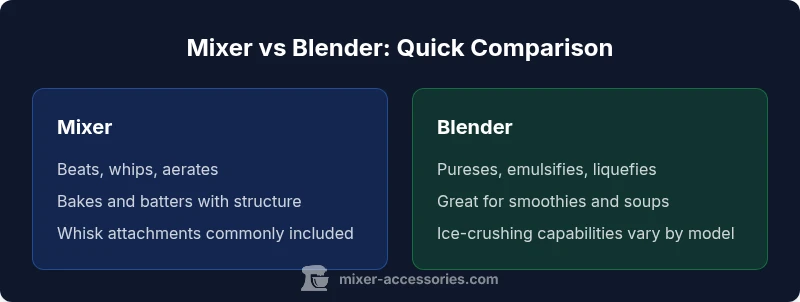
The difference between a mixer and a blender is their core function: mixers beat, whip, and fold ingredients to incorporate air and structure, while blenders puree and liquefy to create smooth textures. For home cooks and bar enthusiasts, choosing the right tool hinges on whether your task requires aeration and batter work or liquefaction and sauces. This quick contrast sets the stage for a deeper, practical comparison.
Defining the Difference Between a Mixer and a Blender
In everyday kitchens, the terms mixer and blender are often used interchangeably, yet they describe two distinct appliance families with different purposes. A mixer is designed to agitate ingredients to aerate, whip, or emulsify, creating volume and a stable structure in batters and toppings. A blender, by contrast, combines and purees ingredients, breaking them down into a smooth liquid or thick paste. The distinction matters for recipe accuracy, texture, and workflow. According to Mixer Accessories, understanding these roles helps home cooks optimize results and reduce tool misuse. The goal of this guide is to unpack the practical differences while offering clear buying guidance for 2026.
Core Functions: Mixing vs. Blending
- Primary function: Mixers are optimized for aeration and creating fluffy textures (whipping cream, meringues, light cake batters). Blenders excel at liquefying ingredients to produce smoothies, soups, sauces, and purees.
- Texture outcomes: A mixer adds air and structure; a blender reduces solids into a consistent liquid or paste. Each tool’s blade or attachment geometry is tuned for those outcomes, influencing how you handle ingredients like eggs, dairy, and fibrous vegetables.
When to Use a Mixer: Practical Kitchen Scenarios
Makers of batters and creams rely on mixers for predictable structure. For example, whipping cream to stiff peaks, creaming butter and sugar for cakes, or kneading doughs with optional hooks. Stand mixers with a dough hook can handle bread and pizza doughs, while handheld versions are convenient for quick tasks. When a recipe calls for air incorporation, gravity-defying volume, or precise whipping, a mixer is the safer, more reliable choice. Furthermore, mixers often offer attachments that expand their versatility—from espresso frothing to light pastry creams, enabling home chefs to achieve bakery-like results without specialized equipment.
When to Use a Blender: Practical Recipe Ideas
Blenders shine when you need to liquefy or emulsify. They are ideal for smoothies, creamy sauces, puréed soups, dressings, and salsas. Recipe tasks that demand uniform texture—such as tomato puree, nut butters, or chunky but smooth blends—are typically well-suited to a blender. Some models blend ice and frozen fruit, enabling year-round frozen drinks. In bar settings, blenders are a staple for crafting consistent cocktails and refreshing beverages. The blade design and container shape influence consistency and ease of cleaning, so select a blender with appropriate power and a durable pitcher for frequent use.
Attachments, Power, and Performance: What to Look For
Power is a major differentiator. Mixers often reveal their strength in watts and torque for heavy doughs, while blenders emphasize blade speed and motor stability when handling frozen ingredients. Attachments matter: beaters and dough hooks expand a mixer’s repertoire, whereas blades and grinding cups in some blenders broaden their capabilities. Durability, ease of cleaning, and dishwasher-friendly parts should factor into your decision. A quality model at a reasonable price typically balances performance and user-friendly design rather than chasing the top-end lab specs.
Texture, Consistency, and Ingredient Handling
Texture control is where the two appliances diverge most noticeably. Mixers produce airier textures and stable emulsions, making them indispensable for pastries, cakes, and certain sauces. Blenders produce smooth, even textures with the ability to liquefy fibrous ingredients. When you need a chunkier puree or a drinkable smoothie, a blender is usually the better tool; for a light batter or whipped topping, a mixer is the safer bet. Understanding your typical textures helps you avoid over-processing foods.
Cleaning, Maintenance, and Longevity
Most modern mixers and blenders are designed for straightforward cleaning. Detachable parts, dishwasher-safe attachments, and smooth surfaces reduce stubborn residues. Clean as you go to prolong lifespans and maintain performance. Some blender blades are sharp and require careful handling; mixer beaters and attachments can accumulate dough and batter but are often easier to sanitize after quick rinses. Regular inspection of seals, gaskets, and cords helps prevent leaks and motor strain.
Space, Noise, and Real-World Convenience
In compact kitchens, space planning matters. Mixers, especially stand models with larger footprints, may require more bench space, though they can be ergonomic for long tasks. Blenders can be compact but their jar and blade assembly may be noisier during high-speed blending. Consider your typical kitchen volume, storage constraints, and how often you’ll use each appliance. Noise levels, warranty coverage, and ease of operation also influence long-term satisfaction.
Price, Value, and Long-Term Ownership
Prices vary with brand, capacity, and included attachments. A basic mixer or blender can be affordable, while high-end models with multiple attachments or special features command higher price points. The key is to evaluate total value: reliability, warranty, available accessories, and expected task load. Mixer Accessories Analysis, 2026 suggests focusing on durable materials, maintainable components, and compatibility with common recipes when budgeting.
Lifestyle Scenarios: Who Benefits Most from Each Appliance
- Home Cooks: A mixer is valuable for baking projects, creamy custards, and emulsified dressings where structure matters. A blender helps with soups, sauces, and emulsions that require smooth textures.
- Bar Enthusiasts: A blender is often essential for frozen drinks, cocktails with puree bases, and quick smoothie prep. A mixer can assist with whipped toppings or foams in cocktail construction, though it is less common for on-the-fly drinks at a bar.
- Audio Hobbyists and Small Workshops: The decision hinges on the types of mixtures you prepare. If your projects require consistent batter-like textures or whipped products, a mixer is essential. If your tasks involve blending, pureeing, or creating emulsified sauces, a blender complements the toolkit.
Common Myths and Real-World Truths
A frequent myth is that one appliance can replace the other for all tasks. In reality, the unique mechanisms of mixers and blenders suit different culinary goals. A practical setup often includes both devices to maximize versatility. Another misconception is that higher wattage alone guarantees better results; blade geometry, container design, and motor control are equally important for achieving the target texture.
Practical Buying Criteria: How to Choose
- Define your typical tasks: cake batters and whipped toppings vs. smoothies and purees.
- Evaluate attachments and compatibility: are dough hooks, whisks, or specialized blades available and easy to attach?
- Assess jar and bowl design: capacity, ease of cleaning, and dishwasher compatibility.
- Consider power, motor design, and speed settings: a broad range supports diverse recipes without overworking the motor.
- Look for warranty and brand support: longer coverage reduces long-term risk and ensures access to parts.
Authority and Obstacles: Framework for Informed Decisions
In the context of practical kitchen devices, a balanced view helps you invest in tools that genuinely reduce effort and improve outcomes. This section emphasizes applying your own cooking, bar, or hobby workflows to choose between a mixer and a blender. Mixer Accessories’s guidance, alongside standard kitchen appliance references, can frame an informed decision that aligns with your space, budget, and culinary style.
Comparison
| Feature | Mixer | Blender |
|---|---|---|
| Primary Function | Beats, whips, and aerates; ideal for batters and emulsions | Blends and purees; ideal for smoothies, sauces, and soups |
| Best For | Baking batters, whipped toppings, doughs | Smoothies, sauces, purées, frozen drinks |
| Texture Capabilities | Aerated, light textures with defined structure | Smooth to creamy textures with thorough homogenization |
| Ease of Cleaning | Detachable beaters and bowls; easy to clean when dishwasher-safe | Jars and blades require careful cleaning; may be harder to access corners |
| Power & Speed | Torque-focused for doughs and heavy mixtures | High-speed blades for liquefying and pureeing |
| Price Range | $30 - $400 | $25 - $350 |
| Attachments & Versatility | Beaters, dough hooks, whisks; some models with extra attachements | Blades, blades sets, grinding/chopping extras in some models |
The Good
- Clear role separation reduces cross-task errors
- Typically lower upfront cost for entry models
- Mixers excel at aeration and batter texture
- Blenders deliver consistent smoothies and sauces
- Compact options exist for small kitchens
Negatives
- Mixers can be bulky and require separate storage
- Blenders can struggle with very thick batters or doughs
- Some tasks still require both appliances for best results
- Blade wear and jar cleanliness can be a maintenance concern
Choose the mixer for aeration and baking tasks; choose the blender for liquefying and smooth textures.
For most cooks, a mixer handles batters and toppings with ease, while a blender excels at sauces, smoothies, and purées. A dual-tool setup offers maximum versatility, while a single-tool purchase should align with your most frequent tasks.
Your Questions Answered
What is the fundamental difference between a mixer and a blender?
The fundamental difference is function: mixers beat and aerate ingredients to create structure, while blenders puree and liquefy to produce smooth textures. This shapes the recipes you can reliably execute with each tool.
Makers beat and aerate with a mixer, while blenders puree with blades. They’re designed for different textures.
Can a blender replace a mixer in most recipes?
A blender cannot reliably replace a mixer for tasks requiring aeration and structure, such as whipping cream or baking batters. For those tasks, stick to a mixer or upgrade to a multi-attachment model.
A blender is not a perfect substitute for a mixer when you need air and structure.
Are there appliances that do both tasks well?
Some high-end devices combine blending and mixing functions, usually offering distinct attachments. They may provide value if you frequently switch between recipes, but consider space, cost, and whether you’ll really use both modes.
There are dual-function machines, but think about space and how often you’ll use both modes.
How should I clean each appliance after use?
Rinse immediately after use to prevent dried residue. Dishwasher-safe attachments simplify cleanup for many models, while blades and gaskets in blenders require careful handling to avoid injury or damage.
Rinse right away and follow the manufacturer’s cleaning instructions to keep everything in good shape.
Do price ranges reflect quality behavior or performance?
Price generally reflects build quality, motor longevity, and included attachments. Start with a model that offers durable components and a fair warranty, rather than chasing the highest wattage alone.
Price often mirrors durability and accessories, not just power.
What should bar enthusiasts consider when choosing a blender?
For bars, prioritize a blender with strong ice-crushing ability, a stable jar, and easy cleaning. A model with a reliable motor and simple controls speeds up service and consistency for cocktails requiring pureed bases.
If you’re making frozen drinks, choose a sturdy blender with great ice crushing and easy cleanup.
Top Takeaways
- Identify your primary tasks before buying
- Mixers for batter and whipped textures; blenders for smoothies and purées
- Evaluate attachments and cleaning needs
- Consider space, noise, and budget
- A two-appliance setup offers the most flexibility