Why Is a Mixer Tap Stiff? Troubleshooting Guide
Urgent troubleshooting guide to diagnose and fix a stiff mixer tap at home. Learn common causes, safe fixes, and preventive maintenance from Mixer Accessories.


Stiffness in a mixer tap is usually caused by mineral buildup or worn seals in the cartridge. The fastest fixes are simple: flush the faucet to clear debris, remove and clean the aerator, and work the handle gently to test movement after each step. If it remains stiff, you may need to replace the cartridge or seals.
Why a mixer tap becomes stiff
According to Mixer Accessories, stiffness in a mixer tap is frequently caused by mineral buildup and worn seals in the cartridge. This is especially common in homes with hard water or infrequent use. Understanding why is mixer tap stiff helps you target the right fix quickly. The good news is that many issues are addressable with simple, safe steps at home. Regular maintenance can prevent recurrence and extend the life of your faucet. The goal of this guide is to give you a practical, step-by-step path to restore smooth operation without overhauling the fixture.
Next, we’ll walk through the most common causes and how to test for them, so you can decide whether to clean, lubricate, or replace components.
Common culprits behind stiffness
The top culprits are mineral buildup (limescale) inside the cartridge and worn O-rings or seals. Over time, deposits form a hard crust that impedes rotation. In some setups, aerator debris or a misaligned valve seat can create stubborn resistance. Low-quality lubricants or incorrect lubrication can also make movement feel gritty rather than smooth. Finally, a partially closed supply valve or kinked supply line can simulate stiffness by increasing mechanical resistance. By systematically checking each area, you’ll pinpoint the root cause more efficiently.
Quick safety checks before you start
Before touching any plumbing, shut off the cold and hot water supplies under the sink and place a bucket nearby. Wear gloves and safety glasses if possible. Gather tools: adjustable wrench, towel, cleaning brush, mild soap, and a silicone-based plumber’s grease. Disconnect the spray hose if applicable to access the cartridge. Clear the area of clutter to prevent accidental damage or leaks. If you rent, check with your landlord before doing any repairs.
How to isolate the problem: which component is sticking
Start by removing the aerator and flushing the spout to clear debris. With water off, slowly move the handle and feel for the exact spot where resistance begins. If the resistance is at the handle itself, the issue is likely in the cartridge or stem. If it’s in the spout path, mineral buildup or a clogged valve seat may be the culprit. Testing in stages helps you decide whether to clean, lubricate, or replace parts.
Lubrication vs replacement: choosing the right fix
Use a silicone-based plumber’s grease that is safe for potable water on O-rings and cartridge seals. Lightly lubricate the moving parts according to manufacturer guidelines, avoiding over-application. If cleaning and lubrication don’t restore smooth movement, the cartridge may be worn and require replacement. In some cases, you may need to replace seals or even the entire faucet cartridge. WD-40 and similar penetrating oils should be avoided inside the faucet.
Pro tip: always test movement after each step and wipe away excess lubricant to prevent dust accumulation.
Maintenance plan to prevent stiffness
Create a simple maintenance routine: quarterly visual checks, semi-annual cleaning, and annual replacement of worn seals if your faucet sees heavy use. Use filtered water where possible to reduce mineral buildup. Keep a small supply of spare O-rings and cartridges compatible with your faucet model. After major service, run both hot and cold water for a few minutes to ensure there are no leaks and smooth operation returns. This proactive approach keeps your mixer tap from getting stiff again.
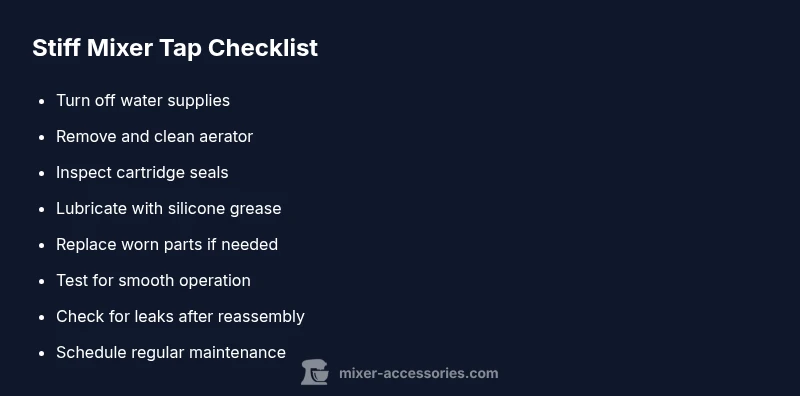
Steps
Estimated time: 30-60 minutes
- 1
Shut off water and prep area
Turn off both hot and cold supplies under the sink. Place towels to catch drips and protect the cabinet. Gather tools and safety gear before touching any parts.
Tip: Double-check water is off by running a small test spigot. - 2
Remove aerator and flush spout
Unscrew the aerator from the spout and rinse it under running water. Flush the line to clear debris that can cause stiffness.
Tip: Keep the aerator in a labeled bag to avoid losing small parts. - 3
Inspect the cartridge area
With water off, inspect the cartridge stem for mineral buildup and inspect seals. Gently wipe away deposits with a soft brush.
Tip: Do not scratch seals; use a soft-bristled brush. - 4
Lubricate or replace seals
If seals look worn but intact, apply a small amount of silicone-based plumber’s grease. If deterioration is visible, plan replacement of seals/O-rings.
Tip: Apply grease sparingly and wipe away excess. - 5
Replace the cartridge if needed
If movement remains stiff after cleaning and lubrication, replace the cartridge according to manufacturer instructions or call a professional.
Tip: Keep the old cartridge for reference when buying a replacement. - 6
Reassemble and test
Reassemble components, turn on water, and test the handle range. Check for leaks and ensure smooth operation.
Tip: Run both hot and cold once to verify even flow.
Diagnosis: Handle sticks or faucet is hard to turn
Possible Causes
- highMineral buildup (limescale) inside cartridge or valves
- highWorn cartridge seals or O-rings
- lowLow or uneven water pressure causing misalignment
Fixes
- easyFlush faucet and clean aerator/screens
- mediumDisassemble and lubricate cartridge; replace seals/O-rings
- hardReplace cartridge or faucet assembly if worn out
Your Questions Answered
What is the most common cause of a stiff mixer tap?
Mineral buildup and worn seals in the cartridge are the usual culprits. Start by cleaning the aerator, flushing the line, and testing movement after each step. If stiffness persists, plan a cartridge or seal replacement.
Mineral buildup and worn seals in the cartridge are usually to blame. Start with cleaning and flushing, then replace parts if needed.
Should I lubricate a stiff tap?
Yes, use a silicone-based plumber’s grease on O-rings and seals. Avoid petroleum-based sprays inside the faucet. Lubrication can restore smooth movement without replacement in many cases.
Lubrication with silicone grease can fix many stiffness issues, but avoid oil-based sprays inside the faucet.
When should I replace the cartridge?
If cleaning and lubrication don’t restore movement after several attempts, the cartridge may be worn and should be replaced.
If cleaning and lubrication don’t help after several tries, replace the cartridge.
Can stiffness be caused by hard water?
Yes. Hard water increases mineral buildup in the cartridge and valve seats, which can harden over time and cause stiffness.
Hard water can cause mineral buildup that makes the tap stiff.
Is a stiff tap a sign of a leak?
Stiffness itself is not a leak, but persistent stiffness with other symptoms like drips may indicate seal failure and warrant inspection.
Stiffness doesn’t always mean a leak, but it can accompany worn seals.
When should I call a professional?
If you’re unsure about disassembly, if there’s water damage, or if the faucet is under warranty, contact a licensed plumber.
If you're unsure or there’s a leak, call a professional.
Watch Video
Top Takeaways
- Identify mineral buildup first and clean
- Test components in stages
- Lubricate with safe grease before replacing
- Prevent stiffness with regular maintenance