How to replace mixer tap cartridge: A practical DIY guide
Learn how to replace a mixer tap cartridge with a clear, step-by-step approach. This guide covers safety, compatibility, installation, and troubleshooting to stop drips and restore smooth handle operation for home kitchens and bars.


According to Mixer Accessories, replacing a worn mixer tap cartridge can stop drips, restore smooth handle operation, and save water. This guide provides a Step-by-Step approach, essential tools, safety checks, and model-matching tips to help DIYers complete the job confidently.
What is a mixer tap cartridge and why it leaks
A mixer faucet uses a cartridge to regulate water flow and temperature. When the cartridge wears, deposits build up, or seals fail, you may notice drips, hard-to-turn handles, or uneven temperature control. According to Mixer Accessories Analysis, 2026, many leaks begin at worn O-rings or a damaged cartridge rather than at the faucet body itself. Understanding the cartridge type (ceramic disk vs. traditional cartridge) helps you choose the right replacement and avoid leaks in the future. A worn cartridge also wastes water and increases the risk of mineral buildup in the valve seats, which can affect performance over time.
Key takeaway: identify the cartridge type and inspect the seals to determine if replacement is the best option.
Safety and prep: turning off water and preparing your workspace
Before any disassembly, shut off both hot and cold water supplies to the faucet. Open the faucet to relieve pressure and drain remaining water in the lines. Clear your work area and place a bucket, towels, and a small tray to catch any drips. If your faucet has a plastic handle cover, remove it gently to avoid scratching the finish. A clean workspace reduces the risk of losing small parts and makes reassembly easier.
Why this matters: working with live water lines can cause scalding or flooding if you rush. Take a moment to set up a dry, organized area.
Identify your cartridge type and model compatibility
Cartridges come in different geometries and sizes. Ceramic disk cartridges are common in modern faucets for smooth operation, while older mixers may use a true cartridge with O-rings. To ensure compatibility, locate the faucet model number on the base or in the user manual, or remove the old cartridge and take it to a hardware store for matching. Some manufacturers use cartridge kits labeled for specific models; if you replace with an incompatible unit, leaks and improper operation can result. Always confirm the replacement part matches the cartridge stem shape, spline count, and overall length.
Practical tip: take a photo of the old cartridge in place before removal to compare pins, orientation, and seal placement.
Disassembly: removing the handle and bonnet
First, remove the faucet handle by locating the setscrew under a decorative cap or behind the handle. Use an appropriately sized screwdriver, then lift the handle away to expose the bonnet nut or retaining ring. With a basin wrench or adjustable wrench, loosen the bonnet nut carefully to avoid bending the faucet body. Keep track of any washers or springs that come loose and note their orientation for reassembly.
Why: correct disassembly ensures you don’t damage the valve body or misplace small parts that control cartridge seating.
Removing the old cartridge and cleaning the valve body
Extract the old cartridge using a cartridge puller or needle-nose pliers, turning slightly to release any binding. Inspect the valve body for mineral buildup and wipe the bore clean with a soft cloth. Check O-rings and seats for wear; replace any damaged seals before installing the new cartridge. If debris remains, a gentle flush with water helps clear passages. Storing the old cartridge in a labeled container helps with later reference for model matching.
Pro tip: avoid using metal tools that could scratch the cartridge bore; plastic picks or wooden toothpicks are gentler options for removing sediment.
Selecting and purchasing the replacement cartridge
Choose a replacement cartridge that matches the model and stem configuration (ceramic vs traditional). If you’re unsure, consult the faucet manufacturer’s compatibility chart or bring the old part to a hardware store. Confirm the cartridge’s height, width, and O-ring size, as an ill-fitting cartridge can fail to seal properly or cause leaks. Keep the receipt and record the faucet model in case you need future replacements.
Note: cartridge kits often come with new seals and grease; using these ensures a snug fit and longer life.
Installation: installing the new cartridge and reassembly
Align the new cartridge with the valve body, ensuring the stem orientation matches the prior setup. Gently push the cartridge into place until it seats fully, then reinstall any springs and O-rings. Reassemble the bonnet nut, decorative cap, and handle in the reverse order of removal. Reconnect supply lines and carefully turn the water back on, checking for leaks at the base, handle, and spout.
Warning: do not overtighten nuts, which can strip threads or crack the housing; snug with a wrench and test for movement and seal.
Testing, adjustments, and maintenance tips
With water supply restored, operate the mixer to check for smooth motion and proper temperature control. If a leak persists, re-tighten the bonnet nut slightly or reseat the cartridge. Run both hot and cold cycles to verify consistent performance across ranges. For ongoing performance, wipe the cartridge area after use and perform a light flush every few months to prevent mineral buildup. Consider applying a small amount of plumber’s grease to O-rings if included in the kit.
Maintenance note: keeping the cartridge area clean reduces future service intervals and extends faucet life.
Common troubleshooting after replacement
If drips continue after replacement, recheck cartridge orientation and seating, confirm no cross-threading on the bonnet nut, and inspect for damaged seals. A persistent leak at the cartridge may indicate deposits in the spout or a defective replacement part; in that case, re-open the faucet and try a different cartridge with verified compatibility. If you’re uncertain, consult a professional plumber to avoid water damage.
Bottom line: compatibility and correct seating are the two most critical factors for a leak-free install.
Tools & Materials
- Adjustable wrench(Locknut area; avoid over-tightening)
- Screwdrivers (flathead and Phillips)(For handle setscrews and bonnet caps)
- Cartridge puller or needle-nose pliers(Gently extract old cartridge without damage)
- Replacement cartridge (model-specific)(Match model, stem, and seal sizes)
- Replacement O-rings and seals(Keep compatible sizes ready)
- Grease for O-rings(Light lubrication if included with kit)
- Bucket, towels, and a tray(Catch drips and keep work area clean)
- Penetrating oil (optional)(Loosen corroded fittings if needed)
Steps
Estimated time: 45-75 minutes
- 1
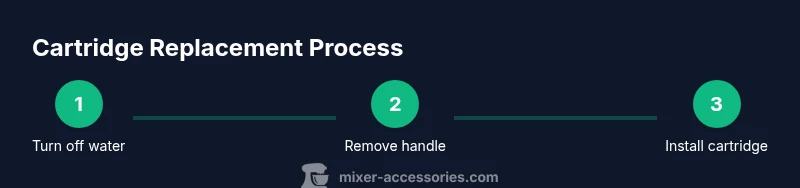
Turn off water and prepare the workspace
Shut off both hot and cold water supplies. Open the faucet to relieve pressure and drain residual water. Lay towels and a tray to catch drips, and keep small parts in a labeled container.
Tip: This reduces splash and helps you locate small screws later. - 2
Remove the faucet handle
Remove the decorative cap if present, then loosen the setscrew and lift the handle away to reveal the bonnet nut.
Tip: Keep the setscrew in a labeled bag to avoid losing it. - 3
Access the cartridge
Use a wrench to loosen the bonnet nut and carefully lift the bonnet cap to expose the cartridge.
Tip: Take note of the orientation of any springs or seals for reassembly. - 4
Extract the old cartridge
Using a cartridge puller or pliers, twist gently and pull the cartridge straight out. Inspect sealing surfaces for wear or mineral buildup.
Tip: Avoid forcing the cartridge; excessive force can damage the valve body. - 5
Clean and inspect the valve body
Wipe the bore clean and inspect O-rings and seats for wear. Replace any damaged seals before installing the new cartridge.
Tip: A clean bore ensures a snug seal with the new cartridge. - 6
Identify and purchase the replacement cartridge
Match the model number and cartridge type (ceramic disk vs traditional cartridge) to ensure compatibility.
Tip: Bringing the old cartridge or model number helps you pick the correct part. - 7
Install the new cartridge
Align the new cartridge with the stem, push firmly into place, and reassemble the bonnet nut and decorative cap.
Tip: Lubricate O-rings lightly if the kit includes grease. - 8
Reattach the handle and restore water
Reconnect the handle, turn the water back on, and test for leaks at the base and handle. Operate hot and cold to verify performance.
Tip: Run the faucet through multiple cycles to confirm even mixing. - 9
Final checks and optional maintenance
If leaks persist, recheck orientation and seating. Consider flushing lines periodically to prevent mineral buildup.
Tip: Document replacement parts for future maintenance. - 10
Optional post-install flush
With water off, briefly open hot and cold to flush the line before the final test.
Tip: This step can prevent particle clogs from reaching the cartridge. - 11
Document and tidy up
Store old parts for reference, label new cartridge, and wipe surfaces to restore the faucet’s finish.
Tip: A tidy workspace reduces chances of misplacing components.
Your Questions Answered
How do I identify which cartridge I have?
Check the faucet model number and reference the manufacturer’s cartridge compatibility chart. If needed, remove the old cartridge and compare its stem shape, size, and seal arrangement to available replacements.
Check the model number and compare the cartridge shape to replacements. If unsure, take the old part to a store for matching.
When should I replace vs repair a faucet cartridge?
If the cartridge shows deep wear, cracks, or persistent leaks after reseating, replacement is usually more reliable than repair. Minor leaks from O-rings may be addressable with fresh seals.
If wear is visible or leaks persist after reseating, replace the cartridge for reliability.
Do I need to shut off the water supply before starting?
Yes. Always shut off both hot and cold supplies and relieve pressure by opening the faucet. This prevents water from spraying and protects you from scalding.
Yes—turn off water first, then begin the replacement.
What if leaks persist after replacement?
Double-check cartridge orientation, seating, and seal integrity. If leaks continue, the replacement part may be defective or incompatible, and consulting a professional is advised.
If leaks persist, recheck orientation and seating or seek a professional.
Can I reuse old gaskets or O-rings?
If the seals are cracked or deformed, replace them with new O-rings. Reusing damaged seals can cause leaks.
Replace worn seals rather than reusing them to prevent future leaks.
Is cartridge replacement a DIY-friendly task?
Yes, for many standard faucets, cartridge replacement is a doable DIY task with basic tools. Model-specific instructions should be followed carefully to avoid damage.
Yes—many faucets can be DIY-repaired with the right part and careful steps.
Watch Video
Top Takeaways
- Identify whether your faucet uses a ceramic disk or traditional cartridge
- Match model numbers or cartridge geometry to ensure compatibility
- Disassemble with care to avoid damaging seals or the valve body
- Install the new cartridge with correct orientation and test thoroughly
- Keep replacement parts and documentation for future maintenance