When to Replace a Mixer Tap Cartridge: A Practical Guide
Discover how to determine when to replace mixer tap cartridge, understand cartridge types, and follow a step-by-step process to restore drip-free performance in kitchen and bathroom taps.


Learn when to replace a mixer tap cartridge and how to decide between repair and replacement. If your tap drips, feels stiff, or the handle has lost response, it's often a sign the cartridge is worn. Typical culprits include mineral buildup, worn O-rings, or a damaged stem. Replacing the cartridge restores reliability and saves water—start by confirming model compatibility, then follow a step-by-step replacement guide.
How a mixer tap cartridge works
A mixer tap cartridge is the core component that controls water flow and temperature. In most home taps, the cartridge sits inside the valve body and blends hot and cold water as you turn the handle. When the cartridge wears, it can no longer seal properly, leading to drips, temperature instability, and reduced flow. This guide explains the function to help you understand why replacement is sometimes the best fix, and it ties directly into the question of when to replace mixer tap cartridge. A worn cartridge is not just annoying—it wastes water, increases maintenance, and can accelerate wear on surrounding parts. The good news: with the right cartridge and a careful replacement, your faucet can return to near-new performance. Understanding when to replace mixer tap cartridge helps you act before leaks worsen and costs rise.
Signs your cartridge needs replacement
Several telltale symptoms indicate that a cartridge is nearing the end of its life. Drips that persist after tightening are common, as are sudden changes in temperature when you adjust the handle. A stiff or gritty feel is another warning sign, often caused by mineral buildup or worn seals. If you notice low water pressure from a single lever, or if the handle develops extra play or loose movement, the cartridge may be worn or misaligned. In some cases, a cartridge leak originates from O-rings or the stem rather than the cartridge itself, but symptoms typically worsen over time. If you observe any of these signs, budget for a replacement before the faucet starts leaking more or corroding other parts.
Cartridge types explained
Cartridges come in several designs, and recognizing the type helps you order the correct replacement. Ceramic-disc cartridges use two ceramic disks to regulate flow and temperature and are known for longevity and smooth operation. Cartridge-based mechanisms blend hot and cold water through a central stem, while ball-type faucets rely on a moving ball to control water. Each type has pros and cons, including sensitivity to water hardness, ease of replacement, and compatibility with standard parts. Confirm your faucet model before purchasing, because even within ceramic-disc cartridges there are size differences and seal configurations that affect fit. Understanding cartridge types is essential for choosing when to replace mixer tap cartridge.
How to identify model and compatibility
Start by locating the faucet model number on the escutcheon, cartridge, or packaging. Take precise measurements of the cartridge diameter, stem length, and the number of splines on the stem. Photograph the cartridge while removed for reference, and compare the dimensions to the replacement you intend to buy. If you aren’t sure, bring the old cartridge to a hardware store or check the faucet manufacturer’s website for a compatibility chart. Different brands can use different cartridge interfaces, and a wrong fit will leak or fail quickly. Identifying model and compatibility is a critical step in knowing when to replace mixer tap cartridge.
Replacement vs repair: when it’s worth it
Sometimes a worn cartridge can be repaired by replacing O-rings, seals, or worn springs. This can be cheaper in the short term, but it’s rarely a lasting solution if the core cartridge body is worn. Replacement is usually the simplest route when a cartridge is over several years old or when temperature control has degraded significantly. Weigh the cost of a new cartridge against potential labor time, the risk of leaks, and the availability of a compatible part. In many cases, a full cartridge replacement provides a longer, more reliable fix.
What shortens cartridge life
Hard water, mineral buildup, and aggressive cycling between hot and cold all stress the cartridge seals and O-rings. Sediment can accumulate under the seals, causing leaks or rough movement. Frequent disassembly or overtightening during maintenance can also damage threads and seats. If your home has very hard water, consider installing a scale filter or treating water to extend cartridge life. Regular cleaning with a mild, non-abrasive cleaner helps preserve the cartridge’s seals between replacements.
Preparing for replacement: safety steps
Before any replacement, turn off the water supplies and relieve pressure by running a nearby tap. Clear the area of clutter and place a bucket or towel to catch drips. Gather the tools and a new cartridge, if you have it, and read the replacement instructions for your model. If your faucet is mounted on a ceramic tile backsplash, protect surrounding surfaces with tape or a cloth. Wearing gloves minimizes skin contact with cleaners and metal edges. Safety first ensures you won’t flood the cabinet or splash water on wiring behind the sink.
Step-by-step replacement overview
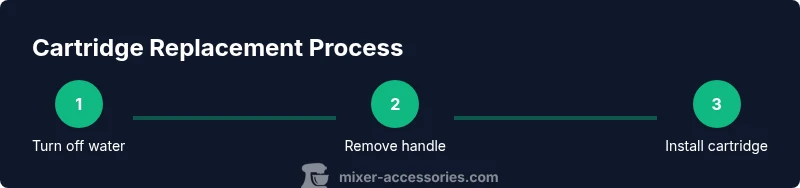
This overview explains the sequence you’ll perform in the detailed STEP-BY-STEP block. You will first shut off the water, then remove the handle, access and remove the retaining nut, extract the old cartridge, inspect the bore, clean the chamber, insert the new cartridge, reseal, and reconnect the water supply. Finally, turn the water back on slowly and test for leaks and proper temperature control. Because faucet designs vary, always follow the specific model’s instructions as part of the STEP-BY-STEP guide. This is the high-level flow for when to replace mixer tap cartridge.
Cleaning and reassembling parts
After removing the old cartridge, clean the cartridge bore and surrounding seats with a soft cloth and mild cleaner. Dry all components thoroughly to prevent corrosion. Inspect the retainer nut and seals; replace worn components as needed. When you assemble the new cartridge, ensure the orientation aligns with the inlet ports and the handle alignment mark. A clean, dry seat will help the new cartridge seal properly and reduce the risk of leaks.
Aftercare and testing
With the new cartridge in place, reassemble the faucet and gradually restore water supply. Check for leaks around the cartridge, the retaining nut, and the handles. Test hot and cold settings at multiple flow rates. If you notice dripping or erratic temperature, re-check cartridge alignment and seals. Allow the fixture to run for several minutes to confirm stable operation. Document the replacement date for future reference.
Common mistakes and how to avoid them
Avoid over-tightening nuts, which can crack the faucet body or strip threads. Don’t force a cartridge into a bore that’s dirty or misaligned—misfit parts lead to leaks. Keep track of small screws and O-rings; losing these parts sabotages the whole repair. Don’t skip turning off water or fail to relieve pressure—water damage is costly and dangerous. Finally, don’t assume a universal cartridge will fit every faucet; compatibility matters.
Maintenance tips to extend cartridge life
To maximize cartridge lifespan, check the water quality, consider a home filtration option, and perform light, regular cleaning of the valve body. Use a mild cleaning solution and a soft cloth rather than abrasive cleaners. Schedule a periodic inspection every 2-3 years or sooner if you have known mineral buildup in your area. Keeping a spare O-ring kit on hand helps you address minor wear before a leak develops. A proactive approach reduces downtime and extends faucet life.
Tools & Materials
- Adjustable wrench(To loosen cartridge nuts and fittings)
- Screwdriver set (flat and Phillips)(For handle screws and escutcheon screws)
- Cartridge kit compatible with your faucet model(New cartridge or compatible core unit)
- O-rings and seals(Spare or included with cartridge)
- Plumber's tape (PTFE tape)(Seal thread connections)
- Bucket or towel(Catch drips during disassembly)
- Safety gloves(Protect hands from sharp edges)
- Soft cloth or microfiber(Clean surfaces without scratching)
- Penetrating oil or mild cleaner(Loosen stubborn parts without damage)
- Flashlight(Improve visibility inside the valve body)
Steps
Estimated time: 60-90 minutes
- 1
Turn off water supplies
Locate and close the shutoff valves for hot and cold lines. Open a nearby faucet to relieve pressure and drain residual water. Have a bucket ready for drips. This prevents water spray during disassembly.
Tip: Double-check both valves are fully closed before proceeding. - 2
Remove faucet handle
Remove the decorative cap to expose the screw. Detach the handle and set it aside in its original orientation. If stuck, apply gentle heat or penetrating oil around the base, never forcing.
Tip: Take a photo of the handle position for easy reassembly. - 3
Access the cartridge retaining mechanism
Expose the retainer nut or clip that holds the cartridge. Use the correct tool to loosen it while supporting the cartridge from inside the valve body. Keep small parts in a tray.
Tip: Keep the nut orientation consistent with the model’s instructions. - 4
Extract the cartridge
Carefully lift the cartridge out, noting orientation. If it sticks, gently twist while pulling, avoiding excess force. Inspect the bore for debris or mineral buildup.
Tip: If deposits resist, soak briefly in warm water or vinegar solution per manufacturer guidance. - 5
Compare and prepare replacement
Match the old cartridge against the new one by size, stem, and port count. Replace O-rings or seals as needed. Clean bore and dry thoroughly before installation.
Tip: Always choose a cartridge made for your faucet brand/model. - 6
Install the new cartridge
Slide the new cartridge into the bore with correct orientation. Refit the retaining nut or clip and tighten to spec. Reassemble trim pieces.
Tip: Hand-tighten first, then finish with a wrench to avoid over-tightening. - 7
Reconnect water supply
Reconnect hot and cold lines and ensure threads are clean. Slowly restore water to prevent a surge that could blow seals. Check for leaks at all connections.
Tip: If a leak appears, re-tighten carefully but avoid overtightening. - 8
Test and adjust
Operate the faucet through hot/cold ranges to confirm smooth action and stable temperature. If leaks persist, recheck alignment and seating.
Tip: Run the faucet for several minutes to verify stability.
Your Questions Answered
Do I need to shut off the water supply before replacing a cartridge?
Yes. Turn off both hot and cold supplies at the under-sink valves, and open a nearby faucet to relieve pressure. This prevents water spray and leaks during disassembly.
Yes. Turn off the water and relieve pressure before starting.
Can I reuse the old cartridge after cleaning it?
In most cases, no. Old discs or seals may be worn, and reusing can leak or fail. If you identify a damaged O-ring or debris, replace with a new compatible cartridge.
Usually not; replacements are best for reliability.
How long does replacement take for a typical kitchen faucet?
Most replacements take 60-90 minutes for a straightforward job, depending on faucet design and access. Complex models or stuck parts can take longer.
Around one to two hours, more if you run into stubborn parts.
What if leaks persist after replacement?
If leaks persist, recheck the cartridge alignment, seals, and bore cleanliness. Inspect mounting nuts for over-tightening or cross-threading. If needed, consult a professional or replace all seals.
Leaks after replacement mean something isn’t seated right; re-check carefully.
Are universal cartridges compatible with all taps?
No. Cartridges are model-specific; universal parts rarely fit every faucet. Always match cartridge type, size, and inlet orientation to your faucet model.
Most cartridges aren’t universal; pick the right type for your faucet.
Watch Video
Top Takeaways
- Identify cartridge type before replacement.
- Shut off water and test for leaks after install.
- Use manufacturer-approved replacements for best fit.
- Inspect O-rings and seals during service.
- Test hot/cold flow and document the replacement date.