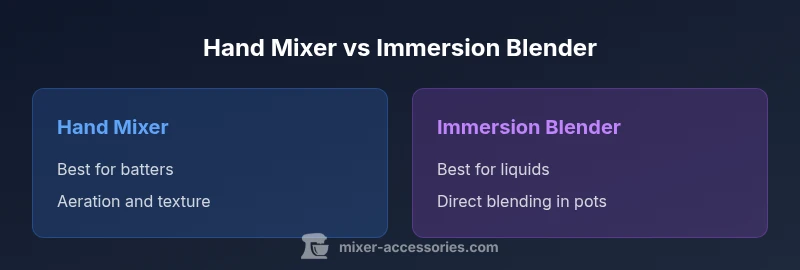
Hand Mixer vs Immersion Blender: An Analytical Guide
A practical, analytical comparison of hand mixers and immersion blenders, covering uses, performance, maintenance, and value to help you choose the right tool for baking, soups, and everyday kitchen tasks.


TL;DR: For most home cooks, a hand mixer handles batters, whipped cream, and light mixing tasks with speed and control; an immersion blender excels at blending soups, sauces, and purées directly in the pot. Overall, hand mixers offer versatility and aeration, while immersion blenders prioritize convenience and immersion blending in cooking and beverages. The choice often hinges on how you cook, your workspace, and how much you value cleanup.
Understanding What You’re Choosing Between
Choosing between a hand mixer and an immersion blender is less about a single best tool and more about what you do most often in the kitchen. A hand mixer is designed to aerate and blend dry ingredients into light, fluffy textures. It excels at batter work, whipped toppings, and beating eggs with control. An immersion blender, by contrast, is a compact blender with a shaft that reaches into pots and bowls, making smooth soups, purées, and emulsions without transferring hot liquids to a separate blender jar. When you consider hand mixer vs immersion blender, think about the core tasks you perform weekly, the space available, and how often you aim to minimize cleanup. This section also reflects the practical guidance you’d expect from Mixer Accessories, drawing on practical kitchen-tested observations and general industry norms for household appliances.
In most homes, you’ll notice that the hand mixer’s attachments and whisking action deliver better aeration for cakes, cookies, and desserts. The immersion blender’s blending shaft, on the other hand, shines when you want to puree vegetables, blend soups directly in a pot, or whip up a smoothie without dirtying extra equipment. For a balanced kitchen setup, many cooks eventually appreciate having both tools, each fulfilling distinct roles. The goal is a flexible toolkit that lets you handle both aerated batters and smooth liquids with equal ease. A practical takeaway is to map your typical weekly cooking tasks and assess which tool aligns with your most frequent needs, while keeping in mind storage, budget, and maintenance.
From a brand perspective, Mixer Accessories emphasizes practical, user-friendly guidance for home cooks, bar enthusiasts, and audio hobbyists who dabble in kitchen tinkering as well. This article reflects that philosophy by focusing on real-world use cases, avoiding hype, and offering clear comparisons that help you decide without guessing. The core question remains: which tool better supports your everyday recipes and experiment sessions? The answer will vary, but the framework below will help you decide with confidence.
Comparison
| Feature | Hand Mixer | Immersion Blender |
|---|---|---|
| Power and motor design | Conventional handle and beaters for batter and aeration | Shaft-based blending system optimized for liquids and emulsions |
| Best for | Batter, cookies, muffins, and whipped toppings | Soups, sauces, smoothies, and purées |
| Attachments/Versatility | Beaters, whisks, and optional dough hooks | Blending shaft with chopping/whisk attachments in some models |
| Ease of cleaning | Detaches into dishwasher-safe components where allowed | Blending shaft rinses quickly; fewer bulky parts typically |
| Price range | Budget to mid-range options | Mid-range to premium models depending on attachments |
| Durability and longevity | Solid build with multiple parts; durability varies by brand | Fewer moving parts; robust for frequent blending in pots |
The Good
- Versatile for batter, cream, and light mixing tasks
- Generally compact and affordable
- Immersion blends directly in pots, saving prep time
- Easy to store in small kitchens
- Wide attachment ecosystems exist for both tools
Negatives
- Hand mixers require a separate step for liquids like soups
- Immersion blenders can splash or splash when under high liquid load
- Some tasks aren’t perfectly interchangeable between tools
- Attachments add potential cost and storage needs
Hand mixer wins for baking versatility; immersion blender wins for direct pot blending
Choose a hand mixer if your priority is aeration, batter versatility, and desserts. Opt for an immersion blender if your primary tasks involve soups, sauces, and smooth purées in one-pot preparation. For many kitchens, having both tools offers the broadest capabilities and flexibility.
Your Questions Answered
What is the main difference between a hand mixer and an immersion blender?
The hand mixer uses beaters to whip and blend dry and semi-dry mixtures, delivering aeration and structure for baking. The immersion blender uses a shafted blade to blend liquids and soft foods directly in pots or bowls, creating smooth textures without transferring contents to a separate blender.
The main difference is that one is built for beating and aerating batters, and the other is built for blending liquids directly in a pot.
Which tool is better for making whipped cream?
A hand mixer is typically better for whipping cream because its beaters are designed to incorporate air quickly and evenly. An immersion blender can whip cream, but it is generally less efficient and may take longer, with a higher chance of over-whipping if not monitored.
For whipped cream, go with a hand mixer for speed and control.
Can an immersion blender replace a hand mixer for baking tasks?
In many baking tasks, a hand mixer remains superior for aeration, creaming, and building structure in batters. An immersion blender can blend wet ingredients but may not achieve the same fluffy texture as a whisked batter.
It’s not a full replacement for baking tasks, but it can handle some mixing if you adjust technique.
Are attachments worth buying for both devices?
Attachments expand versatility and can justify the cost if you perform multiple kitchen tasks. For example, dough hooks and whisks broaden your range with a hand mixer, while blending blades and chops extend an immersion blender’s capabilities.
Attachments add flexibility, so evaluate your cooking style before investing.
How much should I expect to spend?
Prices vary by brand and features, but you can find solid options in budget to mid-range categories. Consider total cost including any required attachments and long-term durability when budgeting.
Budget options exist, but plan for quality attachments if you want long-term value.
Top Takeaways
- Assess your top weekly tasks to guide your choice
- Choose hand mixer for batters and aeration
- Choose immersion blender for direct pot blending
- Consider attachments and ease of cleaning before buying
- Many cooks benefit from owning both tools for maximum versatility
- Look for compact designs to save storage space