Hand Mixer vs Stand Mixer: Which Is Best for Home Cooks
A thorough, balanced comparison of hand mixers and stand mixers to help home cooks decide between portability, power, and price. Includes practical guidance, use cases, and buying tips from Mixer Accessories.


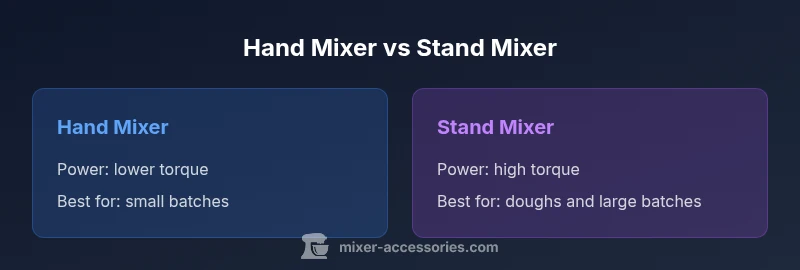
Stand mixers are generally the stronger all‑around option for home cooks who bake regularly, knead dough, or work with large batches. Hand mixers excel for quick whisking, light batters, and small tasks in compact kitchens. If you bake often and want versatile attachments, a stand mixer is worth the investment; otherwise, a hand mixer is a smart, budget-friendly starter.
Defining the question: what does 'better' mean for mixers
When someone asks which is better hand mixer or stand mixer, they are really weighing trade-offs between portability, price, power, and versatility. The best choice hinges on your cooking or baking patterns, kitchen size, and how often you expect to knead dough, whip cream, or mix heavy batters. According to Mixer Accessories, most home cooks benefit from a clear task list before choosing gear, then map those tasks to features like power, attachments, and bowl capacity. This framing helps you avoid buying a tool that sits idle on the shelf and ensures you get a model that matches your routines rather than a general recommendation.
In this guide we’ll unpack the key criteria, compare typical use cases, and provide a decision framework you can apply in minutes. We’ll also cover practical buying tips, maintenance considerations, and common pitfalls so you can choose with confidence.
codeBlock":false],
bodyBlocksParagraphsStart":null,
bodyBlocks2Word":null,
Comparison
| Feature | Hand mixer | Stand mixer |
|---|---|---|
| Power and motor design | lower power suitable for light batters and quick whisking | higher power and torque designed for heavy doughs and large batches |
| Capacity and bowls | requires a separate bowl and manual control | comes with a dedicated mixing bowl and supports large volumes |
| Attachments and versatility | beaters, whisks; upgrade options limited | dough hook, flat Paddle, wire whips; broad aftermarket attachments |
| Weight and footprint | compact, portable | bulkier, requires cabinet or countertop storage |
| Price range and ownership | lower upfront cost; simpler maintenance | higher upfront cost; potentially longer lifespan with upgrades |
| Best for | quick, small tasks, limited space | heavy doughs, large recipes, expanding kits |
The Good
- Lower upfront cost and simpler maintenance
- Compact size for small kitchens and easy storage
- Quick, straightforward use for light batters and toppings
- Easy to learn and transport between tasks
Negatives
- Limited power for dense doughs and large batches
- Less versatile without additional attachments or upgrades
- Can be tiring for long, continuous mixing sessions
- Smaller bowls mean more frequent transfers for big recipes
Stand mixer is the stronger all‑around choice for most households, while a hand mixer remains ideal for portability and quick, small tasks.
The Mixer Accessories team recommends prioritizing a stand mixer for ongoing baking needs, dough work, and future attachment versatility. The hand mixer is a valuable secondary tool for light tasks and travel-friendly setups, especially in compact kitchens.
Your Questions Answered
What tasks is a hand mixer best suited for?
Hand mixers excel at quick whisking, light batter mixing, and whipping cream. They’re ideal for small batches, emulsions, and tasks that don’t require a dedicated bowl or substantial torque. For long mixing sessions or stiff doughs, a stand mixer is usually more efficient.
Hand mixers are great for quick whisking and small batches, especially when space is tight.
Is a stand mixer worth the extra cost?
If you bake regularly, knead dough, or work with large quantities, a stand mixer can save time and effort and offer expanded attachment options. For occasional baking or small recipes, a hand mixer may provide sufficient power at a lower price.
If you bake a lot or work with dough, a stand mixer is worth considering.
Can you bake bread with a hand mixer?
A hand mixer can’t knead bread dough as effectively as a stand mixer, even with a dough hook attachment. For consistent results with yeasted doughs, a stand mixer or kneading by hand is usually preferred.
Bread dough is best handled with a stand mixer or manual kneading.
What about attachments and accessories?
Stand mixers generally offer a broader ecosystem of attachments—pasta makers, meat grinders, and specialized beaters. Hand mixers have fewer options, but add-ons exist for specific tasks and compact models.
Stand mixers have more attachment options.
How much space does a stand mixer require?
Stand mixers take more counter or storage space, and their footprint matters in small kitchens. If space is at a premium, measure your available area and compare it to the model’s height, width, and bowl size.
Plan for the stand mixer's size before buying.
Is a low-cost hand mixer adequate for beginners?
A budget hand mixer can be sufficient for learning basic techniques and occasional recipes. As skills grow or recipe complexity increases, stepping up to a higher‑quality model or a stand mixer can provide better results.
A basic hand mixer works to start, but consider upgrading as you cook more.
Top Takeaways
- Assess your typical recipes first
- Consider space and portability before purchase
- Factor in attachments and upgrade paths
- Budget for long-term value and maintenance
- Don’t discount warranties and service options