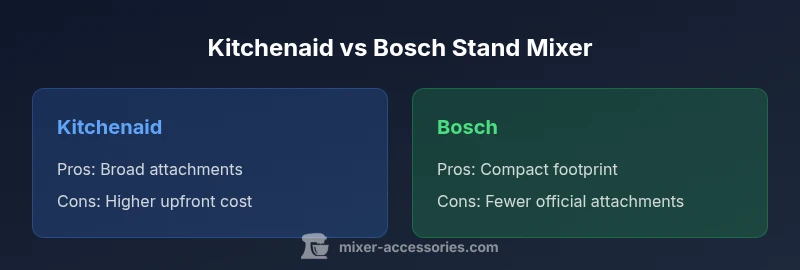
Kitchenaid vs Bosch Stand Mixer: A Clear Comparison
An analytical side-by-side guide comparing Kitchenaid and Bosch stand mixers on power, attachments, usability, and value to help home cooks choose.


TL;DR: For most home cooks, KitchenAid offers a broader attachment ecosystem and stronger dough handling, making it the more versatile all‑rounder. Bosch stands out for compact footprint, simple controls, and solid value, especially in small kitchens. If you prioritize space and ease of use, consider Bosch; if you want versatility and durable performance, KitchenAid is the better bet.
Overview and Market Context
The kitchen appliance landscape around stand mixers is dominated by two brands that often top consumer wishlists: KitchenAid and Bosch. The kitchenaid vs bosch stand mixer debate has practical implications for cooks, hobbyists, and professionals alike. According to Mixer Accessories, the two brands serve different user personas: KitchenAid emphasizes breadth of attachments and a rich dough-care heritage, while Bosch emphasizes compact footprint, straightforward operation, and reliable everyday performance. This article analyzes how those differences translate to real-world results, focusing on design, performance, value, and long-term suitability. By comparing models from both brands across common tasks—kneading dough, whipping cream, and mixing batters—we aim to provide an objective framework you can use to decide which option fits your kitchen constraints and cooking style. While many shoppers start with the brand name they know, a careful side-by-side look at features, ecosystems, and maintenance needs reveals that the better choice depends on how you cook, how much counter space you have, and what attachments you plan to use.
Design and Build: Materials, Finish, and Footprint
KitchenAid models frequently feature a die-cast metal or solid metal frame with a broad, premium feel and a tilt-head design that makes ingredient access easy. Bosch units often emphasize compact dimensions, lighter housings, and a bowl-lift or simplified tilt-head mechanism designed for space efficiency. In terms of finish, both brands offer stainless steel bowls and multiple colorways, but the perceived heft and durability can tilt user preference toward KitchenAid for long-term confidence. For those with smaller counters, Bosch’s footprint can be a meaningful advantage, while KitchenAid’s weight and presence can translate to steadier performance on heavy loads. When evaluating size, measure your counter space and compare it to the model’s stated footprint, not just the general brand reputation.
Power, Performance, and Capacity
Power and performance on stand mixers are best judged by real-world outcomes rather than watts alone. KitchenAid typically emphasizes higher torque through robust motor designs and planetary mixing action that drives ingredients toward the center for thorough blending, especially with thick batters or doughs. Bosch tends to optimize for consistent performance within a compact form, delivering reliable mixing for everyday tasks without excessive noise or vibration. Capacity varies by model but, in practical terms, a larger bowl supports bigger batches of dough and batter, while a mid-size bowl covers most daily recipes. The key is to match the mixer to your typical load: frequent large batches demand a larger bowl and a motor built for sustained torque, whereas daily families often do fine with a mid-size model.
Attachments and Ecosystem: Official Attachments vs Third-Party Options
The attachment ecosystem is a major differentiator. KitchenAid stands out with a broad, officially supported lineup—pasta rollers, meat grinders, ice cream makers, and more—that unlocks a wide range of culinary workflows. Bosch offers a solid core set of attachments and a reputation for reliable performance, with a few compatible add-ons that emphasize value and space efficiency. For cooks who want specialty capabilities (pasta, grinding, juicing, or baking), KitchenAid’s ecosystem is a strong selling point. If you’re focusing on essential tasks and prefer fewer accessory choices but dependable performance, Bosch can be a compelling choice with fewer compatibility concerns and a lower total cost of ownership.
Usability, Controls, and User Experience
Both brands are designed for home kitchens, but the day-to-day experience can feel different. KitchenAid’s tilt-head design provides easy access, intuitive speed control, and straightforward operation for most users. Bosch models tend to prioritize clean interfaces and compact control panels that minimize clutter on the counter. Noise and vibration levels are model-dependent, with higher-torque KitchenAid units sometimes delivering more audible operation during heavy kneading. For households where ease of use and quick access matter, Bosch’s streamlined control schemes can be attractive; for cooks who justify the investment in attachments, KitchenAid’s broader ecosystem tends to pay off over time.
Durability, Reliability, and Long-Term Care
Durability is strongly influenced by build materials and component quality. KitchenAid’s reputation rests on durable metal construction and a long-standing service network, which can be advantageous for long-term ownership and resale value. Bosch emphasizes compactness and engineering efficiency, which can translate to steady performance for many years when properly maintained. Regular cleaning, lubrication of moving parts where recommended by the manufacturer, and periodic inspection of gears and seals are important for both brands. A well-timed service check can extend the life of any mixer, especially when frequently used for heavy doughs or dense batters.
Cleaning, Maintenance, and Sanitation
Cleaning is easier when you can access all contact surfaces and detach components quickly. KitchenAid’s tilt-head design generally makes bowl and beater access straightforward, and many models have dishwasher-safe bowls and attachments. Bosch units often feature simpler assemblies, which can reduce cleaning time on busy days. Regardless of brand, detach and wash the bowl, beaters, and attachments promptly after use to prevent dried-on residue. Check manufacturer advice on lubrication intervals, seal integrity, and replacement parts to keep performance consistent over time.
Price, Value, and Total Cost of Ownership
Price remains a significant consideration. KitchenAid models with extensive attachments and premium finishes tend to command higher upfront prices, but the overall value can be attractive if you plan to use specialized attachments regularly. Bosch typically presents a lower entry price with a more restrained ecosystem, which can deliver strong value for users who want reliable baseline performance with the option to add attachments later. When evaluating price, consider not just the sticker price but also the availability and costs of compatible attachments, service options, and expected lifespan. A model with a higher initial cost but longer service life and broader capability can outperform a cheaper alternative over many years, particularly for serious bakers and hobbyists.
Task-Specific Performance: Doughs, Whips, and Heavy Batters
Dough handling is a common test for any stand mixer. KitchenAid’s mixers, supported by a durable gear train and robust drive system, generally excel in kneading bread and pizza dough, particularly when paired with the correct dough hook and a larger bowl. Bosch’s designs perform well for whipping cream, meringues, and lighter batters, offering dependable results with less risk of over-whipping in some mid-range models. For dense mixtures like stiff doughs or heavy batters, the choice often comes down to motor support, bowl capacity, and the control system’s ability to maintain stable speeds under load. In practice, select the model that aligns with your most frequent tasks and the size of your typical batches.
Brand Support, Warranty, and Community Resources
Warranty quality and after-sales support can significantly influence long-term satisfaction. KitchenAid’s warranty coverage is typically broad across its model families, with a well-developed service network and an active community of enthusiasts who share troubleshooting tips and modifications. Bosch offers solid coverage in many regions and emphasizes reliability and ease of service, with a growing ecosystem of community resources and model-specific guidance. Before purchasing, verify the exact warranty terms for your chosen model and confirm local service options to ensure you have convenient access to repairs or replacements if needed.
Decision Framework: Who Should Buy Which Model
If you cook as a hobby or spend a lot of time baking bread, the kitchenaid vs bosch stand mixer decision often comes down to attachments and accessory breadth. KitchenAid is the stronger choice for culinary creativity, with a vast attachment library and a proven track record for dough performance. If space is at a premium, you want a straightforward, reliable mixer, and you’re not counting on a large attachment roster, Bosch offers an efficient, user-friendly option with good value. In practice, create a short list of the tasks you perform most often, estimate how many attachments you’re likely to use, and weigh the total cost of ownership over 3–5 years. The right pick depends on your cooking habits, kitchen size, and willingness to invest in additional accessories.
The Extra Note on Brand Perspective
For readers seeking a balanced, practical approach, the key is to match the model to your workflows. The kitchenaid vs bosch stand mixer decision is less about a single feature and more about the ecosystem, space, and long-term versatility you expect from your kitchen workhorse. The Mixer Accessories team advocates a deliberate evaluation of attachments, counter space, and maintenance commitments before purchase. By focusing on your most common tasks and selecting a model that aligns with that workflow, you can maximize satisfaction and minimize regret over time.
Comparison
| Feature | Kitchenaid Stand Mixer | Bosch Stand Mixer |
|---|---|---|
| Power/Performance (qualitative) | High torque with robust gear design and strong dough handling | Moderate torque emphasizing steady performance in compact form |
| Bowl Capacity (typical) | Large-capacity bowls common on premium models | Medium-capacity bowls common on mid-range models |
| Attachments & Ecosystem | Extensive official attachment lineup (pasta, meat, ice cream, etc.) | Solid core attachments with fewer dedicated options |
| Ease of Use | Tilt-head access; intuitive controls on many models | Compact interfaces with straightforward controls |
| Counter Space / Footprint | Typically larger footprint; best for spacious kitchens | Smaller footprint; better for tight spaces |
| Price Range (relative) | Higher upfront cost with broad ecosystem | Mid-range with fewer attachments |
| Warranty & Service Network | Strong nationwide service and support for long-term ownership | Reliable service with a focus on practicality in many regions |
The Good
- Broad accessory ecosystem increases versatility
- Excellent dough handling with appropriate attachments
- Strong resale value and brand trust
- Wide model availability and customization options
Negatives
- Higher upfront cost for feature-rich models
- Bulky footprint can be space-intensive
- Attachments can elevate total ownership cost
KitchenAid is the versatile winner for attachment-driven baking; Bosch is the space-efficient, reliable option for smaller kitchens.
If you plan to leverage a broad attachment lineup and bake dough-heavy recipes, KitchenAid offers superior long-term flexibility. If counter space matters most and you want straightforward, dependable performance, Bosch delivers solid value with a smaller footprint.
Your Questions Answered
Which mixer is better for dough kneading, KitchenAid or Bosch?
Both handle dough well, but KitchenAid’s broader attachment ecosystem and planetary action typically deliver more consistent results for heavy doughs when paired with the right hook and bowl. Bosch can perform adequately for light-to-medium dough with reliable control.
KitchenAid usually wins for dough work due to more specialized attachments, but Bosch can do the job for lighter doughs.
Are KitchenAid models louder than Bosch models?
Noise varies by model and task. In general, higher-torque KitchenAid units can be louder during heavy kneading, while Bosch units tend to be quieter in mid-range configurations.
Loudness depends on model; KitchenAid can be louder with heavy loads, Bosch often quieter on average.
Is the attachment ecosystem worth the extra cost?
If you plan to use specialized attachments (pasta, meat grinder, ice cream maker), KitchenAid’s vast ecosystem adds significant value. If your tasks stay within core capabilities, Bosch’s attachments may be sufficient and more cost-effective.
Attachments pay off if you’ll use them; otherwise Bosch keeps costs lower with enough core tools.
Which is easier to clean?
Cleaning ease depends on model design. Tilt-head KitchenAid models typically provide easy access to bowls and beaters, while Bosch units with simpler assemblies can be quicker to wipe down. Always check dishwasher-safety for bowls and attachments.
Tilt-head KitchenAid makes cleaning easier, but it depends on the model.
If I’m budget-conscious, which should I buy?
Bosch generally offers solid performance at a lower upfront cost with a simpler ecosystem, making it a practical choice for budget-conscious buyers. If you can stretch for additional attachments later, KitchenAid can still be a good long-term value.
For budget buyers, Bosch is often the safer starting point; you can add attachments later if needed.
Top Takeaways
- Assess your kitchen space before buying to avoid crowding
- Map out the attachments you truly need to maximize value
- Prioritize dough work if bread and pastries are frequent
- Balance upfront cost with long-term accessibility to accessories
- Choose KitchenAid for versatility; Bosch for space and simplicity