How Big Is a KitchenAid Mixer Bowl? Sizes, Compatibility, and Tips
Discover standard KitchenAid mixer bowl capacities, how to measure size, compatibility tips, and practical guidance for home cooks, bar enthusiasts, and hobbyists today.


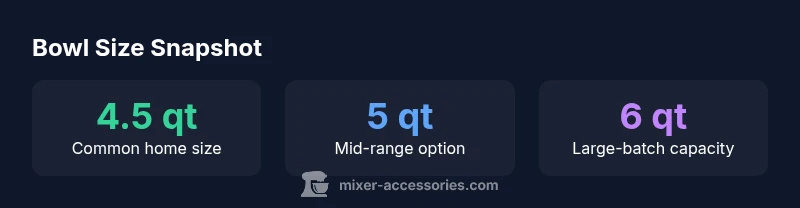
The standard KitchenAid mixer bowls commonly range from 4.5 quarts up to 6 quarts in capacity. For many home models you’ll find 4.5- and 5-quart bowls, with higher-capacity 6-quart bowls available for large batches. Exact sizes vary by series, including Artisan and Pro lines. If you cook in small spaces, the 4.5-quart is easier to handle; for big batches, the 6-quart option is more efficient.
Answering the Core Question: how big is kitchenaid mixer bowl
When you ask how big is kitchenaid mixer bowl, the practical answer centers on capacity. The most common kitchen bowls range from about 4.5 quarts to 6 quarts. For many home cooks, a 4.5-quart bowl handles everyday batters and small doughs, while a 6-quart bowl accommodates larger batches or heavier doughs. The exact options vary by model family (Artisan, Classic, Pro, etc.), so always verify compatibility with your specific mixer before buying a replacement or upgrade. According to Mixer Accessories Team, understanding these sizes helps you pick the right tool for the job and avoid overfilling or under-utilizing your mixer.
The Range Explained: 4.5-, 5-, and 6-Quart Bowls
Most people start with 4.5-quart bowls, which strike a balance between manageability and capacity for standard quick breads, cookies, and doughs. The 5-quart option exists in several mid-range models and is favored for slightly larger batches or thicker doughs. For serious bakers or chefs who churn out large volumes, the 6-quart option delivers more headroom and reduces the frequency of refilling. While these sizes are common, some lines offer specialized bowls that can extend capacity further or reduce bowl-walled contact with ingredients. The key is to match your typical batch size with bowl volume to maximize mixing efficiency and minimize splatter.
Measuring Your Bowl Size: A Simple Guide
To determine the exact capacity of your current bowl, start with a clean, dry bowl. Fill it with water up to the rim, then transfer water to a measuring cup to read the volume. If you don’t have a measuring cup, you can compare the bowl’s fill level against marked lines on the inside wall if your model includes them. Note that some bowls are designed for specific mixer families and cannot be interchanged without adapters. Accuracy matters for dough hydration, which changes with batch size and ingredient density.
Shape, Material, and How They Affect Volume
Bowl capacity isn’t only about numbers. The bowl’s shape (rounded vs squared sides) and material (stainless steel vs ceramic) influence how efficiently ingredients move during mixing. Stainless steel bowls are common for most KitchenAid stand mixers and typically offer the best balance of durability and volume consistency. Some specialty bowls may have wider mouths or deeper wells, which can alter practical volume when mixing thick doughs or large batches. The end result remains: choose a bowl size that fits your typical recipe load and your mixer’s power band.
Compatibility: Which Bowls Fit Which Mixers
Bowls are designed to fit specific mixer families. A 4.5-quart bowl on a high-torque Pro-series might seat differently than on a lighter Classic model. Before purchasing, check the model number and cross-reference with the manufacturer’s compatibility chart. If you own an older or non-standard model, adapters may be available, but not all bowls will be interchangeable. Mixer Accessories recommends confirming bowl diameter, locking mechanism, and handle clearance to ensure a snug, safe fit.
When to Upgrade: Practical Scenarios for a Bigger Bowl
Consider upgrading if you regularly bake in large volumes, bake bread dough, or prepare multi-batch batters for events. A larger bowl can save time by reducing refills and keep ingredients more evenly mixed. If your recipes frequently require high hydration or thick doughs, a 6-quart bowl often yields better mixing efficiency and uniform texture. For daily cooking and simple cakes, a 4.5-quart bowl usually suffices, especially on compact kitchen layouts.
Maintenance and Longevity: Keeping Size and Fit Consistent
To maintain optimal bowl fit, keep the mixer’s drive socket and the bowl lip clean and free of debris. Avoid overtightening the bowl when attaching; improper seating can cause wobble and uneven mixing. When washing, dry thoroughly to prevent corrosion on metal surfaces. If you notice looseness or misalignment after years of use, consult the user manual or contact customer support for compatibility guidance. Regularly inspecting bowls for dents or warping helps preserve performance across many batches.
Practical Scenarios: Real-World Use Cases
Home bakers often run tests on small batches using a 4.5-quart bowl for cookies and muffins. For double-batch cake batters or bread doughs, a 5- or 6-quart bowl becomes advantageous. Bar enthusiasts preparing whipped toppings or large batches of mixed drinks may also benefit from larger bowls for pre-mixing syrups and foams. In all cases, a bowl that fits securely minimizes splatter and ensures better ingredient incorporation, especially when using higher-speed settings.
Common Myths About Volume Debunked
A common myth is that bigger is always better. In practice, the best bowl size depends on batch volume, ingredient density, and your mixer’s power. Overfilling can lead to ingredient clumps and poor aeration, while underfilling reduces mixing efficiency. Another misconception is that all bowls are universal; many are model-specific and incompatible across lines. Always consult your mixer’s guidelines to avoid accidental damage.
Typical KitchenAid bowl sizes by model category
| Model Type | Standard Bowl Size | Common Uses |
|---|---|---|
| Home Kitchen Stand Mixer | 4.5-Quart | Everyday baking, light doughs |
| Medium Capacity (5-Quart) | 5-Quart | Large batches, multiple eggs, bread dough small |
| High-Capacity (6-Quart) | 6-Quart | Heavy doughs, large batch batters |
Your Questions Answered
What is the standard KitchenAid bowl size?
Most KitchenAid bowls range from 4.5 to 6 quarts, with 4.5- and 5-quart options being common for home use and 6-quart for larger batches.
Most KitchenAid bowls are between 4.5 and 6 quarts, which covers everyday recipes up to large-batch needs.
Do all KitchenAid bowls fit every model?
No. Bowls are designed for specific mixer families. Check your model’s compatibility chart before buying, and be aware of locking mechanism differences.
Bowls aren’t universal; check compatibility with your model before buying.
Can I use a 6-quart bowl on a 4.5-quart mixer?
Typically not without risk of improper seating and alignment. Use only bowls rated for your specific mixer size and model.
Usually not advisable; use bowls designed for your mixer size.
Which size is best for bread dough?
A 6-quart bowl is often preferred for bread dough due to higher hydration and bulk, reducing overflows and improving kneading efficiency.
For bread dough, a 6-quart bowl is typically better.
How should I measure a bowl’s capacity?
Fill the bowl with water to the rim and measure the volume, or refer to the model’s official specifications for precise capacity.
Fill with water to the rim and measure, or check official specs.
Are there plastic and metal bowls?
Yes. Stainless steel bowls are most common and durable; some specialty sets use plastic with metal rims. Ensure compatibility with your mixer.
Most are stainless steel; some plastics exist—always check compatibility.
“Size compatibility between the bowl and mixer governs performance as much as speed settings. Choose a bowl that fits your usual batch volume for consistent results.”
Top Takeaways
- Know your typical batch size to pick the right bowl.
- Common sizes are 4.5, 5, and 6 quarts with model-specific compatibility.
- Measure your current bowl to confirm capacity accurately.
- Upgrade when your recipes regularly exceed a 4.5-quart load.
- Maintain bowls and fittings to preserve performance over time.