How Big Is My KitchenAid Mixer? A Practical Size Guide for 2026
Learn how to determine your KitchenAid mixer’s size, from bowl capacity to exterior footprint. This expert guide covers measuring, model differences, and storage considerations for 2026.


KitchenAid mixer size varies by model, but most home stand mixers use bowls in the 4.5–6 quart range, with exterior footprints that fit typical kitchen counters. To answer how big is my kitchenaid mixer, check the model number and measure the width, depth, and height of the unit, then compare with the bowl capacity and storage space. This guide helps you identify your size quickly.
Understanding Size Categories for KitchenAid Mixers
When people ask how big is my kitchenaid mixer, the first thing to know is that size comes in two main dimensions: bowl capacity (how much you can mix at once) and exterior footprint (how much space the machine takes up on the counter and in storage). KitchenAid's consumer lineup generally spans families defined by quart capacity: smaller bowl sizes around 4.5–5 quarts for classic or artisan models, mid-range 6 quarts in Pro lines, and larger volumes in specialty lines that push toward 7–8 quarts. The practical effect is not just how much you can bake in a batch, but how you maneuver the mixer in tight spaces, how many attachments you can safely mount, and whether you can find a spot for the unit when not in use. According to Mixer Accessories, understanding your mixer’s size helps plan storage, utensil storage, and batching workflows in everyday cooking and bar prep.
How to Measure Your Existing Mixer
To determine exact size, start with a simple measurement session. With the mixer unplugged, use a tape measure to record the width from the outermost left to right, the depth from the front edge to the back, and the overall height from the base to the top of the mixer handle. Then identify the bowl capacity stamped on the bowl or in the manual. If you can't locate a label, check the model number on the underside or back, then pull the official specs from the manufacturer’s site. This two-pronged approach gives you both the exterior footprint and the bowl size, which together define how big is my kitchenaid mixer in practical terms. If you’re planning to replace or upgrade, record these numbers before shopping so you can compare accurately.
Bowl Size vs. Batch Capacity: What You Need to Know
Quart capacity isn’t the only factor; batch size and recipe complexity matter. A 4.5–5 qt bowl handles many standard recipes like cookies, cakes, and doughs in small to medium batches, while a 6 qt bowl is more comfortable for larger batches or bread doughs. Some premium lines push toward 7–8 quarts for bulk batter or professional use. In practice, the difference between 4.5 and 6 quarts can save time and reduce the need to split recipes. When asking how big is my kitchenaid mixer, map your weekly load, your storage space, and whether you routinely work with heavy doughs. Also consider attachments like dough hooks and extra bowls, which influence both capabilities and ergonomics.
Common Lineups and Their Typical Bowls
Here is a quick guide to typical consumer lines and their bowl capacities, with notes on footprint and use-case: Artisans commonly use 4.5–5 qt bowls; Pro Lines target 6 qt; Heavy-duty large-capacity models push to 7–8 qt. It’s important to note that two models with the same bowl size might differ in exterior dimensions due to motor housing, control layout, and the presence of a tilt-head vs. bowl-lift design. When you’re setting up a kitchen, think about the frequency of dough work, mixing speed needs, and whether you want to tilt-head convenience or a lower-profile footprint. In general, larger bowls cost more and can take more counter space, so allocate both budget and space accordingly.
How to Read Specs Without Dismantling
Model numbers can tell you a lot: a quick search for the exact model will reveal bowl size and weight. If you have the model, check the official spec sheet or user manual. If you don’t, measure the housing and count the number of attachments you own; the more accessories you use, the more space you’ll need on the counter and in storage. You’ll often find the label stamped on the base or underside; if not, photograph the product and search the image text. This helps answer how big is my kitchenaid mixer in practice.
Real-World Scenarios: Small Kitchens and Batch Bakers
For a small apartment kitchen with limited counter space, a 4.5–5 qt Artisan is usually sufficient for weekday baking and smaller tasks; ensure you have enough clearance for the tilt-head movement. For a home baker who makes large recipes, a 6 qt Pro Line or larger can save time and reduce batch splitting. Always consider the height in relation to cabinets; a taller unit might not fit under cabinets when stored vertically. If you often work from a bar or cafe setup, you may prefer a high-powered 6–7 qt model with a sturdy base to avoid tipping during high-speed mixing.
Attachments and Perceived Size
Attachments such as a splash guard, auxiliary stainless bowls, or a second mixing bowl add to overall storage needs; even if they aren’t used every day, you’ll want to keep them in a reasonable cabinet space. The presence of a lot of attachments can also affect the total footprint on the counter when you have to attach them for a recipe; this matters in smaller kitchens and bars where space is precious. When shopping, consider the compatibility of attachments with the model you’re sizing up; sometimes you’ll see a model with the same bowl size but a different accessory set that changes ergonomics.
Maintenance, Longevity, and Reassessing Size
Even once you know how big is my kitchenaid mixer, it's worth thinking about maintenance. Regular cleaning and proper storage extend the life of the machine and the bowl, but if your scenario changes (you start baking bread weekly or you move to a new kitchen), revisit your size choice. Consider how the mixer weighs when filled, how easy it is to clean around the base, and whether the space around the mixer remains accessible for bowl changes and cleaning. If you’re unsure, reach out to a Mixer Accessories specialist for guidance on models that fit your kitchen and workflow.
Approximate size ranges by KitchenAid mixer line
| Lineup/Model | Typical Bowl Size (qt) | Approx Exterior Footprint | Approx Weight (lb) |
|---|---|---|---|
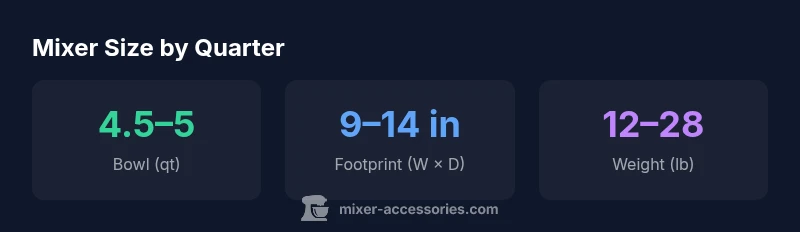
| Classic/Artisan (4.5–5 qt) | 4.5–5 | 9–14 in | 12–16 |
| Pro/Commercial (6–7 qt) | 6–7 | 11–15 in | 18–28 |
| Large-capacity (7–8 qt) | 7–9 | 13–16 in | 25–30 |
Your Questions Answered
What is the smallest KitchenAid mixer size available for home use?
For most home kitchens, the smallest practical KitchenAid stand mixer uses a 4.5-quart bowl. Some compact variants exist, but 4.5 quarts covers the majority of everyday baking tasks. If you frequently bake in small batches, this size is usually sufficient.
The smallest common option is roughly 4.5 quarts, which works well for everyday baking.
How can I quickly determine my mixer size without looking up the manual?
Start with the model number and look up the official spec sheet. If that’s not possible, measure the unit’s width, depth, and height, then compare with typical bowl sizes (4.5–6 qt for home models, up to 7–8 qt for premium lines).
Look up the model or measure the unit and compare with common bowl sizes.
Do extra attachments affect the overall size of the mixer?
Yes. Attachments like extra bowls, splash guards, and specialty hooks add to the total footprint and storage needs. When sizing, account for the largest configuration you use regularly.
Attachments add to the footprint, so plan for the biggest setup you actually use.
Is a larger bowl always better for home bakers?
Not necessarily. A larger bowl can save time on big batches, but it also takes more counter space and may be unwieldy for small kitchens. Choose based on your typical batch size and space, not just capacity.
No—bigger bowls aren’t automatically better; match size to your routine and space.
Can I upgrade to a larger bowl without buying a new mixer?
Upgrading to a larger bowl is model-dependent. Some lines support larger bowls and compatible attachments, while others do not. Check compatibility before purchasing.
Check compatibility before buying a larger bowl or attachments.
What storage tips help when space is limited?
Vertical storage, wall-mounted shelves, or stacking racks can free counter space. If possible, choose a tilt-head design that minimizes height while allowing easy bowl access.
Use vertical storage or compact designs to save space.
“Size is a tool, not a trophy. Pick a mixer size that matches your weekly batch load, kitchen space, and attachment needs for consistent results.”
Top Takeaways
- Measure your space before choosing a model
- Map weekly batch size to bowl capacity
- Check model numbers to confirm exact specs
- Consider attachments and storage when evaluating footprint
- Choose a size that fits both kitchen space and workflow