Kneading After Mixing: Do You Really Need It?
Learn when to knead after mixing, how to test dough readiness, and how hydration and flour type affect kneading. Practical guidance from Mixer Accessories for home cooks using mixers.


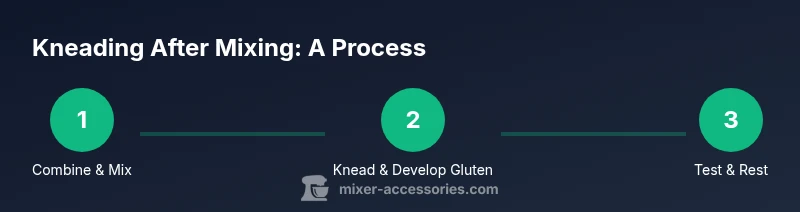
Do you need to knead the dough after the mixer? Not always. For yeast doughs, you typically mix until ingredients come together and then knead briefly by machine or hand to develop gluten, or use autolyse/bench rest for hydration. The need depends on flour type, hydration, and mixer power. Use tests like windowpane to judge readiness.
Do you need to knead the dough after the mixer? Practical orientation and guidance from Mixer Accessories
In many home-baking scenarios, the short answer to the question do you need to knead the dough after the mixer is nuanced. The mixer is a tool to bring ingredients together, begin gluten formation, and save you manual effort. The final texture and strength of your dough, however, often emerge during resting, folding, and a controlled amount of additional kneading if needed. According to Mixer Accessories, understanding when to knead and when to rest helps you avoid two common pitfalls: overworking dough into a dense mass, or leaving gluten underdeveloped and crumbly. Several variables influence this decision: the type of flour you use (protein content affects gluten potential), the dough’s hydration level, the ambient temperature of your kitchen, and the power and design of your mixer or its dough hook. If you’re using a robust stand mixer for the first time, begin conservatively: mix just until the ingredients form a cohesive mass, then pause to assess elasticity and feel. You’ll often find that many recipes rely on a short post-mix knead or a bench rest to finish development rather than a long, muscle-bound kneading session. The goal is to develop a strong gluten network without destroying the dough’s tenderness, flavor, and crumb structure. So, do you need to knead after the mixer? The best guidance is to evaluate the dough’s feel and test with simple cues rather than follow a timer alone.
note”:null},
toolsMaterials
stepByStep
tipsList
keyTakeaways
videoEmbed
faqSection
mainTopicQuery
Tools & Materials
- Stand mixer with dough hook(Ensure motor power supports your dough quantity; use low-to-medium speed (speed 1-2) to avoid overheating.)
- Bench scraper(For turning dough and cleaning surface.)
- Digital kitchen scale(Accurate flour and water measurements improve kneading consistency.)
- Mixing bowls (stainless or glass)(Have two bowls: one for mixing, one for rest.)
- All-purpose flour(For dusting and adjusting hydration if dough is too sticky.)
- Water at room temperature(Hydrates flour to the target hydration.)
- Dough thermometer (optional)(Useful for fermentation control.)
- Timer (optional)(To track rest/knead phases.)
Steps
Estimated time: 45-60 minutes
- 1
Prepare ingredients and attach mixer
Measure ingredients accurately and attach the dough hook to the stand mixer. Set the bowl at a comfortable height and ensure the mixer is on a flat, stable surface. This prepares proper gluten development.
Tip: Use room-temperature ingredients for consistent hydration. - 2
Combine ingredients on low speed
Start mixing on low to combine flour, water, yeast, and salt until a cohesive mass forms. Avoid splashing; resist the urge to crank up speed too early.
Tip: Keep the mixer at speed 1–2 to prevent flour dust from escaping the bowl. - 3
Knead with the mixer for gluten development
Increase to a gentle kneading action and monitor dough feel as it pulls away from the bowl sides. Stop when the dough forms a smooth, elastic ball and pulls back slightly when stretched.
Tip: If the dough sticks excessively, a tiny amount of flour can be added; if too dry, a splash of water may be required. - 4
Test for readiness (windowpane or similar cue)
Take a small dough piece and stretch it gently between thumb and finger. If it becomes thin enough to let light pass without tearing, gluten is developing well.
Tip: This is a practical check rather than a timer-based rule. - 5
Rest or fold to finish development
If using a high-hydration dough, consider resting the dough for 10–20 minutes to relax gluten, then fold or knead briefly to finish.
Tip: Resting can reduce overall kneading time and improve crumb. - 6
Proceed to bulk fermentation
Transfer the dough to a lightly oiled bowl, cover, and let it ferment at a controlled temperature until roughly doubled in size.
Tip: Fermentation contributes to flavor and texture, not just kneading. - 7
Prepare for shaping
Turn the dough out onto a lightly floured surface, portion, and shape according to your recipe. You may give a gentle final fold if needed.
Tip: Avoid heavy handling to preserve gas bubbles.
Your Questions Answered
Should I knead dough after a stand mixer?
Many doughs benefit from brief post-mix kneading or folding, but some doughs benefit from resting and gentle kneads instead. Use gluten tests to decide.
Kneading after the mixer is often brief or optional if you prefer resting and folding.
Can I skip kneading if I rest the dough?
Resting helps gluten relaxation and can aid structure, but many doughs still need some gentle kneading to fully align gluten fibers.
Resting helps, but you may still need a bit of kneading or folding.
What is the windowpane test and why use it?
The windowpane test checks gluten development by stretching a small dough piece until thin and translucent without tearing.
It’s a quick, reliable cue for readiness beyond recipes.
Is kneading the same as folding?
Kneading develops gluten through continuous motion; folding is a gentler technique used to strengthen structure without overworking.
Folding can be a useful alternative to traditional kneading.
Does higher hydration affect kneading time?
Yes, higher hydration can slow gluten development and may require longer or more folds, especially with wetter doughs.
Higher hydration changes how you work the dough and how you test it.
Watch Video
Top Takeaways
- Kneading after mixing is not always required.
- Assess gluten development with hands-on tests, not timers.
- Rest and folding can substitute for long kneading in many doughs.
- Stop kneading when the dough is elastic and passes the windowpane test.