How Long to Mix Pizza Dough in a Mixer: A Practical Guide
Learn exactly how long to mix pizza dough in a mixer, with step-by-step timings for stand and hand mixers, plus tips on hydration, flour types, and signs of proper gluten development for perfect crusts.


By the end, you’ll know exactly how long to mix pizza dough in a mixer and how to adapt timing for flour type, hydration, and mixer speed. You’ll learn the signs of proper gluten development, when to rest, and how to troubleshoot common kneading issues for stand and hand mixers. This quick answer sets the stage for a detailed, kitchen-tested workflow.
What affects mixing time for pizza dough
According to Mixer Accessories, several variables determine how long you need to knead pizza dough in a mixer. The flour's protein content (strong bread flour vs. all-purpose), hydration level, yeast activity, water temperature, and even the mixer type all influence gluten development. For example, higher protein flour typically reaches sufficient network formation more quickly, but very high hydration dough can drag the dough hook and require more kneading to uniform hydration. Room temperature and the flour's age can alter timing: warmer environments speed fermentation and dough temperature, while old flour can behave differently. In practice, you should watch for changes in dough texture rather than rely solely on a timer. A well-kneaded dough should feel cohesive, slightly tacky, and pass the windowpane test. Good kneading also activates gluten network and strengthens dough, which improves pizza crust chew and structure. Remember, the goal is a dough that stretches without tearing and holds its shape when shaped.
The role of mixer speed and kneading action
Kneading action is driven by the mixer’s speed and the dough hook design. A steady, low-shear motion helps align gluten strands without tearing them, while higher speeds can overwork the dough and lead to a tougher crust. Stand mixers with a standard dough hook typically knead efficiently at low speed (often labeled as 1–2 on many models). If you use a handheld mixer, the kneading effect is less controlled and you may need more time to achieve the same gluten development. The key is to balance speed with rest periods when needed, and to stop periodically to scrape flour pockets and check texture. A well-kneaded dough should pull away from the bowl sides as a cohesive mass and pass the windowpane test when stretched gently.
How long to mix by mixer type
Stand mixers with a dough hook generally require about 6–9 minutes of kneading at low speed for typical pizza dough made with all-purpose or bread flour. If you’re using higher-hydration doughs (toward 65–70% hydration), expect closer to 8–12 minutes. Hand mixers tend to take longer—often 8–12 minutes—because their action is less efficient at developing gluten quickly. If you’re using a food processor or other appliance, follow the manufacturer’s kneading guidance and monitor texture closely, since those devices can overwork dough quickly. Always monitor texture and signs of gluten development rather than relying solely on time.
Visual cues for readiness and texture
Texture is your best indicator. A properly kneaded pizza dough should be smooth, elastic, and slightly tacky to the touch. When you press a small patch of dough, it should spring back rather than fight to resist. The windowpane test is a reliable check: stretch a small piece of dough between your fingers; if it becomes translucent without tearing, there’s enough gluten development. If the dough tears or feels overly stiff, it needs more kneading. Conversely, dough that’s overly slack and sticky may have been under-kneaded. Record your observations in a kitchen log to refine future timings based on flour brands and environmental conditions.
Adjusting for hydration and flour strength
Hydration and flour type directly influence mixing time. Lower hydration doughs (around 55–60%) knead faster and feel firmer, while higher hydration doughs (65% and above) require longer kneading to achieve even moisture distribution. Strong bread flour (12–14% protein) develops gluten more quickly, potentially shortening kneading time, whereas all-purpose flour may need a touch longer. If you switch flour brands or switch to a different protein strength, expect to adjust kneading times by a few minutes and rely more on texture cues than the clock.
Common mistakes and how to fix
Overkneading can toughen gluten, leading to a crust that is chewy in an undesirable way. Underkneading yields dough that’s irregular and lacks structure, resulting in a pale crust that doesn’t hold toppings well. Sloppy dough that clings to the bowl walls indicates underhydration or insufficient mixing. If you notice stray flour pockets, stop the mixer, scrape the bowl, and continue kneading. Resting the dough after initial kneading helps relax gluten and improve extensibility, especially for higher-hydration doughs.
Practical timing guide by hydration level
- 55–60% hydration (typical for many home recipes): knead 6–8 minutes on low speed with a stand mixer.
- 60–65% hydration: knead 8–10 minutes.
- 65–70% hydration: knead 9–12 minutes.
- 70% hydration and above: knead 10–14 minutes, with frequent checks for smoothness and elasticity. These ranges assume a standard stand mixer with a dough hook and all-purpose or bread flour. Your results may vary by brand and batch, so use texture cues as your guide.
The windowpane test in practice
To perform the windowpane test, pinch off a small piece of dough and stretch it between your fingers. The dough should become thin and translucent without tearing. If it tears easily, give it another 1–2 minutes of kneading and recheck. If it’s thick or resistant, continue kneading in short bursts. This test helps you gauge gluten development more reliably than time alone and is a standard method favored by many bakers.
Authority sources
For further reading and validation, consult these sources:
- https://www.usda.gov/
- https://extension.illinois.edu/
- https://www.kingarthurbaking.com/ These resources provide practical guidance on yeast and dough handling that complements the kneading times discussed here.
Tools & Materials
- Stand mixer with dough hook attachment(Prefer a dedicated dough hook; a spiral hook is not ideal for kneading.)
- Kitchen scale(Weigh flour and water for consistency.)
- Mixing bowl(Large enough to hold kneaded dough with space to rise.)
- Spatula or silicone scraper(Use to scrape flour pockets off sides.)
- Measuring cups/spoons(For yeast, salt, and added ingredients.)
- Timer(Keep track of kneading time precisely.)
- Dough scraper(Helpful when removing dough from bowl.)
- Thermometer(Liquid water temp around 95-105°F (35-40°C) is ideal to activate yeast.)
Steps
Estimated time: 30-45 minutes
- 1
Attach dough hook and set mixer to low speed
Fit your stand mixer with the dough hook and run on low speed to minimize flour clouds. This protects gluten integrity and reduces splash while ingredients combine.
Tip: If your dough climbs the hook, reduce speed briefly and keep mixing gently. - 2
Add dry ingredients first, then liquids
Add flour, salt, and yeast in separate corners of the bowl. Start mixing on low, then add water gradually through the mixer's pouring chute to avoid sudden hydration surges.
Tip: Keep the water at a comfortable warm temperature to wake the yeast without shocking it. - 3
Ensure even hydration
As the dough comes together, pause to scrape the bowl and check for dry pockets. Mix until there are no visible flour patches and the dough begins to pull away from the sides.
Tip: If dough is too dry, add a teaspoon of water at a time and mix briefly. - 4
Knead until gluten develops
Continue kneading on low speed until the dough is smooth, elastic, and cohesive. Expect 6–9 minutes for typical dough; longer for higher hydration.
Tip: Periodically stop the mixer to perform a quick windowpane check if you’re unsure. - 5
Test and rest
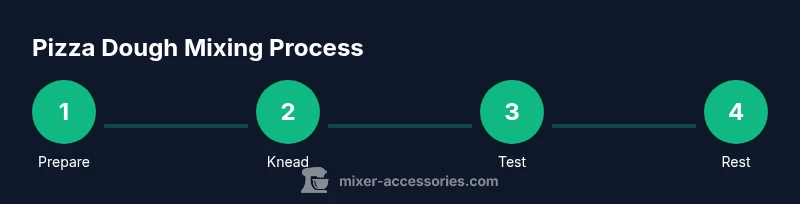
Perform the windowpane test: stretch a small piece until translucent. If it tears, knead a bit longer; if it’s translucent, proceed to shaping. Rest the dough in a lightly oiled bowl for 20–30 minutes to relax gluten.
Tip: Cover to keep dough from drying out during the rest. - 6
Divide and shape for dough balls
After resting, divide the dough into portions suitable for your pizzas. Shape into balls, place on a tray or in a container, and allow to proof as your recipe dictates.
Tip: Lightly oil the container to prevent sticking and store in a warm spot if you’re timing a later bake.
Your Questions Answered
How long should I mix pizza dough in a stand mixer?
Most doughs take 6–9 minutes on low speed with a dough hook; adjust for hydration and flour strength.
Knead for about six to nine minutes on low speed, then check texture.
Can I overmix pizza dough in a mixer?
Yes. Overkneading can overdevelop gluten and make crust tough; stop when dough is smooth and elastic.
Yes, overkneading can toughen gluten and crust if you push too far.
What speed should I use when kneading dough in a mixer?
Use low speed (often 1–2 on home mixers). High speeds can damage gluten structure and cause overheating.
Keep it on low speed to protect the dough and motor.
Should I rest dough after mixing?
Yes. Resting relaxes gluten and improves extensibility; a 15–30 minute rest is common before shaping.
Let the dough rest to relax gluten before shaping.
Does hydration affect mixing time?
Yes. Higher hydration doughs require longer kneading to reach full gluten development and even moisture.
Higher hydration means more kneading time to develop gluten.
Can I mix dough by hand if I don’t have a mixer?
Yes. Knead by hand for about 10–15 minutes, then perform the windowpane test and rest as recommended.
You can knead by hand for about 10 to 15 minutes and check with the windowpane test.
Watch Video
Top Takeaways
- Knead until dough is smooth and elastic
- Hydration and flour type affect mixing time
- Windowpane test indicates readiness
- Adjust times based on mixer and environment