How Long Do Mixing Valves Last? Lifespan Guide (2026)
Discover how long mixing valves typically last, what factors shorten or extend their life, and practical maintenance steps to maximize longevity. Practical guidance from Mixer Accessories for home cooks, bar enthusiasts, and audio hobbyists.


Mixing valves generally last about 10-20 years in residential settings, with lifespans extending toward 20 years for high-quality units installed with good water quality and regular maintenance. Actual longevity varies by valve type, materials, and care. In short: expect replacement intervals of roughly a decade or two, depending on conditions.
What is a mixing valve and why lifespan matters
A mixing valve blends hot and cold inputs to deliver a stable, safe output temperature. In kitchens, bathrooms, and beverage setups, these valves protect against scalding and ensure consistent results. The longevity of a mixing valve matters not only for cost and downtime but also for safety, because a failing valve can lead to sudden temperature spikes or leaks. According to Mixer Accessories, the materials used (brass, stainless steel, or composites), the quality of installation, and the surrounding water quality all shape how long a valve will perform reliably. The takeaway is simple: higher-quality materials and precise installation generally yield longer service life, but maintenance and environment still play a decisive role.
Factors that influence lifespan
Several core factors determine how long a mixing valve lasts:
- Material and construction: Stainless steel and high-grade brass often resist corrosion better than cheaper alloys.
- Water quality: Hard water, high mineral content, and aggressive water chemistry accelerate scale, corrosion, and seal wear.
- Temperature and pressure: Repeated exposure to wide temperature swings and high pressure can stress seals and internals.
- Installation and accessibility: Proper mounting, secure fittings, and easy access for maintenance reduce unintended wear.
- Maintenance and usage: Regular inspections, timely gasket replacements, and descaling can dramatically extend life. Frequent cycling between extreme temperatures wears parts faster than steady operation.
- Environmental conditions: In areas with aggressive water chemistry or high chlorine levels, parts may degrade more quickly.
For homeowners, the practical implication is clear: protect longevity with quality valves, controlled water chemistry where feasible, and routine care. As the Mixer Accessories team notes, a proactive maintenance habit is the single most effective way to push valve life toward the upper end of the typical range.
Typical lifespans by valve type and quality
Lifespan varies by valve type and whether you’re dealing with residential-grade equipment or commercial-grade installations. As a general framework:
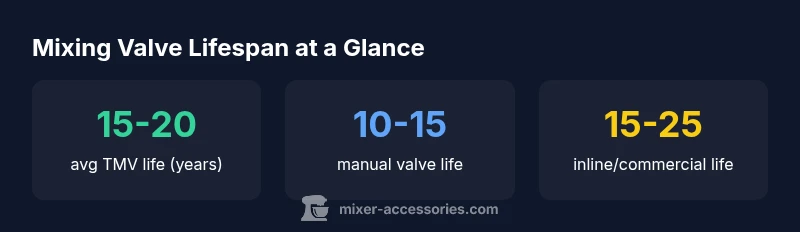
- Thermostatic mixing valves (TMV) in stainless steel: commonly 15-20 years with regular service.
- TMVs in brass or plated finishes: typically 12-18 years, depending on water quality and maintenance.
- Manual mixing valves: usually 10-15 years, with longer life when seals are robust and lines are kept clean.
- Inline or commercial mixing valves: often 15-25 years, especially when installed with professional maintenance schedules.
These ranges reflect typical conditions. Individual results may vary based on the exact model, brand warranties, and local water chemistry. Always consult the manufacturer’s specifications and warranty for your specific valve.
Maintenance routines to extend life
A practical maintenance plan can significantly extend valve life:
- Schedule annual inspections by a qualified plumber to check for leaks, wear, and improper regulation.
- Descale mineral buildup using manufacturer-approved cleaners if your water is hard; avoid harsh chemicals that could damage seals.
- Replace worn gaskets and seals as soon as wear is detected; don’t wait for leaks to worsen.
- Flush the system periodically to remove sediment and prevent clogging of internal passages.
- Monitor water temperature settings and pressure; extreme settings cause accelerated wear.
- Consider water-treatment options (softening or filtration) if your water is exceptionally hard or corrosive.
Following these steps minimizes internal wear, reduces leakage, and helps your valve reach the upper end of its expected lifespan. Mixer Accessories emphasizes that proactive care pays dividends in reliability and safety.
Signs it's time to replace a mixing valve
Even with routine maintenance, valves eventually wear out. Watch for:
- Persistent leaks that don’t respond to gasket replacement
- Inconsistent temperature control or delayed response to setting changes
- Increased noise or vibration during operation
- Visible corrosion or mineral buildup that cannot be cleaned
- Reduced flow or airflow leading to temperature imbalance
If you notice these indicators, evaluate whether a repair is feasible or if a full replacement is warranted. Replacing a valve with a modern, code-compliant unit can improve safety and efficiency.
How to choose a replacement valve
When selecting a replacement valve, prioritize:
- Certification and materials: Look for valves built from lead-free materials and certified for drinking water (e.g., NSF/ANSI 61 compatible).
- Compatibility: Ensure fittings, inlet/outlet sizes, and connection types match your plumbing.
- Temperature and pressure ranges: Match or exceed your system’s operating conditions.
- Warranty and service support: Choose models with solid manufacturer warranties and local support.
- Ease of maintenance: Accessible designs with serviceable seals and recognized spare parts.
A well-chosen valve saves money and hassle over time, especially if you anticipate replacement needs within the next decade.
Installation considerations and professional help
Valves must be installed to code, with attention to lead-free requirements and proper clearance for service. Many jurisdictions require licensed plumbers for new work or substantial replacements. If you’re unsure about compatibility or installation, seek professional guidance. While DIY replacements are possible for simple valves, most homes benefit from a professional assessment to ensure correct sizing, torque, and leak testing. A correctly installed valve reduces early failure and improves overall system safety. For guidance on selecting and installing, refer to manufacturer instructions and local building codes. Mixer Accessories recommends consulting a qualified plumber when upgrading or replacing critical water-control components.
Authority sources
- EPA Safewater guidelines: https://www.epa.gov/safewater
- CDC Water Quality resources: https://www.cdc.gov/healthywater/hygiene/water-quality.html
- NSF International standards and certifications: https://www.nsf.org/standards/nsf-61
Estimated lifespans by valve type
| Valve Type | Typical Lifespan (years) | Maintenance Needs |
|---|---|---|
| Thermostatic Mixing Valve (stainless) | 15-20 | Annual inspection; descale every 1-2 years |
| Manual Mixing Valve | 10-15 | Periodic seals; check for leaks |
| Inline/Commercial Mixing Valve | 15-25 | Professional maintenance every 1-3 years |
Your Questions Answered
How long do mixing valves last in average homes?
Most residential mixing valves last about 10-20 years, with longer life for higher-quality units and well-maintained systems. Longevity depends on valve type, water quality, and maintenance habits.
Most valves last 10 to 20 years, depending on type and upkeep.
What maintenance is required to extend valve life?
Conduct regular inspections, replace worn seals, descale mineral buildup, flush lines periodically, and ensure correct temperature and pressure. Follow manufacturer guidance and warranty terms.
Regular inspections and timely seal replacements extend life.
Do water hardness and mineral content affect longevity?
Yes. Hard water accelerates scale formation and corrosion, shortening valve life. Consider water treatment or conditioning when lifespans are shorter than expected.
Hard water can shorten valve life; conditioning helps.
When should I replace vs repair a mixing valve?
If leaks persist after gasket replacement or the valve fails to regulate temperature, replacement is usually more reliable than ongoing repairs.
If problems persist after maintenance, replace.
How do I choose a replacement valve for a kitchen or bathroom?
Look for lead-free materials, certifications (NSF/ANSI 61), compatible fittings, appropriate temperature range, adequate warranty, and easy serviceability.
Choose certified, compatible valves with a solid warranty.
“Lifespan is not fixed; with correct materials and regular maintenance, a thermostatic mixing valve can serve reliably for decades.”
Top Takeaways
- Lifespan varies widely by type and quality
- Water quality and maintenance are major life determinants
- Regular inspections extend valve life
- Choose certified, high-quality valves with warranties