How Long Do Mixer Showers Last: Longevity, Care, and Replacement
Explore how long mixer showers last, what affects their lifespan, and practical tips to extend life. A data-backed look from Mixer Accessories.


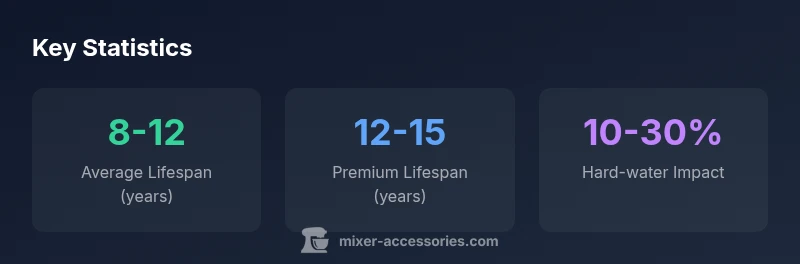
According to Mixer Accessories, how long do mixer showers last? On average, a well-installed mixer shower lasts about 8-12 years with regular maintenance; premium brass valves may endure 12-15 years, while budget models might fail around 5-8 years. Longevity depends on water quality, mineral buildup, installation quality, and routine descaling. Factors such as water pressure, temperature cycling, and leakage history can shift these estimates.
Understanding the lifecycle of a mixer shower
To assess how long mixer showers last, it helps to think in terms of a lifecycle: installation, active use, wear-prone components, periodic maintenance, and end-of-life replacement. A typical bathroom mixer comprises a valve assembly, cartridges or ceramic disks, seals and O-rings, and connectors to hot and cold supplies. Each component ages differently depending on water quality, usage patterns, and installation quality. When we ask how long do mixer showers last, the most conservative approach looks at the valve cartridge and seals, which are usually the first to show wear. With regular inspection and descaling, a reliable unit can comfortably reach the 8-12 year range, with premium builds surpassing it in many cases. The key takeaway is that lifespan is a range, not a fixed number, and proactive care makes a meaningful difference.
Key factors that influence longevity
Longevity is shaped by several interacting factors. Water quality is a major driver: hard water increases mineral buildup on interfaces and inside valve passages, shortening life unless descaled or treated. Valve design matters: high-quality brass or stainless components resist corrosion better than cheaper plastics or composites. Installation quality matters too—correct pressure balancing, secure fittings, and proper velocity reduction minimize stress cycles for internal seals. Usage patterns (frequency, temperature swings, and recurring high-pressure bursts) accelerate wear in seals and cartridges. Regular maintenance, including descalers, gasket replacements, and timely part swaps, can push the effective life well into the upper end of the expected range.
How to extend lifespan: maintenance and care
Extend the life of a mixer shower with a simple, proactive maintenance routine. Descale every 6-12 months if you live in a hard-water area or use a water-softening system. Inspect the cartridge and seals annually for signs of leakage, cracking, or stiffness, and replace worn O-rings promptly. Use compatible lubricants on moving parts where recommended by the manufacturer. Confirm that the supply lines aren’t subjected to excessive pressure or rapid temperature changes. By treating the unit with basic care, you can maintain smooth operation and preserve performance for many years.
Signs a mixer shower may be nearing end-of-life
Watch for gradual reductions in water flow, inconsistent temperature control, noisy operation, or frequent leaks around the valve and handle. The presence of mineral deposits inside the cartridge or on seats is another red flag. If repairs become frequent or replacement parts are no longer available, it’s prudent to plan for a full unit replacement. Early replacement is often cheaper and safer than waiting for a critical failure that could affect water supply or safety.
Budget vs premium models: trade-offs in longevity
Premium mixer showers typically use more durable materials (brass valves, ceramic discs) and tighter tolerances that resist wear, yielding longer lifespans. Budget models may perform adequately but are more susceptible to seal degradation and cartridge wear. The long-run cost of ownership often favors mid-to-high tier options when you factor in replacement frequency and water efficiency. If you’re prioritizing longevity, invest in a model with corrosion-resistant materials, a replaceable cartridge, and a reputable manufacturer that provides spare parts for several years.
Lifetime estimates by valve type and construction
| Model/Type | Estimated Lifespan | Common Wear Factors |
|---|---|---|
| Standard ceramic valve mixer | 8-12 years | Mineral buildup, seal wear |
| Premium brass valve mixer | 12-15 years | Corrosion resistance, mechanical wear |
| Budget plastic unit | 5-8 years | O-ring/tubing degradation |
Your Questions Answered
What is the typical lifespan of a mixer shower?
Most mixers last 8-12 years with proper maintenance; premium units can reach 12-15 years.
Most mixers last 8-12 years with proper care, with premium models often lasting longer.
How does water hardness affect longevity?
Hard water accelerates mineral buildup, which can shorten the lifespan. Descaling and water-softening strategies can mitigate this effect.
Hard water can shorten life; descaling and water-softening help offset that.
Can maintenance really extend the life of a mixer shower?
Yes. Regular descaling, replacing worn seals, and timely cartridge maintenance can significantly extend component life.
Yes—regular maintenance really makes a difference.
When should I replace parts versus the whole unit?
If only seals or the cartridge wear, replace those parts. Widespread corrosion or failure often means replacing the entire unit.
Replace worn parts when possible; full unit replacement may be needed for major failure.
Are there energy-saving benefits to upgrading?
Upgrades can improve efficiency, but focus on flow rates and pressure management; lifespan is a secondary consideration.
Upgrades can save water and energy, but lifespan isn’t the main factor.
“Longevity isn’t guaranteed by the price tag alone; installation quality, water quality, and ongoing maintenance determine how long a mixer shower lasts.”
Top Takeaways
- Prioritize water quality and regular descaling to extend life
- Brass valves generally outlast plastic counterparts
- Inspect seals and cartridges annually for signs of wear
- Choose a model with replaceable cartridges for easier long-term maintenance