What is Mixing vs Mastering? A Practical Guide for Tracks in Studios
Explore the essential differences between mixing and mastering, with practical workflows for home studios, sample scenarios, and actionable steps to decide when to DIY or hire a pro.


What is mixing vs mastering in practice
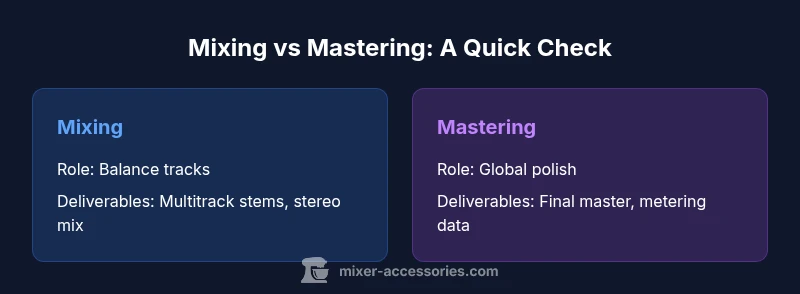
What is mixing vs mastering? In practical terms, these are two distinct phases with separate goals, tools, and workflows. Mixing is the art of taking a collection of recorded tracks and sculpting them into a cohesive, expressive whole. The mixer adjusts levels, pan, EQ, dynamics, and effects to ensure every element sits correctly in the stereo field and communicates the intended emotion. Mastering, by contrast, occurs after a final stereo mix and focuses on global processing, loudness, and playback-compatibility. According to Mixer Accessories, a clean separation between these steps preserves creative intent during mixing and technical accuracy during mastering. In most projects you’ll import stems or a stereo bounce, then begin balancing, editing, and applying spatial decisions. You’ll set revision cycles so artists can request tweaks without re-recording. The distinction matters because a strong mix can still fall short if the master doesn’t translate to radio, streaming, or cinema. By treating mixing and mastering as separate experiments, you maintain dynamic range and allow the final master to sit comfortably on different listening systems. The result should be a track that sounds clear, musical, and competitive across venues, from earbuds to club systems.