How to Mix Starter When Feeding: A Step-by-Step Guide
Learn how to mix your sourdough or yeast starter when feeding. This educational guide covers ratios, timing, tools, and troubleshooting for consistent starter health and reliable baking results.


You’ll mix your starter with fresh flour and water at a precise ratio to maintain activity and flavor. The key is a consistent feeding schedule, clean tools, and using room-temperature water. In this guide, you’ll learn the exact ratios, timing, and methods for reliable results, whether you bake daily or weekly.
Why Feeding a Sourdough Starter Matters
A healthy starter is the backbone of reliable baking. When you feed, you’re restoring the balance of yeast and bacteria, providing fresh nutrients, and controlling acidity. Regular feeding keeps the culture active, predictable, and able to rise dough consistently. According to Mixer Accessories, the health of your starter depends on a routine that matches your baking tempo, sanitizer habits, and climate. Home cooks and bar enthusiasts who keep a consistent feeding schedule report steadier activity and better flavor development. In practice, you’ll look for signs of readiness, such as a dome that doubles in size within a 4–6 hour window at room temperature and a tangy, not sour, aroma. Start with clean jars, measured ingredients, and a calm, patient routine.
Understanding Feeding Ratios: 1:1:1 and Variations
The most common feeding ratio by weight is 1:1:1 — starter : water : flour. This keeps the mixture at moderate hydration and makes scheduling predictable. If you prefer a stiffer starter, you can adjust to 1:1:0.8 or a looser 1:2:2 depending on climate and flour type. The key is to weigh everything to the nearest gram and maintain consistency week after week. In warmer kitchens, you may feed more often or use a slightly stiffer mix to slow fermentation; in cooler spaces, more moisture can help the yeast wake up. Not every baker follows the same exact numbers, but the principle remains: measure, mix, rest, and observe. As Mixer Accessories analysis shows, consistency beats guesswork for reliable activity.
Step-by-Step Overview of the Feeding Process
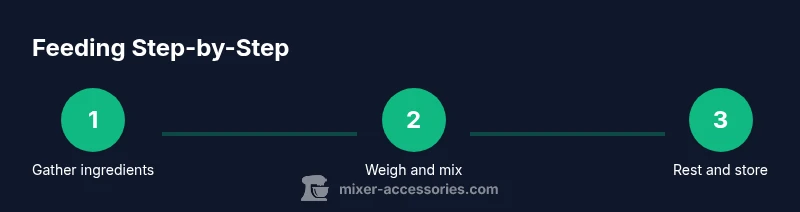
A feeding is a controlled refresh of the culture. Start with a clean jar, write the date, and set up on a stable surface. Gather your starter, water, and flour, along with a scale that reads to at least one gram. The goal is to restore the balance and provide fresh nutrients so the starter can rise robustly between feedings. This overview uses the 1:1:1 model, with notes on how to adapt if you’re using whole-grain flours or different climates. You’ll meet the core actions in the dedicated STEP-BY-STEP section for precise measurements and timing. Always observe the starter for activity after feeding and adjust future ratios if needed.
Troubleshooting Common Feeding Issues
If your starter isn’t rising after feeding, check whether you exceeded the jar’s capacity or used water that’s too hot or too cold. A sluggish or dull aroma can indicate underfeeding or high acidity. A separated layer of liquid (hooch) means the starter is hungry or stressed by temperature swings. In that case, feed with warmer water and a small amount of flour to revive activity. Remember that air bubbles and a strong, fruity smell are good signs; off odors or a yellow color typically signal trouble. The Mixer Accessories team suggests keeping a log of feeding times, temperatures, and observed activity to spot patterns over a few weeks.
Feeding Intervals and Schedules Based on Baking Tempo
Bakers who roast bread daily commonly feed once per day, often in the morning, to reset the culture before doughs. Those who bake weekly can maintain their starter with a 12–24 hour cadence, or even every 2–3 days if the starter remains active in a cool kitchen. If you’re just getting started, a twice-daily feeding for the first 5–7 days helps establish a strong, stable culture. The exact intervals depend on your room temperature, jar size, and flour choice. Track the growth window and adjust your schedule to keep the starter bubbly and ready when you need it.
Using Starter in Baking: When It's Ready
A fed starter is typically ready to bake when it doubles in size within 4–6 hours at room temperature and shows many bubbles on the surface. The timing can vary with temperature and flour type; rye and whole-wheat often accelerate fermentation, while white bread flour may produce a slower rise. The float test is a quick heuristic: drop a small spoonful into water and watch it float. A float suggests activity, but absence doesn’t guarantee failure. Always rely on visible activity in the jar and the aroma to judge readiness.
Common Mistakes to Avoid
Common mistakes during feeding include discarding too aggressively and wasting starter, using tap water with chlorine, skipping a proper clean-up of tools, and changing both flour and water at the same time without allowing the culture to adapt. Avoid feeding immediately after refrigeration; give the starter 1–2 hours to warm to room temperature. Do not use metal containers for long storage, which can affect acidity. Finally, avoid overfeeding after starter is active, which can dilute flavors and stall fermentation.
Safety, Cleanliness, and Flavor Tweaks
Always wash hands and utensils before handling starter to prevent contamination. Use clean jars with tight-fitting lids to avoid drying out or absorbing odors. If you experiment with whole-grain flours, introduce them gradually to prevent sharp acidity spikes. Hydration levels influence flavor; a drier starter tends to taste tangier, while a higher hydration yields lighter crumb in baked goods. Remember: consistency, cleanliness, and patience are your best allies in keeping a reliable starter in your kitchen.
Tools & Materials
- Digital kitchen scale(read to 1 g; weigh starter, water, and flour for precise 1:1:1 ratios)
- Clear glass jar with lid(100–500 ml capacity; ensure jar is clean and dry before use)
- Spatula or spoon(non-metal preferred to avoid reactions with acidity)
- Measuring spoons or cups(for small additions if you’re not using a scale)
- Water (room temperature, filtered if possible)(aim for about 20–25 C (68–77 F) depending on climate)
- Flour (all-purpose or bread flour; whole-grain varieties optional)(start with white flour, then experiment with whole grains gradually)
- Jar marker or tape(label date and feeding amount for tracking)
Steps
Estimated time: 30-60 minutes
- 1
Gather your supplies
Set up a clean workspace and lay out your scale, jar, water, and flour. Having everything at hand minimizes the risk of interrupting the feeding. This ensures accuracy and reduces handling that could introduce contamination.
Tip: Prep the jar and tools first to keep the process smooth. - 2
Weigh starter and target feed
Use the scale to measure the current starter amount and the target amounts for water and flour. A common starting point is 1:1:1 by weight, but adjust based on your starter’s activity and your baking plan.
Tip: If your starter is small, scale up evenly to maintain the ratio. - 3
Add water and mix until smooth
Add the measured water to the starter and stir with a clean spatula until the mixture is uniform and free of dry pockets. This helps the yeast wake up evenly.
Tip: Keep strokes gentle to avoid introducing too much air at once. - 4
Incorporate flour gradually
Add the measured flour in portions, stirring after each addition until fully incorporated. Aim for a smooth, cohesive batter-like texture without dry pockets.
Tip: Avoid overmixing to prevent dense texture. - 5
Let the mixture rest
Allow the blended starter to rest at room temperature for 15–30 minutes. This hydration window helps the flour fully absorb water and activates enzymes.
Tip: Resting can improve aeration and rise later. - 6
Transfer, label, and store
Transfer the refreshed starter back to its jar, seal loosely, and label with the date and ratio. Store at room temperature for daily use or refrigerate for longer intervals.
Tip: If storing cold, allow warming time before using in a bake.
Your Questions Answered
What is the best feeding ratio for a mature starter?
For many bakers, a 1:1:1 ratio by weight (starter:water:flour) works well. Adjust slightly based on your climate and the starter’s activity to keep it lively without becoming overly liquid.
A common starter feeding ratio is equal parts starter, water, and flour by weight; adjust for your climate.
Can I feed without discarding starter?
Discarding helps control acidity and volume. If you’re short on discard opportunities, you can scale up the feeding amounts to keep the ratio stable, but avoid overloading the jar.
You can skip discard by feeding with larger quantities, but keep proportions steady.
What if my starter smells like alcohol or nail polish after feeding?
A strong alcohol scent usually means fermentation is unbalanced or the starter is stressed. Try feeding with a slightly warmer water and a bit more flour, then give it extra rest before the next bake.
If it smells strongly of alcohol, re-check ratios and temperature, then feed again and give it time to recover.
Should I use bottled or filtered water?
Filtered water is ideal if your tap water contains heavy chlorine or minerals. In many homes, plain bottled water isn’t necessary. The key is to avoid extremes in mineral content.
Use clean water, ideally filtered if your tap water is heavily chlorinated.
How can I revive an inactive starter?
Increase feed frequency gradually and keep the starter in a warmer, stable environment. Use a small amount of fresh flour and water and observe for renewed bubbles and rising activity over 24–48 hours.
To revive, feed more often in a warm spot and watch for bubbles over the next day or two.
Can I feed using rye or whole-wheat flour?
Yes. Whole-grain flours can wake up a starter faster due to higher enzyme content, but they can also make the starter stickier. Introduce them gradually and observe effects on rise and aroma.
Yes, you can experiment with rye or whole-wheat, but do it gradually and monitor the starter.
Watch Video
Top Takeaways
- Weigh ingredients for accuracy
- Maintain a consistent feeding schedule
- Watch for readiness indicators (growth, bubbles, aroma)
- Gradually introduce flour types to avoid disruption