Volumetric Mixer for Sale: A Practical Buying Guide
Learn how to evaluate volumetric mixer for sale options with practical guidance on throughput, power choices, maintenance, and service networks from Mixer Accessories.


Volumetric mixers for sale are on-site batching systems that meter cement, aggregate, and water to produce concrete in precise proportions. When shopping, prioritize throughput (yd³/hr), mixer capacity, hydraulic or electric power, and after-sales support. Look for easy maintenance, real-time diagnostics, and compatible attachments. This guide, from Mixer Accessories, helps you compare models and avoid common pitfalls.
Why volumetric mixers matter for on-site batching
Volumetric mixers for sale play a crucial role in on-site concrete production by delivering precise proportions of cement, aggregate, and water for each batch. This capability reduces material waste and improves project consistency, especially on variable-site conditions like uneven forms or changing weather. According to Mixer Accessories, the on-site batching model is particularly valuable for small to mid-scale projects where transportation-ready concrete cannot be stockpiled in bulk. The versatility of volumetric mixers makes them popular among small contractors, DIY enthusiasts working on driveways or foundations, and bar or event spaces needing durable surface pours. When evaluating a potential purchase, consider your typical batch size, the type of aggregates you’ll use, and the distance to your mixing site, as these factors drive throughput and fuel consumption.
For buyers new to the category, a volumetric mixer is not just a truck with a drum; it’s a controlled metering system with integrated controls that adjust mix ratios on the fly. This means better quality control on every pour, provided the system is calibrated and maintained properly. The Mixer Accessories team notes that calibration drift, clogged hoses, and sensor failures can erode batch accuracy, so it’s essential to factor service capabilities into your decision.
Key factors to evaluate when shopping for a volumetric mixer
When you’re in the market for a volumetric mixer, you’ll encounter a spectrum of configurations and capabilities. Key factors to prioritize include throughput versus batch size, power source, calibration and control sophistication, maintenance requirements, and the availability of service networks. Start by defining your typical batch size and the maximum daily production you’ll need. Then compare models in the same class to avoid mismatches between throughput and demand. Look for modular options such as interchangeable hoppers or adjustable mixing drums that can accommodate different aggregate sizes and cement brands. Ensure the system includes diagnostics that alert you to pressure, flow, or sensor faults before a batch is started. In addition, confirm that parts and service are accessible in your region; a responsive dealer network minimizes downtime and accelerates repairs. Mixer Accessories recommends building a short list of three to five preferred models and requesting side-by-side spec sheets to highlight where they differ in throughput, power, and maintenance requirements.
From a practical standpoint, think about the total cost of ownership, including purchase price, installation, fuel or electrical costs, routine maintenance, and potential downtime. While new equipment offers the latest control systems and warranties, well-maintained used units can be a viable option if you obtain complete service history and verify calibration data. The goal is to balance upfront investment with long-term reliability and support.
Power and control systems: hydraulic vs electric
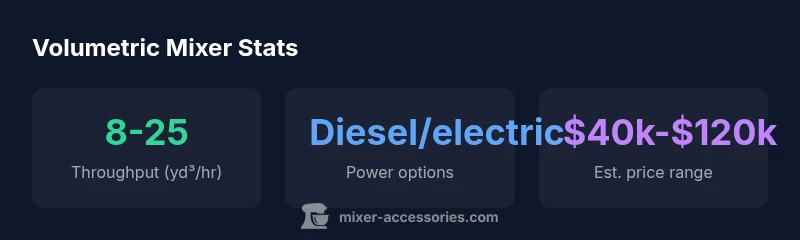
Power systems for volumetric mixers range from diesel engines to electric motors, with hybrid options increasingly available on premium models. Diesel-powered units are common for remote sites or where electricity is scarce, offering robust torque and broad mobility. Electric variants reduce emissions and operating costs in areas with reliable grid access and stricter environmental considerations. Some owners opt for hybrid control architectures that optimize energy use during batch cycles. Control systems vary from basic timer-based setups to advanced digital interfaces with real-time feedstock data, error diagnostics, and remote monitoring. When choosing a power configuration, factor in fuel availability, noise limits around job sites, and maintenance ecosystems for your chosen powertrain. Consider also the availability of spare parts and trained technicians in your region, as these influence both downtime and long-term reliability. For many buyers, a modern volumetric mixer with a scalable control system provides the best balance between batch quality and operational flexibility.
Attachments and accessories to consider
A volumetric mixer’s performance is amplified by thoughtful accessories. The loading hopper size and geometry affect how quickly you can refill, while moisture sensors help maintain proper water balance for different cement types. Calibration ports and test hoppers allow you to verify mix accuracy without wasting materials. Dust collection and filtration systems reduce fines in exhaust and surrounding areas, a consideration in regulated sites or urban environments. Optional metering accuracy enhancements, such as additional sensors for cement and aggregate flow, can improve batch consistency, particularly when switching between cement brands or grain-size distributions. It’s also worth evaluating the ease of cleaning and maintenance access; models with modular components or quick-connect hoses reduce downtime. Finally, ensure that you can source compatible spare parts locally and that the dealer offers training for operators and maintenance staff.
Used vs new: buying guidance
Deciding between a new or a used volumetric mixer depends on budget, project timelines, and risk tolerance. New units typically come with full warranties, modern diagnostics, and dealer-backed service networks, but carry higher upfront costs. Used units can offer substantial upfront savings, but you should conduct a thorough inspection: verify hours, inspect hoses and seals for wear, review calibration history, and confirm that the control system firmware is up to date. Ask for a maintenance log, recent pump and valve replacements, and a record of any batch quality issues. If buying used, consider a service plan or extended warranty from the seller, or negotiate a service package with a local dealer to cover critical components like hydraulic pumps and sensor assemblies. In all cases, insist on a hands-on test pour to confirm that the mixer performs consistently under expected load conditions.
Maintenance and servicing: keeping your mixer healthy
Regular maintenance is the backbone of reliable volumetric batching. Create a maintenance calendar that includes weekly checks (hose connections, seals, and alignment), monthly inspections (filters, sensors, and calibrations), and quarterly or annual service (hydraulic fluids, motor bearings, electrical connections). Establish a clean-down procedure after each batch to prevent concrete buildup that can clog meters and valves. If your model supports remote diagnostics, enroll in a service plan that notifications you of drift or sensor errors so you can schedule preventative maintenance before a batch is affected. Stock common spare parts such as seals, hoses, sensors, and fuses, and maintain a relationship with a local technician or dealer who can perform preventative maintenance and urgent repairs. A well-maintained volumetric mixer sustains throughput, reduces downtime, and extends the equipment life.
Typical volumetric mixer configurations and throughput ranges
| Model Type | Throughput (yd³/hr) | Power Options | Notes |
|---|---|---|---|
| Volumetric mixer (mobile) | 8-20 | Diesel or electric | On-site batching |
| Compact skid-mounted | 12-25 | Diesel or electric | Space-conscious |
| Trailer-mounted | 15-30 | Diesel or electric | Mobile and scalable |
| Industrial fixed | 20-40 | Diesel or electric | High throughput, larger footprint |
Your Questions Answered
What is a volumetric mixer?
A volumetric mixer is a batch-ready concrete mixer that meters cement, aggregates, and water on-site to achieve precise mix proportions. This setup minimizes waste and improves on-site quality control when used with proper calibration.
A volumetric mixer meters cement, sand, and water on-site to make concrete with precise proportions, helping reduce waste and improve consistency.
What to look for when buying?
Key factors include throughput, power source, calibration accuracy, maintenance needs, and service network availability. Compare models within the same class and verify parts availability in your region.
Focus on throughput, power, calibration, maintenance, and local service when buying.
Used volumetric mixers: good option?
Used units can save money but require a thorough inspection: check hours, hoses, calibration history, and maintenance records. Have a technician verify operation before purchase.
Used mixers can be a good deal, but inspect hours, calibration, and maintenance history closely.
Typical operating costs?
Costs include fuel or electricity, routine maintenance, spare parts, and potential downtime. Expect variability based on usage and local labor rates.
Fuel or power costs plus maintenance and parts determine operating costs.
Can it handle different cement types?
Yes, most volumetric mixers can handle multiple cement types with proper calibration and thorough washing between batches.
Yes, with proper calibration and cleaning between batches.
Where to find service near me?
Check dealer networks and authorized service centers for local support and parts availability.
Use the local dealer network or authorized service centers for support.
“Volumetric mixing offers precise batching and on-site flexibility, but success hinges on selecting the right model, power source, and service network.”
Top Takeaways
- Define your throughput needs before shopping.
- Choose power options that fit job-site constraints and costs.
- Prioritize calibration, diagnostics, and service access.
- Weigh new vs used options with a clear maintenance plan.