Best Concrete Mixer for Sale 2026: Comprehensive Buying Guide
Discover the best concrete mixer for sale with this buyer's guide from Mixer Accessories. Learn drum sizes, features, price ranges, and safety tips to choose a durable, affordable mixer for home projects.


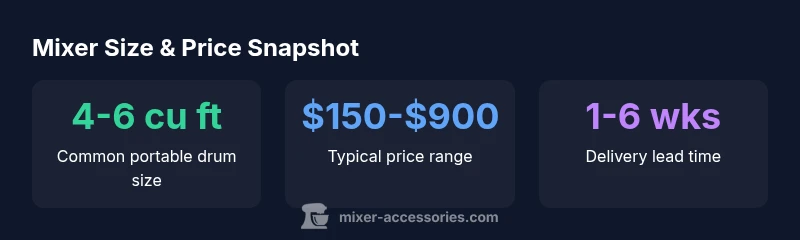
Most homeowners and DIY enthusiasts should start with a portable concrete mixer in the 4–6 cubic foot range. It balances price, portability, and mixing performance for typical small projects. For larger outdoor jobs, consider a towable 9–12 cubic foot drum mixer. Prioritize safety features, easy cleaning, and readily available replacement parts.
Why a concrete mixer for sale matters for home projects
For most DIYers and home improvement enthusiasts, a concrete mixer for sale isn't a gadget they plan to own for every project, but it dramatically speeds up work and improves consistency. When you search for a concrete mixer for sale, you're weighing drum size, motor power, portability, and the ease of cleaning after use. According to Mixer Accessories, the right mixer should balance capacity with practicality, so you don't buy more machine than you need or end up with something too small for your biggest job. The Mixer Accessories team emphasizes considering your typical projects—patio slabs, garden beds, or countertop projects—and choosing a model you can move, set up, and store without drama. A 4–6 cubic foot portable drum is often the sweet spot for most homeowners, delivering steady mixing with manageable weight. If you anticipate frequent larger pours, plan for a towable model in the 9–12 cubic foot range. This strategic approach saves time, reduces fatigue, and minimizes maintenance headaches.
Understanding mixer types: drum vs pan, portable vs towable
Concrete mixers come in several configurations, and understanding the differences helps you interpret a concrete mixer for sale. Drum mixers use a rotating cylinder where materials tumble, while pan mixers mix materials in a fixed bowl with a bladed paddle. For most home projects, drum-style units are simpler and more affordable, especially in portable forms. Portable electric drums are light enough to move around a yard or driveway, while gas-powered options provide more torque on tough mixes. Towable drum mixers add mobility for outdoor sites and larger pours, but they require a vehicle with a hitch and some space to maneuver. When you compare options, align weight, power type, and drum capacity with how you plan to use the mixer. This helps you avoid overpaying for features you won't actually use and keeps the project schedule realistic.
Key features to compare when shopping
When evaluating concrete mixer for sale options, focus on a handful of features that deliver the best value for home projects. Here are the most important criteria to compare:
- Drum capacity: look for 4–12 cu ft ranges; bigger drums pour more concrete, but weigh more and cost more.
- Power source: Electric drum mixers are quiet and reliable for indoor and outdoor tasks; gas-powered units offer more torque for heavy mixes.
- Build quality: Look for thick-walled drums, robust frames, and reinforced mounting; these reduce wear and extend life.
- Cleansing and maintenance: Removable drums, accessible blades, and simple drain plugs save time and reduce cleanup effort.
- Portability and storage: Consider wheelhorse design, foldable handles, and a compact footprint for fit in garages or sheds.
- Replacement parts and service: Availability of drums, paddles, gears, and seals matter over the life of the unit.
- Safety features: Overload protection, splash guards, and secure locking mechanisms help prevent accidents on busy job sites.
Sizing your mixer to your typical job
Sizing your mixer to the job is a practical exercise in balancing batch size with handling. For most residential projects such as small slabs, steps, or patchwork, a 4–6 cu ft drum is ideal. If you routinely pour larger quantities or work outdoors where loading and unloading are more demanding, a 9–12 cu ft towable drum mixer may reduce cycles and labor. Always align motor power with your mix density and the material you’re using (sand-to-cement ratios matter). And remember, larger drums increase cleanup time and require more storage space, so plan your garage or shed layout accordingly.
Price ranges, warranties, and value considerations
Price is a proxy for capacity, durability, and after-sale support. In the home market, you’ll see a broad range from entry-level 4–6 cu ft models to professional-grade 9–12 cu ft offerings. Understand that cheaper units may save money upfront but can cost more in maintenance or downtime. Look for models with protected warranties, spare parts availability, and a simple service route. A longer warranty is often a signal of confidence in build quality, while an extensive replacement-part ecosystem reduces total ownership cost over the life of the mixer.
New vs used: what to watch for
Used concrete mixers can offer excellent value if you know what to inspect. Check the drum for deep corrosion, the belt or drive system for wear, and the on/off switch for reliability. Listen for grinding noises, verify the motor runs smoothly, and inspect the frame for cracks. Ask about prior usage, available service history, and whether replacement paddles and seals are in stock locally. If you’re buying used, try to source from a reputable seller who can provide a basic safety check and a test run before delivery.
Delivery, setup, and on-site safety checks
Delivery logistics matter when buying a concrete mixer for sale. Check load-in requirements, space for assembly, and whether tools are needed for mounting or wheel installation. On-site safety starts with PPE and a dry, level surface. Verify that the power source on site matches the unit (voltage, plug type) and that all guard features are in place. A quick pre-use inspection should include drum locking, belt tension, and proper lubrication.
Common concrete mixer types and price ranges
| Model Type | Drum Capacity | Best Use | Approx. Price Range |
|---|---|---|---|
| Portable Drum Mixer | 4-6 cu ft | Residential/DIY | $150-$900 |
| Towable Drum Mixer | 9-12 cu ft | Larger outdoor projects | $800-$1800 |
Your Questions Answered
What is a concrete mixer for sale?
A concrete mixer for sale is equipment designed to combine cement, aggregate, and water into concrete. Availability ranges from small portable units to large towable machines. The right choice depends on your project size, handling ability, and space.
A concrete mixer for sale is a machine to mix cement, sand, and water into concrete, available in small portable and larger towable sizes.
What features should I prioritize when buying?
Prioritize drum capacity, power source, build quality, ease of cleaning, replacement parts availability, and safety features. Matching these to your typical projects saves time and reduces downtime.
Focus on drum size, power, and safety features to get the best value for your projects.
Should I buy new or used?
New mixers have the latest safety features and warranty but cost more. Used units can offer value if inspected for wear, rust, and motor health, and if you can verify service history and spare parts availability.
New is safer and comes with a warranty, but a well-checked used mixer can be a good deal.
How long do mixers last?
Lifespan depends on usage, maintenance, and build quality. With proper care, home-use drum mixers can last several years, while professional-duty units may endure longer.
With regular maintenance, a well-made mixer can last for many years.
What safety steps should I take during setup?
Set up on a dry, level surface, use PPE, verify electrical compatibility, secure guards, and perform a quick test run with cement-free mix to ensure safe operation.
Make sure the area is level, wear safety gear, and test the unit before actual use.
“A strong mixer choice balances drum size, motor power, and maintenance accessibility. The right model saves time and improves result reliability.”
Top Takeaways
- Start with 4-6 cu ft models for most DIY jobs
- Evaluate drum size against project scale
- Consider towable models for outdoor projects
- Prioritize safety features and maintenance parts availability
- Expect price ranges and warranties to guide value