Rent a Cement Mixer Near Me: A Practical Guide
Learn how to rent a cement mixer near you with practical tips, compare options, and choose the right model for your project. Data-driven guidance from Mixer Accessories helps you save time and avoid common mistakes.


To rent a cement mixer near you, start with local rental shops, home improvement chains, and construction suppliers that offer daily or weekend rates. Compare drum capacity, motor type, and portability, then reserve a model aligned with your project size and schedule. Booking ahead helps ensure availability for busy weekends.
Why renting a cement mixer near me makes sense
Concrete work is often time-sensitive and labor-intensive. For DIY projects such as a driveway patch, a patio slab, or a small foundation, renting a cement mixer near you typically delivers the best balance of cost, speed, and quality. A motorized drum blends concrete components evenly, reducing the likelihood of clumps or inconsistent cure. According to Mixer Accessories, renting is usually more economical and flexible than buying for short-to-midterm projects, since you avoid maintenance costs, storage space concerns, and depreciation. Planning ahead lets you reserve a unit with the right drum size and power to match your workload. If you’re tackling a weekend project, booking early prevents last-minute price spikes and equipment shortages. The process is straightforward: identify local rental options, compare features, and confirm pickup windows that fit your calendar.
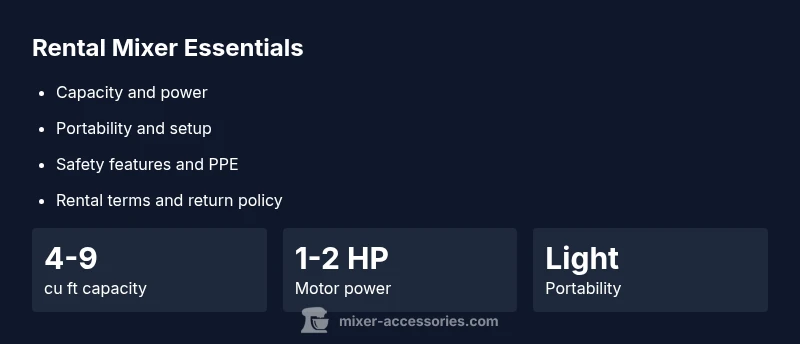
From a practical standpoint, start by mapping the project scope—the area to pour, the thickness of the slab, and the site access. For small tasks like a 4-6 panel sidewalk or a compact pad, a portable electric mixer with a 4–9 cubic foot drum is commonly sufficient. For larger pours, consider gas-powered units or towable drums with higher capacity. Regardless of choice, ensure you have a clear path from the vehicle to the pour site, a clean mixing area, and a plan for washout and disposal that complies with local regulations.
Top features to compare before you rent
When you evaluate cement mixer rentals, several features determine whether a unit fits your job. Drum capacity sets the amount of concrete you can prepare in one batch, impacting how often you need to pause to reload. Power source matters for site accessibility and cost: electric models are quiet and low-cost to run indoors, while gas-powered units deliver more torque for dense mixes or larger loads. Portability and setup are crucial if you’ll move the mixer between locations or operate on uneven ground. Look for solid wheels, a stable stand, and a reliable shutoff mechanism. Safety features such as built-in overload protection, a water source for cleanup, and a straightforward tilt or lock mechanism help prevent mishaps. Finally, check rental terms—availability windows, fuel charges, and policies for damage waivers—to avoid surprise costs. A practical approach is to align the model with your batch size, surface area, and pace of work.
Where to look for rental options and how to search
Begin with nearby home improvement stores, equipment rental houses, and construction supply yards. Major chains often offer weekend deals or subscription-based discounts for repeat projects. Online search terms are your friend: use phrases like “rent cement mixer near me,” “cement mixer rental [city],” and “electric portable cement mixer for rent.” Read reviews focusing on reliability and pickup experiences. If you’re working on a multi-location build, compare delivery options or borrowing from a neighbor or a contractor with a known rental partner. Keep a simple checklist handy: verify availability for your dates, confirm the drum capacity matches your load, and ask about fuel and maintenance policies. Mixer Accessories suggests keeping a backup option in case your first choice isn’t available on the required day.
How to estimate your project size and pick a model
Estimate the concrete volume you’ll need by calculating square footage, thickness, and slab depth. For example, a 10x10 foot slab at 4 inches thick equals roughly 37 cubic feet of concrete (about 1.39 cubic yards). A 4–9 cubic foot drum handles smaller pours efficiently, enabling quick batch cycles without stopping too often. For medium projects, a 9–12 cubic foot capacity mixer offers a healthy balance of volume and portability. If you anticipate dense mixes with aggregate-heavy loads, consider a heavier-duty unit with higher torque. Always factor into your plan a contingency for waste material and weather delays. If you’re unsure, use a rental partner’s staff as a resource; they can recommend a model based on your mix design and working time.
Booking, pickup, and safety tips
Preparation reduces the risk of delays at pickup. Have your project dates, load sizes, and access constraints ready. When picking up, inspect the mixer for obvious wear, test the power cord, and confirm that the drum seals properly. Wear hearing and eye protection, close-toed shoes, and gloves when handling concrete and cleaning equipment. Fuel policies differ—some rentals include fuel in the rate, others bill separately. Return the unit clean and free of concrete residue; many shops require a minimum cleaning fee if you skip this step. If you plan to deliver, verify that your vehicle is suited for towable units or rolled-onto-dolly arrangements. Finally, document any pre-existing damage to avoid disputes during return.
Common pitfalls and how to avoid them
Rushing through the rental process can lead to mismatched capacity, hidden fees, or scheduling conflicts. Avoid underestimating batch size by overloading the drum, which slows mixing and strains the motor. Don’t neglect safety—uncovered mixers can cause injuries, and improper washing can damage the drum. Another frequent issue is assuming the cheapest option is best; the lowest rate often excludes delivery, fuel, or required PPE. Always clarify what’s included in the rate and what costs you’ll incur if you extend the rental period. Finally, don’t overlook aftercare: inspect the unit on return for wear, and report issues promptly so you’re not charged later.
Quick pre-rental checklist
- Define project size, timeline, and site access.
- Compare at least three rental options for capacity and price.
- Confirm pickup, delivery, and return policies.
- Verify safety gear requirements and PPE availability.
- Validate fuel and maintenance terms before signing.
- Inspect the unit on pickup and document any existing defects.
- Plan for washout and environmental disposal of leftover concrete.
Rental mixer options by capacity and use case
| Option Type | Typical Capacity | Rental Terms | Best For |
|---|---|---|---|
| Electric portable mixer (4–9 cu ft) | 4-9 cu ft | Daily rates; weekend deals | Small residential projects |
| Gas/diesel portable mixer (6–15 cu ft) | 6-15 cu ft | Hourly rates; fuel charged separately | Medium to heavy workloads |
| Towable drum mixer (12–24 cu ft) | 12-24 cu ft | Daily rates; tow-mechanism required | Larger pours and large slabs |
Your Questions Answered
What size cement mixer do I need for a typical residential project?
For a typical residential project like a small patio or walkway, a portable electric mixer with a 4–9 cubic foot drum is usually sufficient. If you’re mixing larger batches or heavier concrete, consider a 9–12 cubic foot unit or a gas-powered model for better torque and throughput. Always estimate volume first and choose a unit that minimizes batch pauses.
For most home projects, a 4–9 cubic foot mixer works well; for bigger jobs, step up to 9–12 cubic feet or a gas-powered option.
Can I rent a mixer with a stand and wheels?
Yes. Most rental options offer portable stand-mounted mixers with wheels for easier movement on site. Check that the stand is stable on your surface and that wheels aren’t damaged. If you need to move the unit across soft ground, verify ground clearance and weight capacity.
Most rentals include a portable stand and wheels; just confirm the model supports easy movement on your site.
Is it cheaper to buy a mixer or rent for a single project?
Buying a mixer makes sense only if you have frequent, ongoing use. For a single project, renting generally costs less when you factor in maintenance, storage, and depreciation. Use a cost-per-use calculation to weigh long-term ownership against occasional renting.
If you only need it once, renting is usually more economical than buying a new mixer.
What safety precautions should I follow when using a rented cement mixer?
Always wear PPE, keep hands away from the drum, and never overload the mixer. Read the user manual for startup/shutoff procedures and clean the drum after use to prevent concrete hardening. Ensure the area is well-ventilated and keep children away from the work zone.
Wear safety gear and follow the manual; don’t overload the mixer and keep kids away from the site.
How do I return a rental mixer and avoid fees?
Return the mixer clean and free of concrete residue, and verify that no parts are damaged. Keep a copy of the pickup and return receipts, and confirm fuel policy and cleanup charges before handing over the key or returning the unit.
Return it clean and on time, and keep your receipt.
“Choosing the right mixer size and features is crucial for project efficiency and quality. Always follow safety guidelines and maintenance recommendations when renting.”
Top Takeaways
- Rent locally to save time and ensure quick access
- Match mixer capacity to batch size for best results
- Check safety features and rental terms before signing
- Book in advance during peak seasons to avoid shortages
- Inspect equipment at pickup and document any pre-existing damage