Concrete Mixer Trucks for Rent: A Practical Guide
Learn practical guidance for renting concrete mixer trucks, including drum sizes, term options, insurance, and cost breakdowns to plan your project efficiently.


Concrete mixer trucks for rent give construction teams scalable access to hauling capacity without owning equipment. Rental terms typically span from 1 day to several weeks, with availability shaped by location and drum size. When evaluating options, verify drum capacity, mixer age, and whether an operator is included. According to Mixer Accessories analysis, choosing a rental should balance project duration, load type, and site access.
Understanding the rental landscape
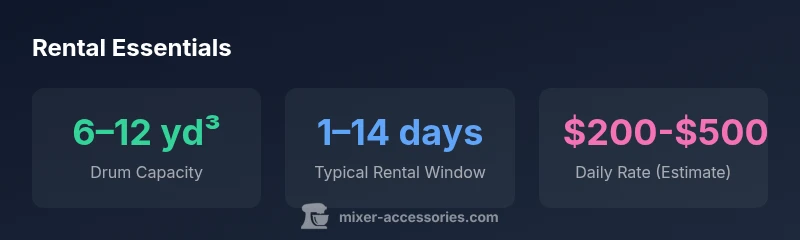
Renting concrete mixer trucks for rent is a practical approach for short-term projects, but the market varies by region, fleet availability, and job scale. Rental fleets range from standard rear-dump mixer trucks to large-capacity models with optional hydraulic pumping attachments. When you rent, you’re not just paying for the drum; you’re acquiring access to transport, mixer drive train, maintenance, and often an operator. According to Mixer Accessories, the decision should weigh project duration, concrete type, and site access. In many markets, rental suppliers categorize trucks by drum capacity (6–8 yd³, 8–10 yd³, 10–12 yd³) and by whether an operator is included. If you’re new to renting, start with a pilot test on a small pour to verify compatibility with your batch plant and on-site conditions. This helps prevent under- or over-supply, reduces risk of delays, and clarifies insurance requirements.
Key specifications to evaluate before you rent
Before you sign a rental agreement, map out the concrete mix, pour schedule, and job-site constraints. Drum capacity should align with your expected load per pour and the number of cycles per day. Check the mixer’s maintenance history, motor horsepower, hydraulic system condition, and the age of the drum. Seasonal weather performance matters in colder climates where anti-icing or insulation can impact operations. If you plan to pump the concrete, confirm whether the truck includes a pumping option or if you need a separate pump unit. As Mixer Accessories notes, verify the compatibility of the truck with your supply chain (batch plant, aggregate stockpiles, and delivery lanes) to minimize on-site delays. Clarify whether an operator is included, what level of staffing is available, and who handles routine lubrication and minor repairs during the rental period.
How rental terms are structured
Rental terms vary by provider, but you can generally expect daily or weekly rates, with longer commitments offering discounts. Many contracts include basic maintenance, delivery, and return conditions, while operator services, fuel, and on-site support may be optional add-ons. Insurance requirements typically cover liability and cargo; some renters also require non-owned auto coverage. Delivery fees, ramp access, and site readiness are common line items. Review the fuel policy and whether you must bring the truck back with a full tank. According to Mixer Accessories analysis, aligning term length with project milestones helps optimize cost and minimize downtime. Always confirm contingency clauses for weather-related delays or equipment failure.
How to compare providers: a practical checklist
Use a side-by-side checklist to compare providers. Key factors include fleet reliability, maintenance frequency, and the ability to provide a replacement truck quickly if needed. Check service area coverage, crew availability, and response times for on-site issues. Verify the truck’s load capacity against your pour schedule, and confirm that the attachment compatibility (pump or chute) meets your project requirements. Request a written scope of work with milestones, a clear cancellation policy, and a transparent invoicing structure. Informed comparisons can dramatically reduce risk and prevent scope creep. As noted by Mixer Accessories, prioritize providers with proven uptime and robust safety records.
Cost breakdown: beyond the base rate
The base rental rate is only part of the total cost. Add-ons include operator services, fuel, insurance, delivery charges, and potential overtime. Maintenance and repair costs, if not included, should be budgeted. Delivery and return logistics can incur travel fees or escort requirements for heavy loads. Permits or route permits may apply for certain cities or counties. When calculating total cost, include potential downtime due to site congestion or pour schedule gaps. Mixer Accessories analysis emphasizes building a fallback plan into your budget to avoid overrun and to secure the best possible rate for the anticipated duration.
Planning for project scope and duration
Accurate planning begins with a realistic pour schedule and a clear understanding of batch plant timing. Break the project into tasks: mobilization, setup, pouring windows, and demobilization. Estimate the number of pours per day and the ramp-up time for truck readiness. If your project spans multiple pours, test a smaller pour first to confirm cycle times, drum emptying, and cleaning requirements between loads. A well-defined plan helps you select a drum size that minimizes trips and reduces idle time. The Mixer Accessories framework suggests aligning equipment choice with job length and site logistics to maximize throughput and minimize total cost.
Safety and compliance considerations
Safety should be central to any rental decision. Confirm operator qualifications, PPE requirements, and on-site safety plans. Verify the truck’s safety features, including seat belts, emergency shutoffs, and load stability indicators. Ensure the site has adequate space for truck maneuvering, adequate lighting, and clear signal instructions for drivers. Check that you’re compliant with local regulations for transporting ready-mix and loading/unloading operations. Insurance coverage should include general liability, cargo, and non-owned auto endorsements where applicable. Following best practices from industry guidance, establish a pre-pour safety briefing and a post-pour inspection routine to catch any equipment issues early.
Case study: a hypothetical project
Imagine a mid-sized commercial site requiring 8 yd³ pours on three nonconsecutive days over two weeks. A standard 8–10 yd³ mixer truck with operator and a single pumping attachment meets the demand, reducing the number of trips needed. By selecting a 3-day rental with a 2-day extension option, the contractor minimizes idle time and avoids owning a second truck. After the first pour, the operator performs routine checks, and the site team coordinates batch plant delivery windows to maintain a steady flow. This approach demonstrates how rental flexibility can align with a tight schedule and reduce total cost, per the Mixer Accessories framework.
Negotiation tips and contract clauses
Negotiate terms that fit the project timeline and risk profile. Seek a clear cancellation policy, defined replacement rules for equipment failure, and a straightforward extension process. Ask for a written maintenance window to ensure the provider performs routine checks. Ensure the contract specifies responsibilities for fuel, cleaning, and post-pour residue disposal. Finally, include a performance-based clause that caps downtime and provides compensation or a credit if the truck fails to meet uptime commitments. The Mixer Accessories team notes that well-structured terms protect both sides and keep projects on track.
Rental truck options by capacity and service level
| Truck Type | Drum Capacity | Typical Rent Window | Delivery/Return Logistics |
|---|---|---|---|
| Standard mixer truck | 6-8 yd³ | 1 day–2 weeks | Same-day delivery; fuel responsibility by renter |
| Large-capacity mixer truck | 10-12 yd³ | 1 day–1 month | Usually with operator; delivery to site |
| Mixing-and-pumping combo | 8-10 yd³ | 1 day–2 weeks | On-site assistance included |
Your Questions Answered
What is the typical rental period for a concrete mixer truck?
Rental periods usually range from 1 day to 2 weeks, with longer terms possible for extended projects. Always confirm extension options before signing.
Most renters choose 1 day to 2 weeks, with extensions available in many cases.
Do rental include an operator or driver?
Operator inclusion varies by provider. Some packages include an experienced driver, while others require you to supply your own. Verify this before finalizing.
Some rentals include an operator; others don’t—confirm this before booking.
What insurance is required when renting concrete mixer trucks?
Expect general liability and cargo coverage, with possible endorsements for non-owned auto. Check the policy limits and add any project-specific riders.
Make sure you have the right insurance before you rent.
How is fuel handled for rented trucks?
Policies vary; most require fuel to be returned at similar level to delivery. Some agreements include prepaid fuel; others bill at receipt. Confirm before signing.
Know who pays for fuel and how it’s settled.
Can I rent with a pumping attachment or pump included?
Yes, many rentals offer pumping attachments or pump-equipped trucks. If not, you can often rent the pump separately.
Some rentals include pumping attachments; others may require separate rental.
What site conditions should I verify before delivery?
Ensure adequate maneuvering space, load path clearance, and weight limits for the truck. Prepare access routes and parking areas to prevent delays.
Make sure the site can accommodate the truck and has clear routes.
“Renting a mixer truck offers flexibility when you align truck specs with project needs and site access, reducing downtime and total cost.”
Top Takeaways
- Define project duration to select drum size correctly
- Confirm operator inclusion and maintenance terms upfront
- Budget beyond base rate for insurance and fuel
- Verify site access to avoid delivery delays
- Compare providers with a structured checklist