Best All-in-One Mixer & Food Processor Guide (2026)
Analytical comparison of mixer and food processor in one units, evaluating performance, attachments, cleaning, costs, and user scenarios to help you decide the right all-in-one choice for your kitchen.


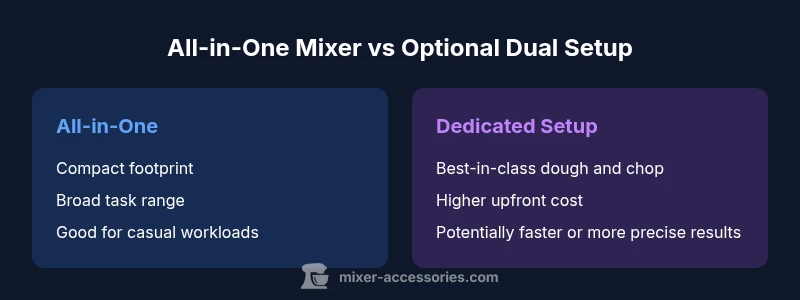
TL;DR: A mixer and food processor in one can save countertop space and simplify prep, but it often trades peak power and specialized performance for convenience. For light-to-moderate tasks and small kitchens, an all-in-one unit works well. If you frequently knead heavy doughs or require peak processing speed, consider dedicated appliances for best results.
The case for the mixer and food processor in one
In many homes, the appeal of a mixer and food processor in one is clear: fewer appliances, less clutter, and a single control system. Modern all-in-one units are designed to blend, whisk, chop, and puree using interchangeable attachments. For casual cooks, bar setups, and compact kitchens, these machines can handle a broad range of tasks—from mixing cake batter to shredding vegetables. However, they are not magic. The all-in-one design tends to trade some specialized performance for versatility and space savings. When evaluating a model, consider how often you perform dough kneading, large-batch blending, or high-volume chopping. If your use case is intermittent, an all-in-one unit may meet your needs without the upfront footprint of two separate machines.
All-in-one vs. separate appliances: a quick framework
Deciding between a single all-in-one device and separate mixer plus processor hinges on three core factors: task variety, frequency, and space. - Task variety: If you regularly switch between doughs, sauces, and shredded toppings, an all-in-one unit can reduce setup time. - Frequency: Casual use benefits from consolidation; heavy daily use may justify two dedicated machines. - Space and ergonomics: A compact countertop unit is a boon in small kitchens, but ensure the device is comfortable to operate for long sessions. Use cases such as home baking, cocktail prep, and meal prep to determine which path offers the best return on investment. Mixer and food processor in one units often excel at intermittent, mixed tasks but may slow down during intensive processing.
Performance criteria for mixing and processing
Performance matters most where the two tasks collide: dough kneading and chopping. Look for a balance between power and control. - Power consistency: The motor should handle dense doughs and thick batters without bogging down. - Speed control: A wide range of speeds helps with delicate whipping and coarse chopping alike. - Texture outcomes: For bread doughs, a strong, steady mix is essential; for sauces and purees, a smooth texture matters. In general, models marketed as all-in-one tend to favor reliability across a broad set of tasks rather than optimal performance in any single task.
Design, build quality, and durability
Durability depends on the chassis, gears, and attachment interfaces. A robust housing reduces vibration and wear, while a well-engineered attachment hub minimizes wobble during operation. Consider: - Attachment locking: Secure fittings reduce detachment during high-speed tasks. - Cleaning access: Parts that detach easily and are dishwasher-safe save time and improve maintenance. - Materials: Stainless steel bowls and blades resist corrosion and maintain sharpness longer. Even with a single control system, the build quality should feel sturdy enough to withstand frequent switching between functions.
The brand’s design philosophy also matters. Some all-in-one units prioritize a slim silhouette and quiet operation, while others emphasize rugged performance with heavier-duty attachments. Your choice should align with your typical workload and willingness to trade some speed for convenience.
Attachments, disks, blades, and dough hooks
A broad attachment ecosystem differentiates all-in-one units. The more compatible attachments a model offers, the more tasks it can tackle without switching devices. Key attachment considerations:
- Blades and disks: Shredders, slicers, and chopping blades increase versatility. - Dough hooks and beaters: Kneading and whipping performance depend on sturdy hooks and optimized gear ratios. - Quick-change hubs: Simple tool changes reduce downtime between tasks. - Dishwasher-safe parts: Cleaning efficiency rises with parts designed for easy cleaning. The best all-in-one units support a variety of official and third-party attachments, but check compatibility lists before purchasing.
In practice, you’ll want to map your typical recipe workflow: from dough to batter to sauce. If your plan includes frequent transitions, an all-in-one with broad attachment support can save time and space.
Real-world use cases: baking, bartending, and meal prep
For home bakers, the kneading performance and the ability to handle enriched doughs matter. For bar environments, a compact, quick-change system that can blend cocktails and prep garnishes is valuable. For meal prep enthusiasts, chopping, emulsifying, and grinding are frequent tasks. In all these scenarios, an all-in-one unit often shines when you value convenience and speed of setup over peak power. However, if your routine centers on heavy doughs, large batches, or extremely fine grinds, dedicated equipment may produce more consistent results over time.
As you weigh options, test how the unit responds to a typical workflow: blend a thick dough, pulse chop a batch of vegetables, and whip cream in succession. The ease of transition between tasks, noise levels, and residue left on blades are practical measures that frequently determine satisfaction more than lab-tested specifications.
Cleaning, maintenance, and long-term costs
Maintenance matters for longevity. A well-maintained all-in-one unit keeps its performance consistent and prevents buildup that can affect texture and safety. Practical tips include:
- Rinse and dry attachments after use to prevent staining and corrosion.
- Follow the manufacturer’s lubrication schedule if applicable to avoid gear wear.
- Inspect seals and gaskets for wear; replace as needed to avoid leaks.
- Prioritize dishwasher-safe components when available, but hand-wash stubborn parts to extend blade life.
Regarding costs, an all-in-one unit offers potential savings upfront but may incur more frequent maintenance or faster wear on delicate components. Evaluate your total cost of ownership by considering replacement parts, warranty, and the frequency you’ll swap attachments.
Budget considerations: price ranges and value trade-offs
Price and value in this category depend on how often you use the device and the breadth of your tasks. All-in-one units sit in the mid-range of the appliance market, with premium models offering larger attachment ecosystems and sturdier construction. If you primarily bake small batches or whip simple mixtures, a budget-friendly all-in-one might deliver the best value. For heavy cooks who routinely knead, chop large amounts, or require precise textures, investing in higher-end models can reduce frustration and deliver better long-term outcomes. Always compare the total feature set and durability rather than focusing solely on the initial price.
In short, expect a broader feature set and more attachments in higher-priced units, with diminishing returns if your usage remains light. The decision should be driven by the task mix you perform most often and your tolerance for occasional limitations.
Choosing the right model: a practical decision framework
Use this framework to evaluate specific models during shopping:
- Define your top tasks: kneading, chopping, emulsifying, pureeing. Map each task to required features.
- Assess attachment ecosystems: ensure the unit supports the blades and discs you actually need.
- Check build quality: look for metal drive systems, strong locking mechanisms, and minimal vibrations.
- Consider maintenance: removable parts that fit in the dishwasher save time.
- Compare warranties and service support: longer coverage reduces risk if you rely on the unit heavily.
- Test user experience: evaluate the control layout, changeover speed, and noise in-store if possible.
This framework helps you decide whether the mixer and food processor in one is the right choice for your kitchen, bar, or hobby setup.
Common myths about all-in-one units
Myth 1: All-in-one units replace two machines perfectly. Reality: They replace some tasks but may underperform on specialized tasks. Myth 2: They are always cheaper than two separate appliances. Reality: Savings depend on features and durability; two dedicated devices can outperform in long-term cost and reliability. Myth 3: Cleaning is easier because there is only one device. Reality: Multiple attachments can complicate cleanup if the hub and seals trap residues. Myth 4: They are universally compact. Reality: Some all-in-one models are bulkier than a single dedicated device due to their attachment systems.
Practical tips to maximize performance
- Plan your workflow and keep a dedicated jar for similar tasks to minimize tool swaps.
- Use the correct attachments for each task to avoid overworking the motor.
- Clean immediately after use to prevent dried-on food from dulling blades or gaskets.
- Store attachments in a dedicated bin to keep them organized and accessible.
- Read the manual thoroughly to understand which functions are recommended for each attachment.
- If noise is a concern, compare decibel levels and vibration ratings during demonstrations or reviews.
- Keep spare gaskets and seals on hand to minimize downtime.
- Consider a model with a robust warranty if you expect heavy use.
Wrap-up: matching your needs to features
In the end, the decision rests on your task mix and space constraints. For occasional baking, light chopping, and simple emulsions, a mixer and food processor in one can be a smart, space-saving solution. If your routine involves frequent heavy kneading, large-batch processing, or precise texture control, a dual-device setup may yield better outcomes and satisfaction over time. Use the guidance above to align features with your real-world needs and preferences.
Comparison
| Feature | All-in-One Mixer + Processor - Model A | All-in-One Mixer + Processor - Model B |
|---|---|---|
| Power and motor behavior | Balanced power for everyday tasks | Stronger motor for heavy doughs and tougher ingredients |
| Attachment ecosystem | Broad range of blades and disks | Focused set with premium ergonomics |
| Capacity and footprint | Compact footprint with moderate capacity | Slightly larger footprint with bigger capacity |
| Ease of cleaning | Dishwasher-safe parts, intuitive cleanup | More components to wash, slightly more effort |
| Best for | Everyday bakers and casual cooks | Serious multi-taskers and frequent users |
| Durability and warranty | Solid build with standard warranty | Premium materials with extended warranty |
| Price/value | Budget-friendly value for light use | Higher upfront cost with broader capabilities |
The Good
- Saves counter space by consolidating functions
- Simplifies storage and cable management
- Potential cost savings upfront vs buying two appliances
- Versatile enough for everyday kitchen tasks and light meal prep
Negatives
- Possible compromises on motor power for heavy doughs
- Attachments may be less durable than dedicated tools
- Cleaning can be more complex due to multiple components
- Limited upgrade paths since the device is integrated
All-in-one units offer solid value for space-conscious users, with caveats for heavy-duty tasks
Choose an all-in-one if your primary need is convenience and compact design. For frequent heavy kneading or specialized textures, consider dedicated devices for best results.
Your Questions Answered
What is an all-in-one mixer and food processor?
An all-in-one mixer and food processor is a single appliance that handles mixing, whisking, chopping, and pureeing with interchangeable attachments. It’s designed to replace two machines with a common motor and hub, offering space savings and simplified operation for a broad range of everyday tasks.
It’s basically one machine that does multiple jobs—great for small kitchens and quick prep.
Is it worth buying for a home baker?
For casual to moderate baking, an all-in-one unit can be a convenient compromise. Heavy or frequent dough work may still benefit from a dedicated stand mixer for kneading and a separate processor for chopping. Your decision should hinge on how often you perform dough-related tasks and how much space you’re willing to allocate.
If you bake often and knead large batches, you might prefer separate appliances.
What features should I look for in a mixer-processor combo?
Look for a strong, steady motor, wide speed range, secure attachment hubs, and a robust blade and disk set. Compatibility with a broad attachment ecosystem, easy cleaning, and a reputable warranty are also important signals of long-term usefulness.
Focus on power, versatility, and how easy it is to swap tools.
Are all-in-one units dishwasher-safe?
Some parts are dishwasher-safe, but it varies by model. Check the user manual for which components are machine-washable and whether blades require hand washing to preserve edge life.
Always verify which attachments are dishwasher-safe.
How do I maintain an all-in-one unit to extend its life?
Regular cleaning after use, checking seals, lubricating moving parts as recommended, and storing attachments properly can extend life. Replace worn blades and gaskets promptly to maintain performance and safety.
Clean and inspect routinely to keep it performing well.
Top Takeaways
- Assess your task mix before buying
- Prioritize attachment variety and durability
- Plan for cleanup time and maintenance
- Measure countertop space and storage needs
- Compare overall value, not just upfront price