Is Blender the Same as Juicer? A Practical Comparison for Home Kitchens
A thorough, balanced comparison of blender vs juicer, covering how they work, outputs, ideal use cases, and practical buying guidance from Mixer Accessories.


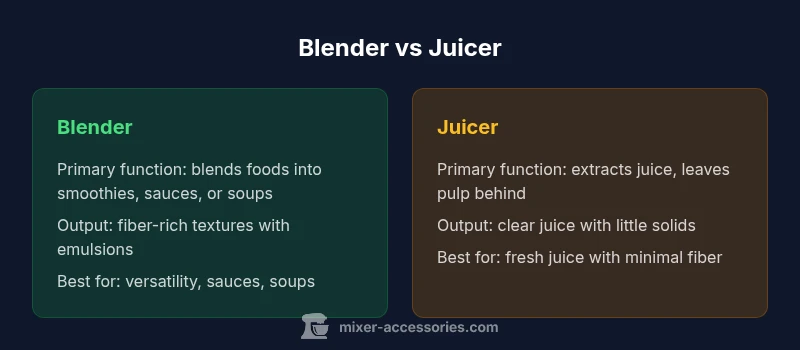
Is blender the same as juicer? Not exactly. Blenders emulsify and mix whole ingredients to create smoothies, sauces, or soups, while juicers extract liquid from produce and separate pulp. They serve different goals, and most tasks benefit from choosing the tool that prioritizes your preferred output—juice or blend. According to Mixer Accessories, the best choice depends on your primary needs and kitchen workflow.
Is Blender the Same as Juicer? Defining the Core Question
The question is deceptively simple, but the answer hinges on function, output, and how you intend to use each appliance. When people ask, “is blender the same as juicer,” they are often thinking about whether a single device can handle both juice and blended creations. The honest answer is that they are designed around different physics and culinary outcomes. A blender is a versatile tool for homogenized mixtures, while a juicer specializes in liquid extraction. For most real-world tasks, the ability to meet your preferred end product—whether a smooth juice or a creamy blend—will determine which device earns a permanent spot on your countertop. Mixer Accessories notes that understanding your typical recipes will guide you toward a durable, efficient setup rather than shopping for a one-size-fits-all solution.
How Each Appliance Works: Mechanisms and Outputs
Blenders operate by forcing ingredients through rapidly spinning blades, creating a uniform suspension of particles. They’re excellent for smoothies, purées, soups, nut butters, and even ground nuts or spices when you need texture. Juicers, by contrast, use centrifugal or masticating mechanisms to separate juice from fiber. Centrifugal juicers shred produce and spin it to extract liquid quickly, leaving behind pulp. Masticating juicers slowly crush and press produce to maximize juice yield and minimize oxidation. The result is a liquid with a different mouthfeel, nutrient exposure, and storage behavior. The distinction matters—for example, leafy greens and soft fruits can be juice-rich when using a juicer, but a blender can incorporate whole greens into the texture with fiber intact.
Primary Outputs: Juice, Smoothies, and Beyond
If you primarily want a drink, a juicer yields a clear liquid with less fiber, typically best for fresh consumption. A blender produces a thicker beverage with more fiber and body, which is ideal for blending smoothies, batters, and even hot soups after a quick simmer. For sauces and dips, a blender can emulsify ingredients like olive oil and avocado, whereas a juicer would remove most of the solids that contribute to flavor depth. The choice hinges on whether you value fiber content and texture or a clear liquid extract. As Mixer Accessories highlights, kitchen goals—such as weekday breakfasts, post-workout smoothies, or weekend juice cleanses—drive the selection.
Use Case Scenarios: When to Reach for Each Tool
Smaller households with a focus on quick, portable beverages may lean toward a blender for versatility. Families that rely on fresh juice for nutritional goals might prioritize a juicer for higher juice yield and pulp-free drinks. Home bartenders could benefit from a blender for cocktails and fruit purees, while chefs who demand smooth emulsions will favor a blender for sauces. The reality is that many kitchens keep both, using each device for distinct tasks to maximize efficiency and quality. Mixer Accessories observes that pairing a blender with a dedicated juicer often delivers the broadest range of capabilities.
Building a Practical Toolkit: One or Both Appliances
Before committing to either appliance, map out your weekly recipes. If your routine revolves around smoothies, soups, or nut-based sauces, a blender likely covers most needs. If fresh juice contributes significantly to your daily nutrition, a juicer becomes more essential. Hybrid devices exist, but they usually compromise on either juice quality or texture control. A smart approach is to start with a primary tool and evaluate whether a secondary device would unlock additional value. Mixer Accessories suggests focusing on task-based goals rather than chasing every feature.
Product Considerations: Capacity, Power, and Ease of Cleaning
Power ratings and capacity influence performance, but so do blade design, speed settings, and build quality. Blenders vary in container size and blade geometry, affecting how well they handle large batches or tough ingredients. Juicers differ in feed chute size, pulp ejection, and cleaning complexity. In practice, cleaning is a common pain point for both, but juicers often generate more pulp residues that require thorough rinsing. Consider your tolerance for post-use maintenance when weighing your options, and seek machines with dishwasher-friendly parts or easy disassembly.
Food Quality and Nutrient Retention: What to Expect
Nutrient retention depends on processing speed, exposure to air, and heat. Juicing can yield quick absorption of some nutrients but may reduce others sensitive to oxidation. Blending retains more fiber and often preserves a broader spectrum of nutrients in the whole food, though some may be less readily absorbed due to fiber content. While science suggests differences in nutrient bioavailability, the practical takeaway is to balance your diet with a variety of fruits, vegetables, and whole foods. Mixer Accessories encourages readers to view these appliances as tools that complement a healthy lifestyle rather than as magic bullets.
Noise, Footprint, and Longevity Considerations
Juicers tend to be louder during operation, especially centrifugal models, and their more complex grinding mechanisms can influence long-term maintenance needs. Blenders vary in noise by motor size and blade design, with high-speed models capable of creating a thunderous hum. Space and storage are practical constraints: a larger juicer may require more counter space and more dedicated cleaning time, while a compact blender can slip into tight kitchens. Choosing models with reliable parts and accessible customer support helps protect your investment over years of use.
Quick-Start Buying Guide: What to Prioritize
Start with a clear inventory of your typical recipes and time budget. If you want to minimize cleanup and maximize texture, a high-powered blender is a strong starting point. If your primary aim is fresh juice, look for a juicer with a wide chute, efficient pulp separation, and easy cleaning. Compare models based on three core criteria: performance (how well they process your ingredients), convenience (ease of use and cleaning), and durability (build quality and warranty). In all cases, read reviews from real users to gauge long-term reliability and service support.
Summary: Aligning Your Tool with Your Routine
The short answer to is blender the same as juicer is no: they have distinct architectures and outputs designed for different culinary goals. Most kitchen setups benefit from acknowledging these differences and choosing tools that align with daily routines, not just novelty features. For many households, a blender will handle the majority of blended tasks, while a dedicated juicer will satisfy juice-forward ambitions. The goal is to build a two-part toolkit that minimizes frustration and maximizes the quality of your food and drinks.
The Bottom Line: A Practical Decision Framework
To decide, categorize your needs by output: fiber-rich blends and emulsions vs. clear juice extracts. Assess your budget, space, and willingness to manage cleaning. Consider hybrid devices only if you value space-saving and are willing to compromise on some performance facets. This framework helps ensure your investment serves you well over many meals and beverages.
Closing Thoughts: Keeping Your Kitchen Efficient and Enjoyable
Whether you choose a blender, a juicer, or both, the emphasis should be on how well the appliance integrates into your cooking and beverage routines. A well-chosen tool supports consistency, reduces waste, and encourages healthier habits. Remember that the best appliance is the one you actually use consistently, day after day, in line with your dietary and culinary goals.
Comparison
| Feature | Blender | Juicer |
|---|---|---|
| Primary function | Emulsifies and blends ingredients into smoothies, sauces, or soups | Extracts juice from produce, leaving pulp behind |
| Output | Whole-food textures with fiber | Clear juice with minimal solids |
| Output texture | Thick, creamy, or chunky depending on ingredients | Smooth, liquid consistency with little to no pulp |
| Typical use cases | Smoothies, sauces, soups, nut butters, dips | Fresh juice, juice blends, some baby foods |
| Noise level | Moderate to high (varies by model) | Typically louder at higher speeds (centrifugal) |
| Cleaning complexity | Depends on model; many parts dishwasher-safe | Often more parts and pulp residues; thorough rinsing needed |
| Price range (typical, non-brand-specific) | $50-$250 | $70-$500 |
| Best for | Texture versatility and fiber retention | Juice-focused drinking with minimal pulp |
The Good
- Offers versatility for a wide range of recipes
- Blenders often handle hot liquids and emulsions well
- Juicers produce smooth juice with less fiber for immediate consumption
- High-quality blenders can match many blending needs with fewer parts to clean
Negatives
- No single device excels at every task; two appliances can be more expensive
- Juicers require more cleanup to handle pulp and fiber
- Hybrid devices often compromise on juice quality or texture control
- Some models can be bulky and take up counter space
A blender and a juicer are not the same; they excel at different outputs, and the smarter choice depends on your preferred beverages and meals.
If your priority is texture-rich blends and versatile cooking, choose a blender. If you primarily want smooth, pulp-free juice, a dedicated juicer is the better investment. For many kitchens, a combination of both offers the most flexibility and value.
Your Questions Answered
What is the main functional difference between a blender and a juicer?
A blender emulsifies and blends whole ingredients to create smoothies, sauces, or soups, preserving fiber. A juicer extracts liquid from produce and separates pulp, delivering a clearer juice. The two devices target different culinary outcomes.
Blenders blend, juicers juice. They’re built for different results, so pick based on whether you want fiber-rich blends or clear juice.
Can a blender substitute for a juicer in any situation?
In some cases, a blender can approximate fresh juice by blending produce and then straining, but you’ll lose some nutritional clarity and texture. A dedicated juicer generally yields a quicker, pulp-free drink with less prep work.
A blender can mimic juice if you strain, but it won’t match a dedicated juicer’s pulp-free precision.
Which is easier to clean, a blender or a juicer?
Blenders typically have fewer parts that come apart easily, but may be messy with sticky ingredients. Juicers often have more components and pulp, which can mean more thorough cleaning.
Blenders are usually simpler to clean, but juicers demand more attention because of pulp and multiple parts.
What should I look for when buying one of these appliances?
Consider output preference (fiber-rich blends vs juice), motor power, blade or juicing mechanism, ease of cleaning, capacity, and warranty. Reading user reviews helps gauge real-world reliability.
Think about what you’ll use most and pick features that support those tasks.
Are there any safety concerns to consider?
Both appliances should be used as directed, with guardings in place and cords managed. High-speed blenders and centrifugal juicers can pose splash and burn risks if handling hot liquids or overly dense ingredients.
Follow the manual and keep blades away from kids; always unplug before cleaning.
Top Takeaways
- Define your top output: juice or blended textures
- Prefer a blender for versatility and fiber-rich recipes
- Choose a juicer for quick, pulp-free juice
- Expect some cleanup with juicers due to pulp handling
- Consider a two-appliance setup for maximum flexibility