Troubleshooting: What’s Wrong with Mixing Drinks
Urgent troubleshooting guide to diagnose and fix imbalanced cocktails. Learn common causes, practical fixes, step-by-step actions, and safety tips for home bartenders and Mixer Accessories readers.


Most likely problems are unbalanced ingredient ratios, improper ice or dilution, and low-quality mixers. Quick fix: re-measure ingredients, chill components, and control dilution with proper ice size and duration. If balance still isn’t right, start over with a simpler base and adjust one element at a time. See our full step-by-step guide for details.
Understanding the problem: what’s wrong with mixing drinks
The phrase what's wrong with mixing drinks often points to balance, temperature, and technique rather than the quality of the ingredients alone. According to Mixer Accessories, many home bartenders underestimate the impact of precise measurements and controlled dilution. When you encounter a wobble in flavor, the first instinct should be to quantify what’s in the glass and how long it spends in contact with ice or agitation. A balanced drink is as much about process as it is about ingredients, and small adjustments can yield dramatic improvements in overall drinkability.
Common causes of imbalanced mixes
In practice, the root causes of a drink that feels off usually fall into a few categories: incorrect ingredient ratios or substitutions, ice and dilution dynamics, and the quality of mixers or syrups. A common error is following a recipe by eye instead of by weight or volume. Temperature also plays a critical role; even when all else is correct, serving temperature and glassware can mute or exaggerate flavors. Another frequent culprit is over- or under-dilution from ice size and melt rate, which can flatten acidity, sweetness, and bitterness. Understanding these factors helps you diagnose quickly when a drink isn’t landing as intended, and it frames the fixes in a practical way that home bartenders can apply tonight.
Ingredient and recipe pitfalls to check
The most common recipe-related issues involve mis-measured syrups, misread bitters, or substitutions that alter the final balance. For example, swapping a citrus cordial with fresh juice changes acidity and pH, which affects perceived sweetness and bitterness. When thinking about what's wrong with mixing drinks, it helps to audit every component: base spirit, modifiers (patterns of sweet, sour, bitter, or salty), and modifiers such as garnishes. The goal is a harmony where each component supports the next without overpowering it. Re-check your recipe accuracy, use fresh mixers, and ensure your citrus fruit is in its prime to avoid a flat or off-tasting result. Mixer Accessories emphasizes the value of precise measurement for consistent outcomes.
Ice, temperature, and dilution: controlling water in the mix
Ice is not just filler; it’s an active ingredient that shapes texture, aroma release, and flavor perception through dilution and temperature control. The wrong ice can dilute a drink too quickly or not enough, leaving you with a weak or scorching finish. For cocktails that rely on delicate balance, pre-chilling glasses and ingredients helps keep the drink from watering down too fast. Similarly, choosing the right ice size—larger cubes for slow dilution vs. crushed ice for quick chilling—can dramatically alter the final profile. This block explains practical ice strategies to prevent over-dilution and maintain desired mouthfeel and aroma release.
Diagnostic flow: from symptom to solution
When a drink doesn’t land as intended, start with the simplest checks and progressively test more variables. The diagnostic path begins with symptom recognition (e.g., flat sweetness, excessive sourness, or dull aromatics) and then tests potential causes: recipe accuracy, ingredient freshness, ice/dilution, temperature, and technique. By isolating one factor at a time, you can determine which adjustment yields the quickest improvement. Throughout, document changes so you can reproduce successful tweaks in future batches. The goal is a repeatable method that consistently delivers the intended profile.
Quick fixes you can apply now
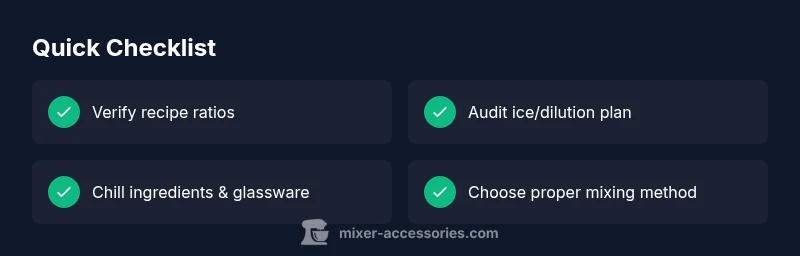
If you’re pressed for time, begin with the easiest interventions: verify the recipe and measure, ensure all components are chilled, and adjust dilution via ice management. For immediate balance, rebuild the drink with a simplified base and reintroduce one factor at a time (sweet, sour, bitter) to evaluate impact. Taste after each adjustment to confirm progress. Always consider safety and cleanliness when handling spirits, syrups, and garnishes to maintain quality and avoid contamination.
Steps
Estimated time: 25-35 minutes
- 1
Verify recipe and measure ingredients
Start by confirming the recipe ratios and measuring each component precisely. If you’re using a published recipe, weigh or measure every liquid to reduce variation. This small step eliminates one of the most common sources of imbalance. Tasting after this step can show immediate impact.
Tip: Use a digital scale for accuracy and set aside a dedicated measuring cup for each ingredient. - 2
Assess ice strategy and dilution
Evaluate the ice you’re using and the expected dilution timeline. Larger ice cubes melt slower, producing controlled dilution; crushed ice dilutes quickly and changes mouthfeel. Adjust your ice choice based on the drink type and the desired finish. This step often explains why a drink tastes over-diluted or too intense.
Tip: Match ice size to the drink: slow-dilution drinks get large cubes; fast-dilution drinks use crushed ice. - 3
Check temperature and glassware
Chill spirits and mixers in advance and consider pre-chilling the glass. A cold environment helps maintain aroma and prevents rapid temperature rise when the drink is poured. If a drink tastes flat, it may be temperature-related rather than ingredient-based.
Tip: Hold the glass by the rim, not the bowl, to avoid warming the drink with your hand. - 4
Choose the mixing method wisely
Decide whether to shake, stir, or build the drink in the glass. Shaking aerates and emulsifies; stirring preserves clarity and aroma for spirit-forward drinks. Using the wrong method can leave flavors flattened or harsh.
Tip: Shake only when the recipe calls for it; for delicate balance, stir and taste before adding ice to control dilution. - 5
Make incremental adjustments
When tweaking, adjust one variable at a time: add a touch more sweet or adjust acidity in small increments. After each change, re-taste to track progress. This approach helps you isolate which factor yields the most improvement.
Tip: Record each adjustment so you can reproduce the successful balance later. - 6
Validate results and document changes
Finalize the balance by confirming the drink with a fresh sample, then document the successful adjustments for future batches. If the result isn’t satisfactory, revert to the previous working baseline and try a different parameter.
Tip: Keep a small notebook or digital log of recipes and tweaks for consistency.
Diagnosis: Drink tastes off or lacks balance after mixing.
Possible Causes
- highIncorrect ingredient ratios or substitutions
- mediumIce type or dilution control not appropriate for the drink
- lowLow-quality mixers or syrups affecting sweetness or acidity
- lowTemperature or glassware not pre-chilled, altering perception of flavor
Fixes
- easyDouble-check recipe ratios and weigh ingredients to match the intended profile
- easyChill all components and use properly sized ice to control dilution
- easySwap in fresh mixers/syrups and taste after each adjustment
- easyPre-chill glassware and adjust temperature gradually to preserve balance
Your Questions Answered
Why is my cocktail too sour after mixing?
A cocktail can taste too sour if there isn’t enough sugar or if acidic components are too strong. Start by adjusting sweetness with a measured amount of syrup or liqueur and test gradually. Re-balancing acidity and sweetness usually restores harmony.
If your drink is too sour, balance it with a measured touch of sweetness and re-test. Small adjustments make a big difference.
Does ice choice really affect flavor balance?
Yes. Ice controls dilution and temperature. Large cubes melt slowly, preserving strength longer, while crushed ice cools quickly but dilutes faster. Matching ice strategy to the drink type helps maintain balance throughout drinking.
Ice choice matters because it changes how quickly your drink dilutes and how cold it stays as you sip.
Is pre-batching cocktails a good idea for consistency?
Pre-batching can improve consistency if you standardize measurements and dilution expectations. Store in sealed containers and chill until service. Remember that some cocktails don’t scale linearly when batched, so test ahead.
Pre-batching helps with consistency, just test the batch and adjust dilution before serving.
Should I always chill glassware?
Chilled glassware helps preserve temperature and aromas, especially for spirit-forward drinks. It’s a simple step that can improve perceived balance and refreshment without altering the recipe. Don’t over-chill to avoid condensation.
Chilled glasses can make a big difference in how your drink keeps its temperature and aroma.
When is a cocktail unusable and should be discarded?
If a drink tastes severely off after adjustments or presents unsafe ingredients, discard and start fresh. Don’t push past the point of no return; sometimes a reset is quicker than chasing an elusive balance.
If it tastes off after tweaks, it’s safer to start over rather than push through.
Watch Video
Top Takeaways
- Verify precise ingredient measurements.
- Control ice and dilution for predictable balance.
- Chill ingredients and glassware to preserve aroma and temperature.
- Test changes incrementally and document successful tweaks.