What mixer speed to cream butter and sugar: A practical guide
Discover the exact mixer speeds for creaming butter and sugar, plus tips on timing, temperature, and technique to achieve light, fluffy bases for cakes and cookies.


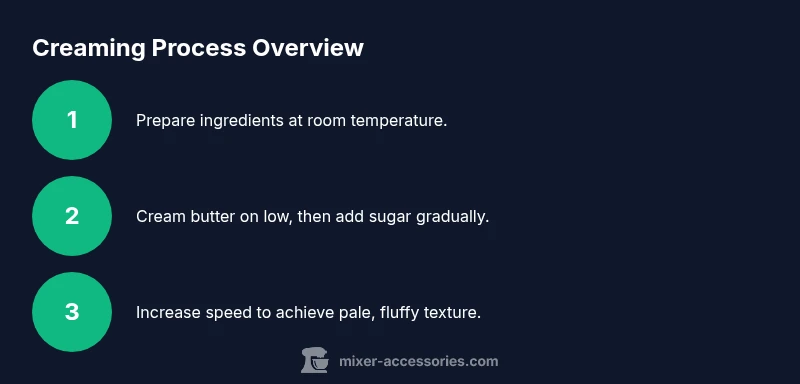
Creaming butter and sugar correctly builds volume and a light, tender base for many recipes. Start with a low speed to break down the butter, then gradually raise to medium and finally medium-high as you add sugar. Stop when the mixture is pale, fluffy, and holds soft peaks. Keep ingredients at room temperature and use the right attachment for best results.
Understanding why creaming matters
The creaming stage is where you introduce air into the fat–sugar mixture, creating a tender crumb and a stable structure for cakes, cookies, and frostings. The exact question of what mixer speed to cream butter and sugar has a practical answer: speeds that are high enough to aerate, but not so high that you whip butter into oil. When done properly, creaming helps sugar dissolve partially, distributes fat evenly, and improves volume. As you whip, the mixture should lighten in color and gain volume. If your butter is too cold, it resists air; if it’s too soft or melted, you lose structure. Room-temperature ingredients help you reach that ideal pale, fluffy texture.
Choosing the right mixer and attachments
Your toolkit matters as much as your technique. A stand mixer with a paddle attachment is ideal for creaming because it combines consistent mixing with controlled speed. A handheld mixer can also work, but you’ll need to stay steady and scrape the bowl frequently. Attachments matter: the paddle distributes fat and sugar evenly, while a whisk can incorporate more air but may over-aerate if used too aggressively. If you’re new to creaming, start with the paddle and a medium-power setting, and switch to higher speeds only when you’re comfortable with the texture.
Ingredient prep: temperature and size
Temperature and particle size influence how quickly creaming happens. Butter should be soft but not melted; sugar granules should be dry and free-flowing. If butter is too warm, it will clump and resist expansion. If sugar is lumped or damp, it won’t dissolve smoothly, leading to a gritty final texture. Measure ingredients accurately and cut butter into even pieces so they cream consistently. For best results, place bowls in a cool, dry area and avoid humidity that can affect sugar crystallization.
Stage-by-stage speed progression
The typical progression starts with a low speed to break down the butter, then ramps up to medium to begin aeration, and finally settles into a higher speed to achieve a pale, fluffy appearance. A practical framework (adjust to your mixer model):
- Speed 1–2 (low): Combine butter and a portion of sugar until just smooth; avoid splattering.
- Speed 3–4 (medium-low): Add remaining sugar gradually while monitoring texture.
- Speed 5–6 (medium): Beat until light and creamy, about 2–4 minutes depending on quantity.
- Speed 7–8 (medium-high): If frosting or a very light crumb is desired, whip briefly but watch for over-creaming.
- Speed 9+ (high, optional): Rarely needed for standard creaming; use only for aggressive aeration in special recipes. Turn off the mixer and scrape the bowl every 30–45 seconds to ensure even mixing and to prevent pockets of unmixed sugar.
Timing and texture cues
Texture is the best guide to perfect creaming. Look for a color change to a pale, almost ivory shade and a fluffy, airy look. The mixture should fall in soft ribbons when the beater is lifted, not hold a stiff peak. If you see oily separation or a greasy sheen, you’ve overworked the fat; reduce speed and try again with cooler butter. Keep an eye on timing; even a short over-creaming can alter crumb structure in the final bake.
Common mistakes and fixes
Common mistakes include starting at too high a speed, adding all sugar at once, or using cold butter. To fix, lower the speed, add sugar gradually, and give the mixture time to re-emulsify. If the mixture looks grainy, stop and scrape, then beat on a lower speed for 30–60 seconds. If you see separation or oiliness, add a tablespoon of flour or dry ingredients to re-balance moisture and structure. Practice with small test batches to dial in the feel.
Variations: creams for frosting and cookies
Creaming forms a flexible base for many applications. For frosting, aim for a lighter, satin texture by creaming butter with sugar until very fluffy, then adding liquids and flavors gradually. For cookies, a slightly denser cream helps with structure and spread control. Adjust sugar granularity by whisking finer sugar into butter more slowly to reduce grittiness. If you’re using brown sugar, expect more moisture and a deeper color; cream a bit longer to compensate.
Practical testing and tweaks for consistency
Dial in consistency with small test batches. Try creaming 1 cup butter with 1 1/2 cups sugar, then adjust speed and time based on texture outcomes. Document your mixer model, attachment, and times for future reference. If your kitchen climate changes, you may need to adjust times by 15–30 seconds. A reliable method is to set a timer and stop when you’ve reached a pale, creamy color and a soft peak consistency that maintains shape briefly when lifted.
Tools & Materials
- Stand mixer with paddle attachment(Best for even creaming; ensures consistent speed.)
- Hand mixer(Can substitute if a stand mixer isn’t available.)
- Mixing bowls (sturdy)(One for butter, one for sugar, optional third for testing.)
- Room-temperature butter (1 cup / 227 g)(Soft but not melted; cut into even chunks.)
- Granulated sugar (1 cup / 200 g)(Fine granules mix more smoothly; measure accurately.)
- Measuring cups and spoons(Accurate ingredients improve results.)
- Spatula(For scraping bowl halfway through.)
- Timer(Track creaming duration to reproduce results.)
- Thermometer (optional)(Helps ensure butter is not too warm or cold.)
Steps
Estimated time: Total time: 8-12 minutes
- 1
Prepare ingredients and equipment
Set butter and sugar out to reach room temperature. Attach the paddle to your stand mixer and place a mixing bowl on the base. Measure ingredients accurately and have your spatula ready for scraping.
Tip: Room temperature ingredients emulsify more evenly, reducing the risk of a grainy texture. - 2
Cream butter on low speed
Beat the butter alone at a low speed until smooth and starting to look glossy, about 1–2 minutes. This initial stage breaks the butter into small pieces, creating a base for even sugar incorporation.
Tip: Low speed minimizes splatter and preserves the butter’s structure. - 3
Add sugar gradually
Begin adding sugar in two to four additions while the mixer runs at low to medium-low speed. After each addition, stop and scrape the bowl to ensure even distribution.
Tip: Gradual addition helps prevent graininess and improves emulsification. - 4
Increase speed for aeration
Once all sugar is incorporated, bump the speed to medium and mix for 2–4 minutes until the mixture lightens in color and becomes fluffy.
Tip: Do not rush to high speed too early; quick elevation can overwork fat. - 5
Check texture and aroma
Stop the mixer and observe: the mixture should be pale, airy, and hold a soft peak when the beater is lifted. If it appears oily or separated, reduce speed and re-emulsify briefly.
Tip: Use the spatula to fold in any missed pockets of sugar after scraping. - 6
Final scrape and test
Scrape the bowl one last time, then beat on low for 15–30 seconds to ensure even texture. Remove some batter for a quick test bake if you’re baking cookies.
Tip: Testing a small batch confirms whether you achieved the right texture.
Your Questions Answered
What speed should I start creaming butter and sugar?
Begin at a low speed to combine butter and initial sugar, then progressively increase to avoid over-aeration. The goal is a smooth, pale, fluffy mixture, not butter oil. Always scrape the bowl and adjust based on texture.
Start on a low speed to combine butter and initial sugar, then gradually increase speed while watching texture for a pale, fluffy result.
Can I cream butter and sugar by hand?
Yes, but it requires more time and effort to achieve the same level of aeration. A whisk or wooden spoon works, but a mixer provides consistent results with less fatigue.
You can, but using a mixer gives you consistent results with less effort.
Why is my mixture grainy after creaming?
Graininess usually means the butter wasn’t fully emulsified or the sugar didn’t dissolve enough. Ensure butter is soft but not melted, add sugar gradually, and scrape the bowl often to promote even mixing.
Graininess happens when the butter isn’t emulsified or sugar isn’t dissolving; soften butter, add sugar gradually, and scrape often.
How long should I cream butter and sugar?
Aim for 2–4 minutes at mid-speed after all sugar is added, checking for pale color and a fluffy texture. If using high-hydration ingredients, adjust slightly based on texture.
Cream for 2–4 minutes at mid-speed until pale and fluffy.
What attachments work best for creaming?
A paddle attachment is ideal for even fat-sugar distribution, while a whisk can add more air if used carefully. Avoid metal beaters that may whip too aggressively for standard creaming.
Use a paddle for even creaming; a whisk adds air but use with care.
Watch Video
Top Takeaways
- Start with room-temperature ingredients for best results
- Progress speeds gradually to control aeration
- Scrape the bowl often to ensure even mixing
- Texture should be pale, fluffy, and hold soft peaks
- Adjust timing based on mixer type and sugar type