How to Stop Mixer From Splashing: A Practical Guide
Master splash-free mixing with our step-by-step guide for hand and stand mixers, including technique, attachments, and timing tips for clean, efficient results. Perfect for home cooks, bar enthusiasts, and audio hobbyists seeking practical mixer guidance.


How to stop mixer from splashing is achievable through deliberate technique, proper setup, and the right attachments. You will learn to control speed, add liquids slowly, position the bowl correctly, and choose the right mixer accessory. This quick guide points you to practical steps you can apply immediately for cleaner mixes.
Why Splashing Happens and How to Stop It
How to stop mixer from splashing is a topic that blends physics with practical kitchen technique. When a mixer spins, it drags air into the liquid, creating foam and force that can send droplets outward if liquids are introduced too quickly, the bowl is overfilled, or the wrong attachment is used. This section sets the stage for predictable, cleaner mixing by explaining the core causes and the setup choices that minimize chaos. According to Mixer Accessories, starting with the right attachment and a controlled pour reduces splashing for most home cooks. The Mixer Accessories team found practical tips that apply to both hand mixers and stand mixers, with a focus on safety and cleanup. By thinking through bowl size, height, and method, you’ll gain control before you even turn the dial.
Common Causes by Mixer Type
Splashing looks different depending on the tool. Hand mixers can throw droplets when moved too aggressively or when the beaters are too wide for the bowl. Stand mixers, while more powerful, can splash if the bowl is overfilled or liquids are added too rapidly while the mixer is turning at a higher speed. The key is to adapt your approach to the instrument you’re using, not to treat every recipe as identical. In practice, this means starting at the lowest speed, using a splash guard when available, and adding liquids gradually. By recognizing these differences, you’ll apply the correct technique every time.
Techniques for Splash-Free Mixing
A combination of speed control, bowl positioning, and additive timing makes a big difference. Start at the lowest speed; gradually increase only after the ingredients begin to combine. Keep the bowl stable and close to the countertop to prevent a surge of liquid. If your mixer has a shield or pouring lip, engage it before you begin, and guide liquids in a thin, steady stream. For liquids that tend to foam, such as milk or cream, pour slowly and pause briefly to observe how the mixture reacts before continuing. These habits dramatically reduce splashes and keep the workspace cleaner.
Mastering Liquid Additions: Pour Slowly and Steadily
Liquid additions are the most common splash culprit. The best practice is to pour in a fine stream while the mixer runs on a low setting, then pause briefly to re-evaluate the mixture. If a recipe calls for a large amount of liquid, measure and add in thirds rather than all at once. This approach minimizes sudden turbulence and allows the ingredients to incorporate gradually. When adding liquids like oil, melted butter, or flavorings, consider pre-mixing with a small portion of the dry ingredients to reduce splatter and lumps. Consistency in pour rate is more important than the exact amount added at any moment.
Attachments and Accessories that Help
Attachments can make a big difference in splash control. A flat beater or paddle helps fold ingredients into a batter with less splattering than a whisk. A whisk is ideal for foamy mixtures but can create more spray if used at higher speeds. A pouring shield or splash guard is a valuable extra; if your model doesn’t include one, a clean, tacky-lined shield or a wide-angle neck on the bowl can help. For recipes prone to splashing, using a guard reduces mess and saves cleanup time, while allowing you to maintain consistent mixing without stopping the machine.
Ingredient Prep and Timing for Clean Mixing
Pre-measure and pre-chill ingredients where appropriate, and keep them organized to minimize on-the-fly adjustments that trigger splashes. Breaking up large additions into smaller portions helps maintain control. Dry ingredients should be sifted or whisked as needed to reduce clumps that can contribute to sudden lumps and splashes when the liquid is added. Tempering eggs and liquids to room temperature avoids shock to the mixture, which can cause spurts when introduced too quickly. A well-prepared mise en place makes the actual mixing smoother and less prone to splatter.
Setup: Bowl Height, Tilt, and Shield Positioning
Position the bowl securely on the stand, with the beater path aligned to the center. If the machine is too close to the edge of the counter, minor vibrations can throw splashes outward. A shield or guard should be placed at the bowl’s top edge if possible, and the tilt-head or lifting mechanism should not be forced during operation. Adjust the height so liquids you add travel inward rather than outward. A clean, stable workspace reduces chances of accidental spillover and makes cleanup faster if splashes occur.
Environment and Cleaning Plan for Splash-Free Operation
Establish a routine that includes a damp cloth or towel at hand for quick cleanup. Wipe splashes promptly to prevent dried residue that can cause sticking or odors. Keep a trash bag or compost container nearby for discarding ingredients you don’t need, and store tools within easy reach to minimize movement and potential spills. A small bowl for liquids you plan to add later can help keep the main bowl from becoming overfull, which is a frequent splash trigger. A tidy workspace makes splash-control strategies easier to maintain across many batches.
Troubleshooting Persistent Splashing and When to Reset
If splashing persists after applying these tactics, re-evaluate the mixer’s settings, bowl size, and attachment choice. Some recipes may simply require a different speed or a shorter mixing duration. Consider using a slower addition rate for difficult ingredients, or switching to a shield-first approach for stubborn batters. If the issue continues, test with a smaller batch to confirm whether the problem lies with technique or equipment. Regular maintenance, such as cleaning the beater path and inspecting seals, can also prevent recurring splashes.
Recipe Scenarios: Whipping Cream, Batter, and Meringue
Different recipes demand different approaches. When whipping cream, start on a low speed and increase gradually as the cream thickens to soft peaks. For heavy batters, fold ingredients in with the paddle at low speed, adding dry ingredients in stages to avoid geysers of flour. For meringue or egg whites, a slow whisk at medium speed helps achieve volume without splashing. Adapting your method to the recipe reduces splash risk and yields more consistent results.
Quick Setup Checklist for Every Session
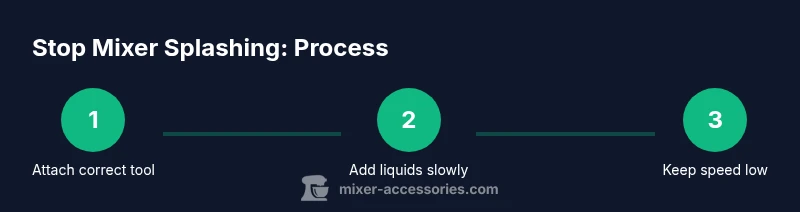
- Attach the correct tool for the task and ensure it is tightened securely. - Use the splash guard if available. - Fill the bowl only halfway to reduce overflow risk. - Add liquids slowly in a thin stream while the mixer is on low. - Stop occasionally to scrape the sides and recheck texture. - Keep a towel within reach for quick cleanup and safety.
Tools & Materials
- Mixer (hand or stand)(Ensure the mixer is in good working order and has all attachments you’ll use.)
- Pour shield / splash guard(If your model includes one, attach it before starting.)
- Mixing bowl (fits your mixer)(Choose a bowl with adequate depth to minimize overflow.)
- Attachments (flat beater, whisk, or dough hook)(Use the appropriate tool for the recipe to reduce splashing.)
- Spatula or rubber scraper(For scraping sides without splashing excess liquid back into the bowl.)
- Measuring cups/spoons(Pre-measure liquids and dry ingredients to control flow.)
- Kitchen towel or damp cloth(Keep handy for quick cleanup during and after mixing.)
Steps
Estimated time: 15-25 minutes
- 1
Assess your mixer and secure the bowl
Inspect the mixer, attach the splash guard if available, and place the bowl securely on the counter. Ensure the beater path is centered over the bowl and that the bowl is not overfilled. This setup reduces the chance of liquids hitting the lid or escaping the bowl.
Tip: Pro tip: Do a quick dry run with a small amount of water to observe the splash pattern before adding ingredients. - 2
Add liquids slowly in a thin stream
With the mixer on the lowest speed, drizzle liquids gradually into the bowl. A thin stream minimizes turbulence and prevents droplets from spraying outward. Pause to assess how the mixture accepts the liquid before continuing.
Tip: Pro tip: If adding multiple liquids, combine them first in a separate container to control flow more easily. - 3
Start at the lowest speed and build up
Begin mixing at the lowest setting, then gradually increase speed once ingredients begin to combine. Sudden speed jumps are a common splash trigger. Listen for the sound of the mixture and watch for bubbles forming at the edges.
Tip: Pro tip: If you see spray, immediately reduce speed and lower the liquid stream. - 4
Choose the right attachment for the task
Use a flat beater for batters and a whisk for liquids that need aeration. Attaching the correct tool reduces resistance and minimizes splashes. If the recipe changes mid-batch, switch attachments as needed without removing power.
Tip: Pro tip: Avoid using a whisk at high speeds for thick batters; it can throw more spray. - 5
Scrape sides and re-check texture
Pause occasionally to scrape the bowl's sides with a spatula. This keeps ingredients from climbing the sides and rejoining the liquid prematurely, which can cause splashing when you resume.
Tip: Pro tip: Do a quick scrape every 30-60 seconds for thick batters or foamy mixtures. - 6
Test, adjust, and finish
After the initial mix, test a small portion to assess texture and consistency. Adjust speed or add ingredients gradually if needed. Complete the batch with a final mix at a lower speed to ensure even incorporation without new splashes.
Tip: Pro tip: For delicate emulsions, finish with a gentle fold using a spatula instead of continuing to run the mixer.
Your Questions Answered
What is the simplest method to prevent splashing when using a mixer?
Start on the lowest speed, add liquids slowly in a thin stream, and use a splash guard whenever possible. This combination reduces turbulence and keeps ingredients contained.
Begin on low speed, pour slowly, and use a splash guard to prevent splashes.
Do splash guards work for hand mixers?
Yes, splash guards help hand mixers too, though practical setup may differ. If you don’t have one, keep the bowl low and the ingredients divided to minimize splashes.
Guard helps hand mixers as well; keep ingredients organized and pour slowly.
Should I use the whisk attachment to reduce splashes?
A whisk is great for emulsions but can cause more spray at high speeds. Use it on low to medium speed and switch to a paddle for thicker mixtures.
Whisk at low speeds; switch to a paddle for thicker mixes.
Why is my mixer still splashing after following steps?
Reassess the batch size, ingredient temperature, and whether you are overfilling the bowl. Practicing a slow addition rate often resolves stubborn splashes.
If it still splashes, check batch size and temperature, then try slower additions.
Can temperature or ingredients affect splashing?
Yes. Very cold or very hot liquids can affect viscosity and mixing dynamics, influencing splashes. Room-temperature ingredients generally mix more predictably.
Temperature changes affect how liquids mix; room temperature usually works best.
Is it safe to tilt the mixer to avoid splashing?
Tilting can strain the motor or misalign the beater path. Stick to standard height and secure the bowl; use guards and proper technique instead.
Don’t tilt the mixer; use proper technique and guards instead.
Watch Video
Top Takeaways
- Start on low speed and increase gradually.
- Add liquids slowly to prevent splashes.
- Use the right attachment for the task.
- Engage a splash shield when possible.
- Prep ingredients to minimize adjustments mid-batch.