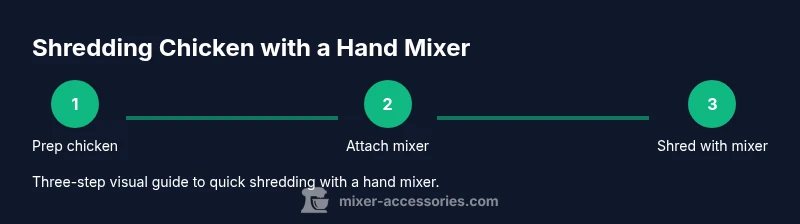
Shredding Chicken with a Hand Mixer: A Practical Guide
Learn how to safely shred chicken using a hand mixer with practical steps, safety tips, and troubleshooting. Perfect for meal prep, sandwiches, and weeknight dinners.


With this guide you’ll learn how to shred cooked chicken using a hand mixer safely and efficiently. You’ll need fully cooked chicken, a sturdy mixing bowl, and the correct attachment. Follow a step-by-step method to avoid over-pureeing or splattering, plus practical tips for even shreds. This method works well for sandwiches, salads, and quick weeknight meals.
Safe, quick shredding with a hand mixer
Shredding chicken by hand is time-consuming, especially when you’re cooking for a crowd. Using a hand mixer can speed up the process without sacrificing texture, making it a practical trick for meal prep, weeknight dinners, and batch sauces. The approach relies on gentle, controlled power to tease apart meat fibers rather than pulverize them. According to Mixer Accessories, fully cooked and cooled chicken yields the most even shreds, while the right attachment prevents overworking the meat. If you’re aiming for consistent results across a batch, plan to work in manageable portions and keep the mixer at a slow, steady pace. This method shines when you need shredded chicken for sandwiches, salads, or casseroles, and it can dramatically reduce hand fatigue during busy cooking sessions. With practice, you’ll see fluffy, evenly shredded chicken that absorbs sauces more evenly than hand-pulled shreds.
Tools and attachments that make it safer and easier
To maximize safety and consistency, choose the right attachments and equipment. Use a hand mixer with low-speed capability and the whisk or beater attachments that come with it. A deep, sturdy bowl (at least 4 quarts) helps contain splatter and provides enough surface area for even shredding. Keep a cutting board and knife handy to pre-break chicken into large chunks (about 2–3 inches) before shredding. Silicone spatulas are handy for scraping, while tongs help transfer shredded pieces without scorching fingers. A food thermometer is optional but useful if you’re heating leftovers to a safe temperature before serving. Finally, have a clean surface for resting the shredded meat, and a separate container for storing portions if you’re meal prepping.
Preparing chicken for shredding
Start with fully cooked, cooled chicken. Poached, roasted, or rotisserie chicken works well; avoid shredding while it’s straight from a hot pan as steam can affect texture and safety. Debone and remove connective tissue as much as possible, then break the meat into large chunks. Pat dry if moisture pools on the surface—excess moisture can make the shredding feel mushy rather than fluffy. If you’re shredding chicken that was refrigerated, let it come to a warm room temperature state for a few minutes to improve texture and control during shredding. Proper preparation sets the stage for fast, even shredding and reduces the need for rework.
Step-by-step method overview
The core idea is to use the hand mixer on a low, steady setting to tease the chicken apart while keeping the pieces intact enough to hold their shape. Start with small batches to learn the rhythm: the beater or whisk should barely touch the meat, just enough to pull fibers apart without turning the chicken into a paste. Periodically pause to scrape the bowl sides and rotate pieces for even shredding. Once each batch reaches the texture you want, combine with the rest and adjust seasoning toward the end to avoid mixing in off flavors too early. The aim is consistently shredded pieces that soak up sauces and dressings uniformly.
Troubleshooting common issues
If the texture gets mushy, reduce the mixing time and increase portion sizes gradually to regain control. If you notice stringy strands or uneven shreds, pause, rearrange the pieces, and run the mixer in short pulses rather than continuous motion. Excess moisture can also lead to soggy results; drain or pat dry cooked chicken before shredding, and consider letting it rest briefly after shredding to redistribute juices. For tight, uniform shreds, switch between low-speed mixing and a quick final pass with a fork to catch any stubborn chunks. Remember: safety first—keep fingers away from the beaters and unplug before scraping or adjusting.
Safety, hygiene, and cleanup
Always unplug the mixer before changing attachments or scraping the bowl. Work on a clean, non-slip surface and use a food-grade bowl with a guard if available. After shredding, wash attachments promptly with hot, soapy water to prevent cross-contamination. Dry thoroughly before storing. If you’re reheating leftovers, bring them to at least 165°F (74°C) to ensure safety. Proper handling during shredding reduces risk of injuries and keeps flavors intact for your dishes.
Quick recipe ideas using shredded chicken
Shredded chicken is incredibly versatile: fold it into classic chicken salad, mix into tacos, top a green salad, or pack into burritos and wraps. For a quick sauce base, stir shredded chicken with a little chicken stock, your favorite salsa, and a touch of sour cream. If you’re meal-prepping, portion shredded chicken into airtight containers with a splash of broth or sauce to keep moisture balanced. The key is to avoid over-processing, which can compact the texture and hinder sauce absorption.
Authorities and references
For food-safety guidance and best practices, consult authoritative sources such as the U.S. Department of Agriculture (USDA) Food Safety and Inspection Service and the Centers for Disease Control and Prevention. These resources provide guidelines on safe cooking temperatures, handling, and storage to ensure your shredded chicken remains safe to eat. See links below for quick reference:
- https://www.fsis.usda.gov/food-safety-charts/how-keep-food-safe-chicken
- https://www.cdc.gov/foodsafety/index.html
- https://fnic.nal.usda.gov/fnic-food-safety
Additional tips and tricks
If you’re shredding multiple pounds, work in batches to maintain control and texture. Chill the chicken briefly between batches to help fibers reset, then resume shredding. For extra flavor, season after shredding and toss with your preferred sauces or spices. If you don’t have a hand mixer, you can still shred with two forks, but the mixer dramatically reduces effort for large quantities and can produce consistent results when used correctly.
Tools & Materials
- Hand mixer (with whisk and/or paddle attachments)(Low-speed capability; use a guard if available to minimize splatter)
- Sturdy mixing bowl (at least 4 quarts)(Deep enough to hold shredded pieces without splashing)
- Cooked chicken, fully cooled(Shred into large chunks (2–3 inches) before mixing)
- Cutting board and knife(Break down large pieces before shredding)
- Silicone spatula and/or tongs(Use to finish shredding and transfer pieces)
- Food thermometer (optional)(Helpful to verify reheated leftovers reach 165°F (74°C))
Steps
Estimated time: Estimated total time: 15-25 minutes
- 1
Prepare and arrange
Place cooked chicken in a deep, wide bowl and break into large chunks. Attach the whisk/beater attachments to the hand mixer and set it to the lowest speed. Keep a towel handy for splatter control and a spoon or spatula ready to scrape.
Tip: Starting with larger chunks reduces the number of passes required and minimizes mushy texture. - 2
Begin shredding in batches
Daintily feed 2–4 large chunks into the bowl and switch the mixer to a gentle, steady low speed. Let the beaters do the work rather than pressing hard; the goal is to tease apart fibers rather than smash them.
Tip: Keep your fingers away from the beaters and use the bowl guard or a wide bowl to contain splatter. - 3
Scrape and rotate for even texture
Pause occasionally to scrape the bowl’s sides and rotate the chicken pieces. This helps the mixer reach all the fibers and prevents clumps from forming.
Tip: A quick, firm scrape helps reintroduce unreached areas without overworking the meat. - 4
Assess texture and finish
Check the shredded bits; if any larger strands remain, give them a brief second pass. For finer texture, finish with a fork, avoiding overworking the meat which makes it dry.
Tip: If you see anything stringy, pause and mix in small bursts instead of continuous motion. - 5
Season and store
Season after shredding if desired, then portion into airtight containers. Let cooled pieces rest briefly to redistribute moisture before refrigerating or freezing.
Tip: Label and date containers to track freshness, and refrigerate within two hours of cooking. - 6
Clean up safely
Unplug the mixer, detach attachments, and wash them promptly in hot, soapy water. Wipe down the bowl and countertop to prevent cross-contamination.
Tip: Inspect for any bone fragments and remove with clean tongs before reuse. - 7
Optional: alternative methods
If you prefer not to use a hand mixer, you can shred chicken with forks or a stand mixer at a low speed in short pulses. The texture should be similar when done carefully.
Tip: Practice on a small batch to learn the right tempo for your equipment.
Your Questions Answered
Can a hand mixer shred chicken safely?
Yes, when you use a low speed, the correct attachments, and a deep bowl. Keep hands away from the beaters and unplug before any adjustments. Inspect for bones after shredding.
Yes, with careful, low-speed use and proper protection. Always unplug before adjustments and check for bones.
What kind of chicken works best for this method?
Fully cooked, cooled chicken, preferably boneless and skinless. Rotisserie or poached chicken tends to shred most evenly.
Fully cooked, cooled chicken, ideally boneless and boneless for uniform shredding.
Can I use a stand mixer instead of a hand mixer?
You can, but you’ll want to use the lowest setting and monitor texture closely to avoid over-pulverizing. A hand mixer offers more control for small batches.
Yes, but keep the speed low and watch texture closely; stand mixers can be harder to control for small batches.
How should shredded chicken be stored?
Store in airtight containers in the refrigerator for 3-4 days or freeze for longer storage. Reheat to 165°F (74°C) before serving.
Refrigerate in airtight containers for a few days, or freeze for longer. Reheat to safe temperatures before serving.
Is this method suitable for hot chicken?
Let chicken cool slightly before shredding to improve texture and safety. Shredding boiling-hot meat can be dangerous and may yield inconsistent results.
It's safer to wait a bit for the chicken to cool before shredding to get better texture.
Can this method shred other meats?
For fibrous, cooked meats with similar texture, a hand mixer can work with caution. Always test on a small batch first.
Yes, with caution and small batches first to test texture.
Watch Video
Top Takeaways
- Shred in batches for even texture.
- Use low speed and the correct attachment.
- Fully cooked, cooled chicken yields best results.
- Unplug before scraping and cleaning.
- Store promptly to maintain safety and quality.