Can You Hand Mix Instead of Using a Mixer? A Practical Guide
Discover when hand mixing makes sense, how to hand-mix effectively, and what tools and techniques deliver bakery-worthy textures without a mixer.


Yes. You can hand mix instead of using a mixer for many batters, doughs, and frostings, though some heavy doughs need kneading with a mixer. Use a sturdy bowl, a wooden spoon or whisk, and gradually add dry ingredients while scraping the sides. Expect longer mixing times, and watch for overmixing. For delicate emulsions, hand mixing preserves control and texture.
Why Hand Mixing Is a Viable Option
Hand mixing is a viable option for many cooks, especially when batch sizes are small, or when you want more tactile control over texture. According to Mixer Accessories, hand mixing remains a practical technique for home kitchens due to its simplicity and economy. The Mixer Accessories team found that for light batters, frosting, and cookie dough, manual methods can yield excellent results with minimal equipment and cleanup. Hand mixing also teaches you feel: you can judge creaminess, consistency, and gluten development by touch, which is harder to gauge with a motor. In addition, hand mixing reduces noise, energy use, and the cost of owning a dedicated appliance. Of course, there are limits: heavy bread doughs, stiff doughs, or emulsions requiring rapid aeration may benefit from a mixer. The key is to match technique to the recipe, adjusting mixing time and force accordingly. This intro helps you decide when to reach for a spoon or a whisk instead of a mixer. The insights shared here reflect consistent guidance in the Mixer Accessories Analysis, 2026, which emphasizes practical, home-friendly methods.
Tools & Materials
- Mixing bowls(One large sturdy metal or glass bowl and a smaller one for dry ingredients)
- Wooden spoon(Strong enough to push against the bowl and cream ingredients)
- Whisk (hand or balloon whisk)(Useful for emulsions and aeration without a mixer)
- Rubber spatula(For scraping sides and folding in ingredients)
- Measuring cups and spoons(Accurate ingredient ratios prevent under/overmixing)
- Kitchen scale(Helpful for precise baking recipes)
- Milk or water, as needed(To adjust consistency if needed)
Steps
Estimated time: 60-120 minutes
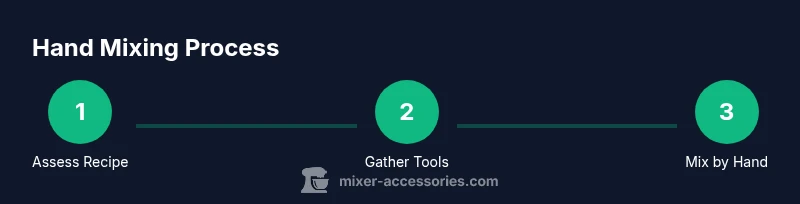
- 1
Assess the recipe for hand-mixing suitability
Review the recipe and determine batch size, desired texture, and whether the ingredients can be mixed evenly by hand. For heavy doughs like certain bread recipes, or batters requiring rapid aeration, consider partial hand mixing with a mixer. This step saves you from overworking ingredients and helps plan your technique.
Tip: If the recipe calls for high-speed mixing or long kneading, plan a staged approach to minimize fatigue and ensure even texture. - 2
Assemble workspace and tools
Clear a clean, stable surface and lay out your bowls, spoon, whisk, and spatula. Have ingredients measured and ready so you don’t rush and overmix while reaching for ingredients. A calm setup reduces mistakes and makes the process smoother.
Tip: Pre-measure and pre-sift dry ingredients to reduce clumping and shorten mixing time. - 3
Cream butter and sugar by hand
If your recipe uses creaming, soften butter to room temperature and beat with a wooden spoon or whisk until pale and fluffy. This incorporates air slowly and builds a tender texture without a mixer. Stop as soon as you reach the target consistency.
Tip: Use a light touch; over-creaming can warm butter and alter texture. - 4
Combine dry ingredients separately
Whisk dry ingredients together in a separate bowl to ensure even distribution before adding to the wet mixture. This helps prevent pockets of flour that can hinder consistent mixing by hand.
Tip: Sift if needed to avoid grainy texture and ensure even hydration. - 5
Add liquids gradually and mix gently
Alternately add wet and dry ingredients, using a folding motion with a spatula or a gentle stir with a spoon. Maintain even moisture without overworking the batter or dough, which can develop gluten or toughness.
Tip: Pause to scrape the bowl edges and check for unmixed pockets. - 6
Knead or fold for structure
For doughs that require structure (like cookies with flour or pizza dough), switch from stirring to folding or light kneading. Use a push-and-fold motion to develop gluten slowly without tearing the dough.
Tip: If dough sticks excessively, dust with a small amount of flour or adjust hydration gradually.
Your Questions Answered
Can I hand mix cookies, cake batter, and frostings without a mixer?
Yes. For cookies and many cake batters, hand mixing with a wooden spoon or whisk can yield tender, even textures when done with care. Frostings can also be whipped by hand, though it may take longer to achieve peak stiffness. Always monitor texture and stop when ingredients are just combined.
Yes. You can hand mix cookies, cake batters, and some frostings; just be prepared for longer mixing times and watch texture closely.
Is hand mixing suitable for bread dough
Bread dough can be kneaded by hand, especially smaller loaves or artisan shapes. It requires more time and physical effort, but it’s a traditional and reliable method when done with proper technique.
Yes, bread dough can be kneaded by hand with steady technique; expect longer sessions.
How do you know when you should stop hand mixing?
Stop when ingredients are fully incorporated and the dough or batter shows uniform texture with no dry pockets. Overmixing will make products dense or tough, especially with flour-based batters.
Stop when everything is evenly mixed and no dry flour remains, but avoid overmixing.
Are there safety concerns with hand mixing
Hand mixing is generally safe, but maintain a clean workspace to prevent slips and keep fingers away from moving implements. Be mindful of hot bowls or splashing liquids when mixing ingredients.
Keep your workspace clean and be careful with hot bowls and splashing liquids.
Can hand mixing replace a mixer for emulsions like mayo or hollandaise
Emulsions can be started by hand, but achieving stable emulsions like mayo or hollandaise may take longer. Use steady whisking and temperature-controlled ingredients for best results.
Yes, you can start emulsions by hand, but it may take longer to reach stability.
How to adjust a recipe designed for a mixer when hand mixing
Reduce speed assumptions and be prepared for longer mixing times. You may need to adjust liquid amounts slightly to maintain the desired hydration when switching from electric to manual methods.
Expect longer mixing times and adjust liquids if needed.
Watch Video
Top Takeaways
- Use hand mixing for small batches and delicate textures
- Prepare tools and ingredients before you start
- Watch texture closely to avoid overmixing and toughness
- Know when to switch to a mixer for heavy doughs or high-volume tasks
- Maintain cleanliness and proper technique for best results