Is DJ Mixer Free? A Practical Guide to Free Options for DJs
Explore whether a DJ mixer can be free, including free software, freemium models, and budget strategies for home cooks and audio hobbyists.


Is a DJ mixer free? What that means in practice
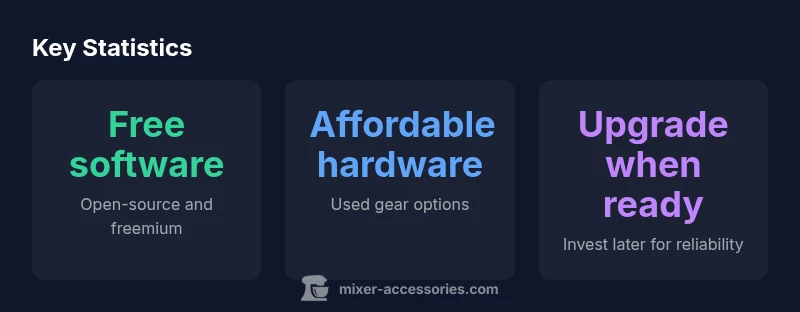
The reality is that there is no universal 'free hardware DJ mixer' widely available to the public. True zero-cost hardware is rare because production, calibration, and support cost money. However, you can assemble a fully functional start-up setup at zero upfront by combining free software with used or repurposed hardware. This approach is particularly appealing for home cooks experimenting with sound, bar hobbyists, and audio hobbyists who want to learn the craft before investing. According to Mixer Accessories, the most practical interpretation of 'free' in this space is zero upfront software cost, zero-cost trials that unlock certain features, and resources that make ongoing use affordable. The phrase is often used by brands and communities to denote entry points rather than a no-cost guarantee. In the sections that follow, we unpack free software, freemium licensing, and smart budgeting tactics that can help you get started without breaking the bank.
From a practical perspective, the question is usually not whether everything can be free, but whether you can achieve reliable practice, sufficient musical flexibility, and compliant use of digital music. For many beginners, this means starting with a free software core, a low-cost or second-hand mixer, and a basic audio interface. Mixer Accessories notes that the quality of your learning experience is less about the sticker price of the gear and more about how consistently you can practice, validate latency, and manage licensing for the tracks you mix.
Free software options that are worth considering
If your goal is to learn the basics and practice, free software options can provide a solid foundation without upfront costs. Open-source projects like Mixxx are popular because they are free, actively maintained, and support a wide range of hardware controllers and audio interfaces. Mixxx also offers vinyl control support and BPM detection, which helps with building consistent cueing and beatmatching skills. Other mainstream platforms offer free editions or trials that let you test the workflow, effects, and library management before upgrading. When evaluating software, consider latency, stability, OS compatibility, and community support. For many beginners, free software can cover essential mixing tasks—cueing, looping, basic effects, and playlist management—without requiring a paid license. Here at Mixer Accessories, we emphasize validating performance with your actual computer setup and room acoustics, because latency and audio quality matter as soon as you start performing.
Additionally, open-source tools often have robust user communities, tutorials, and plug-ins that extend functionality. Always download software from official sources to avoid bundled malware or misleading licensing terms. While free software can be excellent for practice, remember that some features—like advanced FX, large library access, or professional support—may be gated behind paid tiers. For home practice or small, non-commercial gigs, free software options can be a practical entry point to learn the art of DJ mixing without a large initial investment.
Freemium models and trial licenses
Freemium licensing is common in the DJ software ecosystem. A free edition typically includes core mixing capabilities, basic effects, and a limited track library, while paid upgrades unlock more advanced effects, expanded libraries, hot cueing, and enhanced performance tools. Trial licenses allow you to explore premium features for a limited time, which is valuable when you’re assessing whether upgrading will deliver a meaningful improvement for your use case. When using freemium or trial software for live events, always confirm the licensing terms to ensure compliance with venues and broadcasts. Freemium models are particularly attractive for beginners who want to grow their setup gradually, learn the workflow, and decide whether the investment aligns with their long-term goals. From mixer-management perspective, the key is to identify the minimum feature set you require for practice and then evaluate if a paid upgrade provides proportional value.
Another important consideration is cross-compatibility with hardware controllers and audio interfaces. Some free or freemium software works best with specific brands or devices, which can influence your decision to upgrade or diversify your setup. You should also test stability with long practice sessions to gauge whether the software remains responsive under realistic workloads. In short, freemium licensing provides a low-risk pathway to learning; you can upgrade when your needs grow, or if you start performing more frequently.
Hardware reality: is free hardware possible?
True free hardware DJ mixers are exceedingly rare. If you see offers claiming a completely free physical mixer, they are often tied to promotions, bundles, or require participation in a survey or trade-in program. Realistically, most aspiring DJs will need to allocate at least a small budget for hardware, even when starting with free software. A practical approach is to look for second-hand mixers from reliable sources, which can dramatically lower upfront costs while still offering reliable performance. When shopping used gear, verify working channels, crossfader behavior, and meter accuracy. If possible, pair inexpensive hardware with a solid free software workflow to maximize learning before making a larger commitment. Mixer Accessories recommends focusing on reliability and latency consistency, as these factors impact your ability to learn beatmatching and phrasing. If you decide to pursue hardware promotions, read the terms carefully to ensure you’re not locked into high subscription fees or future obligations.
For bar setups or small gatherings, affordable hardware bundles may exist that include a basic mixer plus essential peripherals. Always test the complete chain—microphone, mixer, audio interface, and speakers—before committing to a purchase. This reduces the risk of latency or level mismatches during the actual performance. The central takeaway is that while a free hardware mixer is unlikely, you can assemble a capable system by combining free software with smart, budget-conscious hardware choices.
How to evaluate if a free option meets your needs
Start by defining your core use case. Are you practicing at home, DJing small events, or experimenting with live remixing? Once you’ve outlined the scenario, create a checklist: compatible operating system, latency performance, keyboard/motion control, library management, and licensing. Check that the software supports your preferred controller and audio interface, and verify that you can export or record mixes without hitting license restrictions. Consider audio quality, noise floor, and reliability during longer sessions. A good rule of thumb is to test the entire chain with your most demanding track set and a few hour-long practice blocks. Keep a log of latency measurements, dropouts, and any glitches, so you can quantify improvements as you upgrade. Finally, document your licensing rights for music you plan to mix, especially if you intend to perform publicly. Free software and trial licenses are valuable for learning, but compliance and sound quality should guide your upgrade decisions.
Practical setup: pairing software with hardware on a budget
Getting started with a no-cost or low-cost DJ setup involves careful configuration. Install a free software package like Mixxx and connect it to a basic audio interface. In your software settings, select the correct audio device, set the sample rate, and configure the crossfader and cueing preferences. Create a simple workflow: cue points, beatgrid alignment, and playlist structure. Build your library with properly tagged tracks to simplify search and sorting during sessions. For hardware, consider a used mixer or a budget controller with built-in audio interface if you need tactile control. Always calibrate your hardware to ensure consistent levels across channels. Finally, practice with real-world scenarios: a live room with audience, varying lighting, and background noise. The goal is to establish a dependable practice routine that translates into smooth performances when you upgrade.
Getting started quickly: a practical 5-step checklist
- Install a free DJ software (e.g., Mixxx) and verify it runs on your computer. 2. Connect a budget or used audio interface and test monitoring. 3. Create a simple playlist with tagged tracks for easy cueing. 4. Practice beatmatching, cueing, and basic effects. 5. Check licensing terms for music you plan to mix in public performances.