How Much Is a Cake Mixer? A Practical Buying Guide for 2026
Discover cake mixer prices from handheld to stand models, with budget ranges, features to compare, and practical buying tips. Learn how power, attachments, and durability drive value in 2026.


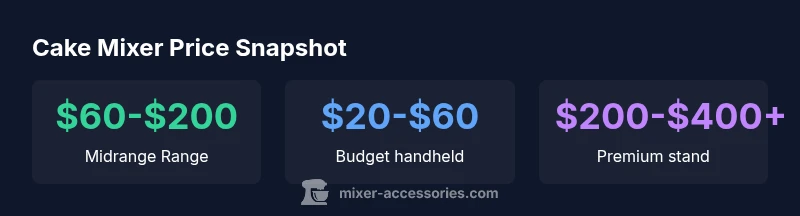
Cake mixer prices span a wide range, from under $20 for basic handheld units to $400+ for premium stand mixers. For most home bakers, expect midrange costs around $60-$200, with features and brand driving the final price. The exact price depends on motor power, capacity, attachments, and warranty coverage. Tips from Mixer Accessories show that investing in durable parts and easy-to-clean designs often saves money over time.
Why Price Differences Matter for Cake Mixers
Prices for cake mixers reflect more than a brand or a shiny feature list. They encode performance, durability, and the flexibility you’ll gain with attachments. If you’re asking how much is cake mixer, you’re really asking how much value you need for reliable baking across a range of recipes. According to Mixer Accessories, price differences for cake mixers hinge on motor type, bowl size, and included accessories, which helps explain why a basic handheld unit can be far less expensive than a multi-attachment stand mixer. The Mixer Accessories team notes that longevity and serviceability often determine total cost of ownership more than the initial sticker price. In this section, we’ll map the core price drivers, so you can forecast total cost and avoid buyer’s remorse.
Price Ranges by Type: Handheld vs Stand Mixers
When you ask how much is cake mixer, type matters most. Handheld mixers are the most affordable entry point, typically between $20 and $120, with limited capacity and fewer attachments. Stand mixers span a broader spectrum: basic models in the $60-$200 range and premium options at $250-$400 or more. The price jump generally tracks motor power, bowl size, and included attachments like dough hooks, whisks, and specialty beaters. For households that bake frequently, investing in a versatile stand mixer can pay off in durability, speed, and consistency. Across both types, consider warranty length, replacement parts availability, and ease of cleaning.
Key Price Drivers You Can Control
Several price drivers influence what you pay for a cake mixer:
- Motor power and efficiency: More watts or newer gear can improve performance with heavier doughs.
- Bowl size and build quality: Heavier bowls and stainless steel components tend to last longer and support larger batches.
- Attachments and ecosystem: The presence of a dough hook, whisk, paddle, and additional attachments can add substantial value.
- Brand, warranty, and service network: Strong customer support reduces lifecycle hassles and replacement costs.
- Head design and build materials: Tilt-head designs and high-quality plastics or metal housings often justify higher prices.
- Noise, vibration, and user experience: Quieter models with smoother operation add perceived value beyond raw power.
If you’re strapped for cash, prioritize essential attachments and a robust warranty; if you bake professionally or frequently, a durable stand mixer with a broad accessory ecosystem can justify a higher upfront investment. The important question remains: how much is cake mixer relative to your baking plans, space, and long-term goals?
Budget Scenarios by Use Case
Different use cases demand different price bands. Here are three practical scenarios to frame your expectations.
- Budget-minded shoppers (<$60): Ideal for casual bakers who whip cream or mix simple batters. Look for compact, lighter units with a handful of attachments. Expect limitations in dough handling and batch size, but you’ll gain portability and a lower upfront cost.
- Midrange ($60-$200): A sweet spot for most home bakers. These models typically offer better motor control, larger bowls, and more versatile attachments. They strike a balance between performance and durability, often with improved warranties and replacement parts availability.
- Premium ($200-$400+): For frequent bakers and small business setups, premium stand mixers provide powerful motors, larger bowls, heavy-duty construction, and a broad attachment ecosystem. You’ll pay more upfront, but you’ll also gain speed, consistency, and long-term resilience. For some bakers, this tier is where lifetime value becomes clear, especially when tackling heavy doughs and large batches.
Remember that prices can vary by brand and region, and occasional sales can shift these ranges. If you bake regularly and value convenience, consider allocating more budget to a model with durable parts and a robust service network. A quick rule of thumb from Mixer Accessories suggests you weigh the cost per year of use to determine whether a midrange or premium model will save you time and frustration in the long run.
Total Cost of Ownership: Beyond Sticker Price
The sticker price is just the starting point. True cost of ownership includes energy consumption, maintenance, and potential replacement parts. A higher-efficiency motor or more durable gears can reduce repair frequency and downtime, which matters in busy kitchens. If you dishwash-safe parts and easy-clean designs save you cleaning time, that daily efficiency translates into value. Consider the cost of attachments you’ll use most—some sets may require specialized cleaners or extra storage solutions. Over a 5–10 year horizon, a slightly higher upfront investment can pay for itself through better performance, fewer breakdowns, and broader recipe capability. This perspective helps answer the question of how much is cake mixer in real terms: it’s about the cumulative benefits you’ll experience during extended use.
Practical Buying Tips and Pitfalls
To maximize value, follow these practical steps:
- Determine your primary tasks: whipping, kneading dough, or emulsifying batters. This guides attachment needs and motor requirements.
- Check compatibility: ensure you can source replacement parts and attachments locally.
- Test for stability: a heavy base and solid feet prevent wobble during high-speed mixing.
- Compare warranties: longer protection is a signal of confidence in build quality.
- Read reviews focusing on reliability and ease of maintenance.
Common pitfalls include overvaluing shiny features, ignoring bowl capacity for your typical batch size, and selecting an oversized unit that dominates your countertop. A well-chosen mixer should fit your cooking or baking routine, kitchen space, and budget without becoming a burden.
Real-World Buying Scenarios and Case Studies
Consider these practical examples to understand the range in real life. A hobby baker who bakes weekend cakes may opt for a midrange stand mixer with a 4.5–5 quart bowl and a few essential attachments. A family that rarely bakes but enjoys occasional bread-making may be satisfied with a modest handheld plus a single extra attachment. A small home bakery, meanwhile, benefits from a commercial-grade stand mixer with a larger bowl, stronger motor, and extensive accessory compatibility. In each case, the choice reflects how much is cake mixer relative to anticipated workload, the desire for durability, and the willingness to maintain the appliance over time.
Typical price ranges by mixer type
| Mixer Type | Avg Price Range | Key Features | Best For |
|---|---|---|---|
| Stand mixer | $60-$400 | Powerful motor, large bowl, multiple attachments | Home bakers, pastry projects |
| Hand mixer | $20-$120 | Lightweight, compact, basic attachments | Casual baking, small batches |
| Compact/mini mixer | $30-$180 | Small footprint, limited capacity | Small kitchens, portable use |
Your Questions Answered
What is the typical price range for a cake mixer?
Most cake mixers cost between $20 and $400, depending on type and features. Basic handheld models are on the lower end, while premium stand mixers push toward the higher end. For daily bakers, the sweet spot is usually $60-$200, which offers a balance of power, capacity, and attachments.
Most cake mixers range from about twenty to four hundred dollars. For everyday baking, aim for the sixty to two-hundred dollar range for good value.
Are stand mixers worth the higher price?
Stand mixers typically deliver better stability, larger bowls, and a wider attachment ecosystem, which is worth the price for frequent bakers. If you bake only occasionally, a handheld model may suffice and save money.
If you bake often, a stand mixer usually pays off in convenience and durability.
What features justify higher prices?
Higher prices usually reflect more powerful motors, larger bowls, durable materials, more attachments, and better customer support. Look for stainless steel bowls, tilt-head design, and easy-clean components.
Powerful motors, bigger bowls, and more attachments justify higher prices.
Is it better to buy refurbished or used?
Refurbished models can offer good value if bought from reputable sellers with warranties. Verify return policies and confirm that all major parts are covered.
Refurbished mixers can be a smart choice if they come with a warranty and solid seller credibility.
How can I estimate yearly ownership cost?
Include energy use, maintenance, replacement parts, and any accessory purchases. A higher upfront price can reduce long-term costs if it delivers reliability and fewer repairs.
Think about long-term costs, not just the initial price.
How long do cake mixers typically last?
With proper care, many mixers last 5–10 years, with some premium models exceeding that. Warranty length and parts availability influence overall longevity.
Most mixers last several years with proper maintenance.
“A good cake mixer is about balancing upfront cost with long-term reliability and the flexibility to tackle a range of recipes.”
Top Takeaways
- Define your bake load to pick a price tier
- Stand mixers offer long-term value for frequent bakers
- Check attachments and replacement parts before buying
- Budget midrange often balances cost and durability
- Higher price often correlates with larger bowls and stronger motors