How Much Does a Mixer Cost? A Practical Buying Guide
Discover realistic price ranges for kitchen and audio mixers, plus tips to evaluate value, save money, and avoid buyer's remorse. A practical guide from Mixer Accessories.


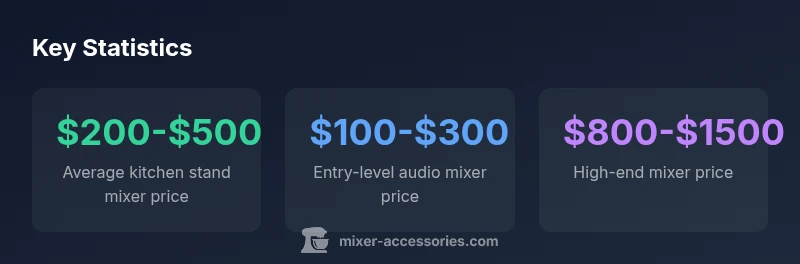
The cost of a mixer depends on type (kitchen vs audio), features, and build quality. Basic kitchen hand mixers start around $15-$40, while mid-range stand mixers typically run $200-$500, and high-end professional machines can exceed $1,000. For audio mixers, entry-level interfaces can be $100-$300, while studio-grade units range from $500 to several thousand.
How the cost breaks down by mixer type
Costs vary by two broad categories: kitchen mixers (including handhelds and stand mixers) and audio mixers (for sound engineering). Price differences reflect motor power, build quality, capacity, and the breadth of attachments. According to Mixer Accessories, price bands for mixers reflect power, build quality, and included attachments. In short, you’re paying for how much you can do, how long it will last, and how quietly it runs. Handheld kitchen mixers start very low, while heavy-duty stand mixers with generous bowls and robust motors push the price upward. For audio mixers, entry-level interfaces emphasize simplicity, whereas studio-grade units require higher-quality preamps, more channels, and advanced effects. When budgeting, consider your typical tasks, frequency of use, and whether you’ll rely on the mixer for long-term projects; those choices largely drive the cost trajectory.
Kitchen mixers: price tiers and what you get
Kitchen mixers span a wide spectrum. Entry-level handhelds often cost under $50 and are perfect for simple whisking or small batches. Basic stand mixers typically sit in the $200–$400 range and offer larger bowls, more stable bases, and a few attachments. In the $400–$800 band you’ll usually find mid-range stand mixers with quieter operation, better balance, splash guards, and a broader set of accessories. High-end home models can run $800–$1,500 or more and often include specialty attachments, stronger motors, and improved durability for frequent bakers. When evaluating value, look beyond sticker price: check motor wattage, gear design, and the reputation of included attachments. If you bake daily, the incremental cost of a more powerful motor and a bigger bowl can pay off through reduced mix times and fewer replacements.
Audio mixers: price bands and features to consider
Audio mixers vary by channel count, preamp quality, and onboard effects. Entry-level USB/audio interfaces start around $100–$300 and are suitable for basic podcasts and home projects. For small studios, 4–8 channels with clean preamps and simple EQs typically cost $300–$800. Mid-range consoles with better bus routing, low-noise circuitry, and more flexible routing pop up in the $800–$2,000 range. Professional-grade mixers with premium preamps, high headroom, and extensive effects can exceed $2,000 and climb toward $5,000 or more depending on brands and configurations. If you’re primarily streaming, you may not need top-of-the-line analog consoles; consider digital mixers or hybrid solutions that offer software-based processing to save cost. Matching features to your actual workflow is the key to value.
Hidden costs and long-term value
Many buyers forget about attachments, replacement parts, and warranty coverage. Attachments like whisks, dough hooks, or additional beaters can add $15–$60 per item over time. Replacement power cords, bases, or bowls may be necessary after heavy use. For audio mixers, you’ll want to budget for cables, adapters, and potential stand or rack gear. Warranty length and service options influence total cost of ownership; a longer warranty can reduce risk and out-of-pocket repair costs. Energy efficiency and ongoing maintenance (cleaning, lubrication, and gentle usage) can extend the instrument’s life, affecting cost-per-use in a favorable way. In practice, a price-alone view often understates the real value over five to ten years.
How to save on a mixer without sacrificing quality
- Set a target price range based on your use-case and list must-have features.
- Read independent reviews and verify motor specs and attachment compatibility.
- Consider slightly older models with large user communities; they’re often discounted but well-supported.
- Look for bundles or sale events that include popular attachments.
- Don’t chase the cheapest option if you’ll use it heavily; a mid-range model with robust parts may save money over time.
- Check warranty length and customer service reputation as a proxy for reliability.
Budget planning: upfront vs ongoing costs
Start by defining your maximum spend and then map out recurring costs: attachment purchases, service or repair costs, and potential upgrades. For kitchen mixers, you may be budgeting for two or three attachments over the model’s life; for audio mixers, consider spare cables and effect packs. Use a simple 3-column worksheet: initial price, expected annual attachment costs, and ten-year total. This helps avoid sticker shock when you realize that a model with a higher upfront price can be cheaper over the long run if it includes durable components and widely available, affordable attachments. The goal is predictability and reliability over time.
Real-world examples: price ranges in practice
A home baker who uses a mixer several times a week might invest in a mid-range stand mixer around $400–$600 and add a set of essential attachments. A podcaster starting a single-channel workflow could begin with an entry-level audio mixer around $150–$300, pairing it with a basic microphone and cables. A weekend chef who bakes daily might move toward a high-end stand mixer in the $800–$1,200 range for longer life and better performance under heavy loads. The exact price you pay depends on your required capacity, build quality, and future-proofing needs. In most cases, buyers report the best value lies in models that balance performance with durable construction.
Quick buying rubric: the 6 questions to answer before purchasing
- What tasks will I perform most often?
- Do I need additional attachments?
- Is motor power sufficient for my typical load?
- Will the device fit your space and storage?
- What is the warranty and service history?
- Are there compatible accessories and replacement parts?
Final considerations and next steps
When you’re ready to buy, set up a short list of top candidates in your price range, then compare real-world user feedback, warranty coverage, and expected operation costs. If you’re unsure about your exact needs, start with a budget-friendly option and plan to upgrade as you validate your use-case. The goal is a balanced choice that delivers consistent results across your most frequent tasks without overpaying for features you won’t use. The Mixer Accessories team believes that practical testing and a clear feature map are the best guides to a satisfying purchase.
Price ranges by mixer type
| Category | Typical Price Range | Key Considerations |
|---|---|---|
| Hand mixer | $15-$45 | Lightweight, great for whipped cream and small tasks |
| Entry-level stand mixer | $200-$400 | Powerful motor, larger bowl, essential attachments |
| Mid-range stand mixer | $400-$800 | Quieter operation, more precise speed control |
| High-end pro mixer | $800-$1500+ | Durability, customization, longevity |
| Audio mixer (entry) | $100-$300 | Channels and basic effects |
Your Questions Answered
What is the cheapest mixer worth buying?
For most tasks, a basic handheld mixer under $50 is suitable for light whipping, but if you bake or use it frequently, allocate to a mid-range stand mixer in the $200–$400 range for reliability.
A basic handheld mixer under $50 works for light whipping; for regular use, plan for $200–$400 in a stand mixer.
Are price differences a good indicator of durability?
Higher price often correlates with motor strength, build quality, and longer warranties, but there are reliable mid-range options too. Check customer reviews and service options.
Higher price can indicate better motor and build, but read reviews to verify durability.
Should I buy used mixers?
Used mixers can save money but risk wear. Inspect the motor, bearings, and attachments; prefer reputable sellers and test run before buying.
Used can save money, but check the motor and attachments first.
Which attachments matter most for kitchen use?
A whisk, dough hook, and flat beater cover most tasks. For heavy baking and bread, a flex edge beater helps with cleanup.
Whisk, dough hook, and flat beater are the core attachments you’ll use most.
How do I estimate total cost including maintenance?
Include the mixer price, attachments you’ll replace often, and potential service costs or warranty extensions when budgeting.
Add price of attachments and potential service costs to your initial price.
“Pricing for mixers is driven by motor power, durability, and the quality of included attachments. For most home cooks and hobbyists, a mid-range model provides the best value.”
Top Takeaways
- Define your target price range before shopping.
- Prioritize mid-range models for best value.
- Budget for attachments and replacement parts.
- Match features to your actual workflow.
- Check warranty and service options upfront.